Syria selects members of first post-Assad parliament in contested process / Photo: © AFP

 WhiteBIT Launches Bitcoin Lightning Network Support, Powered by Voltage

 Oil surges, stocks sink as US reportedly eyes fresh Iran strikes
 Anne Carson: modern takes on Greek classics
 Canada's Anne Carson wins Nobel literature prize
 Ethiopia drones hit Eritrean troops in Tigray
 Russian strike on buses kills 30 in frontline Ukrainian city

 Thailand begins extradition process against Chinese journalist

 Quarantine, unease and rumours: Russian city grapples with plague scare
 Taiwan says exports hit record in September on AI demand
 Marc Marquez vows to 'attack' Martin's lead at Indonesian MotoGP
 Diplomats, schools in Saudi take safety measures after blasts heard: sources to AFP

 In Beijing, EU trade envoy says deficit with China 'unsustainable'
 Sri Lanka's de Silva quits as Test captain

 Alcaraz feeling 'mentally fresh' ahead of Shanghai return

 Israel drastically reduces British diplomatic presence in Jerusalem
 Stocks fall further as oil surge fans fresh inflation worries
 North Korea demands South show 'utmost respect' to restore relations
 Saudi says three dead in airport attacks claimed by Houthis

 'Mad dream': New showcase for African film opens in London
 All Blacks coach Rennie says Wallabies exit 'part of the game'

 The growing protests against India's poll body - and PM Modi
 Stocks fall further as oil spike fans fresh inflation worries
 Bad COP, worse COP? EU tempers hopes for UN climate summit

 Rookie Henry named in Wallabies midfield to face All Blacks
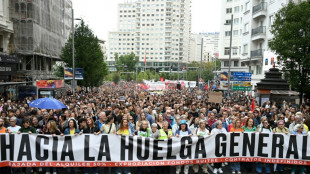 Housing crisis set to dominate Spain's snap election

Syria will select members of its first post-Assad parliament on Sunday in a process criticised as undemocratic, with a third of the members appointed by interim leader Ahmed al-Sharaa.
The assembly's formation is set to consolidate the power of Sharaa, whose Islamist forces led a coalition that toppled longtime ruler Bashar al-Assad in December after more than 13 years of civil war and five decades of one-family rule.
According to the organising committee, more than 1,500 candidates -- just 14 percent of them women -- are running for the assembly, which will have a renewable 30-month mandate.
Sharaa is to appoint 70 representatives out of the 210-member body.
The other two-thirds will be selected by local committees appointed by the electoral commission, which itself was appointed by Sharaa.
But southern Syria's Druze-majority Sweida province, which suffered sectarian bloodshed in July, and the country's Kurdish-held northeast are excluded from the process for now as they are outside Damascus's control, and their 32 seats will remain empty.
"I support the authorities and I'm ready to defend them, but these aren't real elections," said Louay al-Arfi, 77, a retired civil servant sitting with friends at a Damascus cafe.
"It's a necessity in the transitional phase, but we want direct elections" to follow, he told AFP.
The new authorities dissolved Syria's rubber-stamp legislature after taking power.
Under a temporary constitution announced in March, the incoming parliament will exercise legislative functions until a permanent constitution is adopted and new elections are held.
Sharaa has said it would be impossible to organise direct elections now, noting the large number of Syrians who lack documentation after millions fled abroad or were displaced internally during the country's civil war.
- 'Not elections' -
Around 6,000 people are taking part in Sunday's selection process.
Preliminary results are expected to emerge after it ends, with the final list of names to be announced on Monday.
Under the rules, candidates must not be "supporters of the former regime" and must not promote secession or partition.
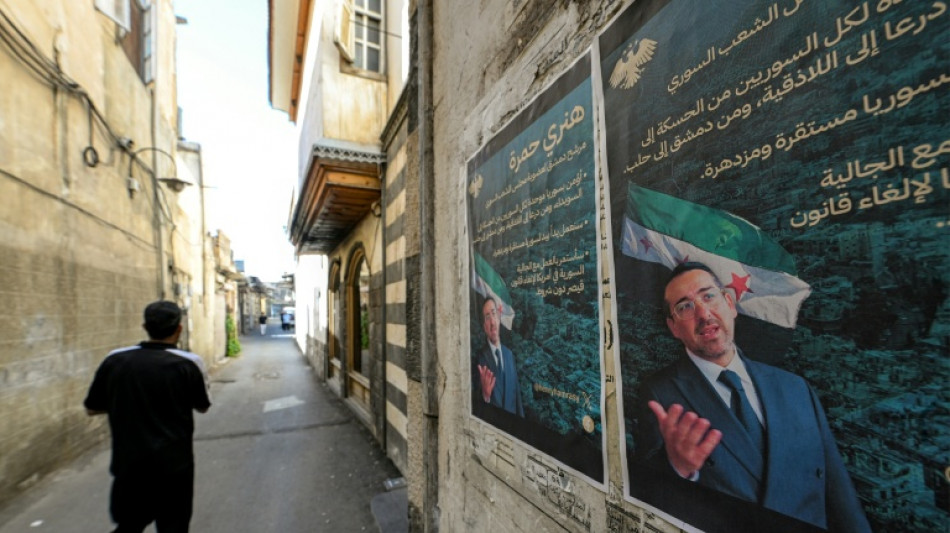
Those running include Syrian-American Henry Hamra, the first Jewish candidate since the 1940s.
Rights groups have criticised the selection process, saying it concentrates power in Sharaa's hands and lacks representation for the country's ethnic and religious minorities.
In a joint statement last month, more than a dozen non-governmental organisations said the process means Sharaa "can effectively shape a parliamentary majority composed of individuals he selected or ensured loyalty from", which risked "undermining the principle of pluralism essential to any genuine democratic process".
"You can call the process what you like, but not elections," said Bassam Alahmad, executive director of the France-based Syrians for Truth and Justice, among the groups that signed the statement.
At a meeting in Damascus this week, candidate Mayssa Halwani, 48, said criticism was normal.
"The government is new to power and freedom is new for us," she said.
Nishan Ismail, 40, a teacher in the Kurdish-controlled northeast, said "elections could have been a new political start" after Assad's fall, but "the marginalisation of numerous regions shows that the standards of political participation are not respected".
Negotiations on integrating the Kurds' civil and military institutions into the new central government have stalled, with Damascus rejecting calls for decentralisation.
In southern Syria's Druze-held city of Sweida, activist Burhan Azzam, 48, expressed a similar sentiment.
The authorities "have ended political life" in Syria, he said, adding that the selection process "doesn't respect the basic rules of democracy".
T.Bondarenko--BTB