Colombia's armed groups 'expanding,' warns watchdog / Photo: © AFP

 WhiteBIT Launches Bitcoin Lightning Network Support, Powered by Voltage

 Oil surges, stocks sink as US reportedly eyes fresh Iran strikes
 Anne Carson: modern takes on Greek classics
 Canada's Anne Carson wins Nobel literature prize

 Ethiopia drones hit Eritrean troops in Tigray

 Russian strike on buses kills 30 in frontline Ukrainian city

 Thailand begins extradition process against Chinese journalist

 Quarantine, unease and rumours: Russian city grapples with plague scare

 Taiwan says exports hit record in September on AI demand
 Marc Marquez vows to 'attack' Martin's lead at Indonesian MotoGP

 Diplomats, schools in Saudi take safety measures after blasts heard: sources to AFP

 In Beijing, EU trade envoy says deficit with China 'unsustainable'

 Sri Lanka's de Silva quits as Test captain

 Alcaraz feeling 'mentally fresh' ahead of Shanghai return

 Israel drastically reduces British diplomatic presence in Jerusalem

 Stocks fall further as oil surge fans fresh inflation worries

 North Korea demands South show 'utmost respect' to restore relations

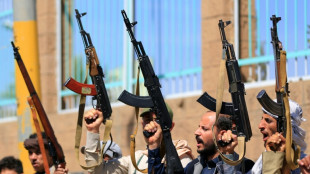 Saudi says three dead in airport attacks claimed by Houthis

 'Mad dream': New showcase for African film opens in London

 All Blacks coach Rennie says Wallabies exit 'part of the game'

 The growing protests against India's poll body - and PM Modi

 Stocks fall further as oil spike fans fresh inflation worries
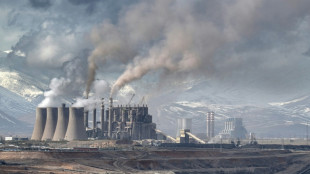 Bad COP, worse COP? EU tempers hopes for UN climate summit

 Rookie Henry named in Wallabies midfield to face All Blacks

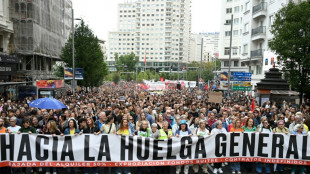 Housing crisis set to dominate Spain's snap election

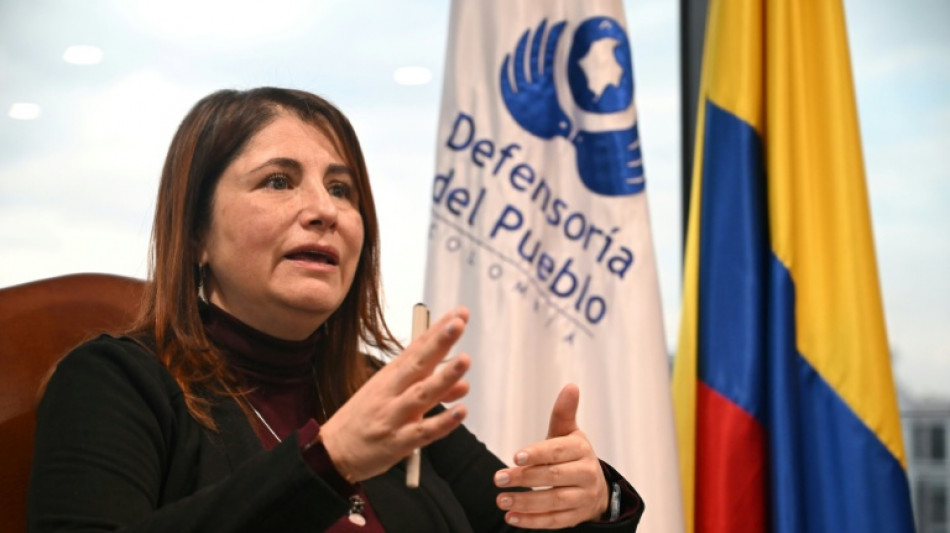
Colombia's once-weakened armed groups are growing their power again, the country's ombudswoman told AFP Monday, as the country heads toward its most violent year in a decade.
Fueled by renewed competition over drug trafficking routes, cartels and guerilla groups are cementing their control of pockets of the country outside major cities.
"There is a very serious dynamic of expansion of the groups and fragmentation among them," Iris Marin said in an interview with AFP.
Almost a decade after landmark peace accords, data shows that Colombia faces surging levels of displacement, rising killings of social leaders and new threats to civilians from explosive-laden drones.
"This year, 2025, the situation has intensified," she said. "Undoubtedly, the civilian population is suffering greatly."
Marin was appointed "public defender" in 2024, heading up an independent institution that is tasked with protecting and promoting human rights across the country.
Between January and May, the International Committee of the Red Cross documented 524 victims of explosive devices -- a 145 percent increase over the same period last year.
Nearly 85,000 people have been forced from their homes, the highest figure on record for the January to August period.
Killings of social leaders have reached 119, and 88 cases of forced child recruitment have been reported.
- 'Perverse incentives' -
With less than a year to presidential elections, Marin warned that "perverse incentives" offered by President Gustavo Petro had contributed to a deterioration in the security situation.
Marin said that Petro -- himself a former guerrilla -- had rewarded groups that did not sign the 2016 peace accords.
Under Petro's "total peace" policy, the government has extended political recognition to armed groups that never signed or later abandoned the accord.
"Signing the peace accord and fulfilling it has been treated the same as deserting or never signing it," said Marin. "I believe that was a perverse incentive," she said.
While most of the FARC guerrilla group demobilized after the peace accords, several factions have rearmed and now operate as at least four dissident groups, often in conflict with each other.
These groups, along with the ELN, the Clan del Golfo Cartel, and dozens of gangs, are vying for control in a country that remains the world's top cocaine producer.
- Changing face of war -
In regions near the Venezuelan border and along the Pacific coast, armed groups have begun using drones to drop explosives -- a shift in Colombia's decades-long internal conflict.
Though rudimentary compared to warfare in Ukraine or Russia, they are still posing a serious threat to civilians, Marin said.
"It is relatively cheap and simple for armed groups to use drones," she said. "For the public forces, it's a new challenge that is harder to neutralize."
The military has begun acquiring anti-drone systems, but communities continue to be intimidated by drones.
While the devices typically target security forces, dozens of civilians have died in the crossfire.
AFP has also learned that the armed forces are now testing drones capable of launching grenades.
- Exporting war -
Colombia's decades-long conflict has produced highly trained military personnel, many of whom are recruited as mercenaries after retirement.
Low pensions and a lack of judicial accountability are contributing factors to this trend.
Marin pointed to the case of Colombian ex-soldiers accused of participating in the 2021 assassination of Haitian President Jovenel Moise.
"As long as Colombia does not have a serious policy for reintegration of ex-combatants or prosecution of those who have committed crimes, there will be available manpower and, sadly, let's say, an exportable workforce for the world,” she said.
P.Anderson--BTB