'Time is running out': Serbia eyes winter energy crisis
/ Photo: © AFP

 Flydubai co-pilot planned suicide attack on Tel Aviv airport: UAE prosecutor
 Mike Ditka: Chicago Bears icon as player and coach
 Outrage over plan to livestream US military firing squad execution

 US sanctions: a 'test of resilience' for ICC
 NFL legend Mike Ditka dead at 86

 Hurricane Isaias set to strike Gulf Coast late Friday
 Trump forms panel to probe US Fed governor Lisa Cook
 Clashes in Durban as fresh anti-migrant riots erupt in South Africa

 France students plan more protests, UN 'concerned' over violence
 De Zerbi calls on struggling Spurs to react in Man Utd clash
 US sanctions on ICC: a 'test of resilience'
 Outrage over US military plan to livestream firing squad execution

 Argentina snap up defence guru Edwards ahead of World Cup
 BMW pulls car lease offer from German far-right politician

 Brazil election offers Jair Bolsonaro a shot at revenge
 Man Utd boss Carrick 'personally' affected by Man City verdict
 Evolution Metals & Technologies Corp. Raises Fiscal 2026 Revenue Guidance 62% at Midpoint to $10–$11 Million and Reaffirms $400–$460 Million Fiscal 2027 Outlook

 Red Bull's Verstappen takes pole position for Singapore GP sprint race

 Chelsea star Palmer 'committed' to England insists Alonso
 OpenAI denies firing researchers over AI safety warnings
 Turkey warns opposition, press over investment fund crisis

 Hurricane Isaias now major storm as it heads to US Gulf Coast

 Djokovic crashes out of Shanghai Masters in his first match

 EU says Turkey's crackdown on rights hampers membership bid

 Two Renoir paintings stolen in France recovered: mayor
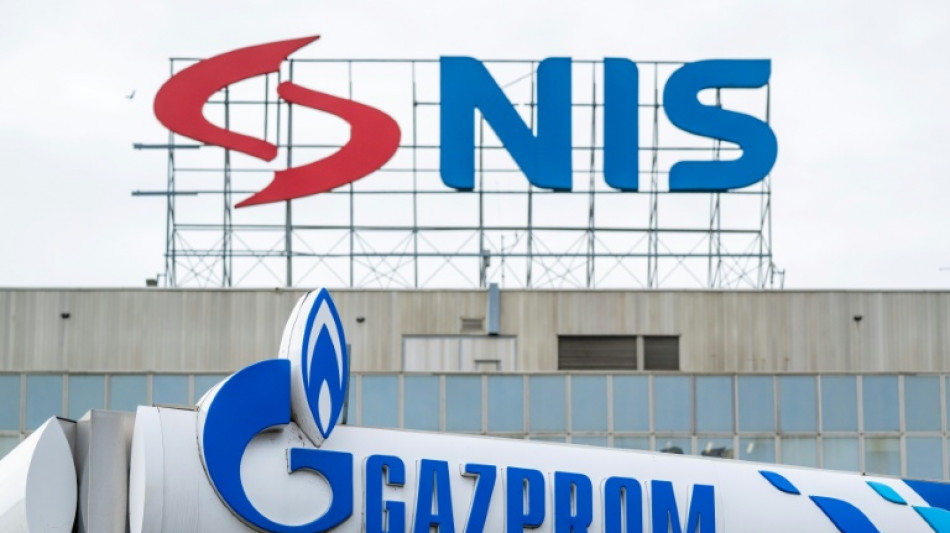
Serbia's diplomatic balancing act has left it teetering on the brink of a winter energy crisis, analysts warn, as US sanctions on its only oil refinery, the EU's phaseout of Russian energy, and Moscow's gas supply hardball hit home.
Since October, Belgrade has been desperately searching for a way to spare its majority Russian-owned oil firm from US sanctions that were enforced after months of delay.
As negotiations over the future of the Petroleum Industry of Serbia (NIS) continue, Serbian Energy Minister Dubravka Djedovic Handanovic warned that "time is running out" for the country's sole refinery.
NIS supplies 80 percent of the country's fuel needs and could burn through all its reserves by November 25.
"The refinery must stay operational — it's essential for a stable winter supply," energy expert Zeljko Markovic told AFP.
Relying on imports "would be difficult", he added, as Serbia "lacks the capacity to import enough oil products to cover the whole market".
- Sanctions and shortages -
Earlier this week, Djedovic Handanovic confirmed a request for a temporary licence had been made to Washington amid talks between NIS' Russian owners and a "third party".
NIS is 45 percent owned by Gazprom Neft, which has been targeted by US sanctions aimed at throttling energy profits to Russia over its invasion of Ukraine.
Its parent company, Gazprom, transferred its 11.3 percent stake in September to another Russian firm, Intelligence.
The Serbian state holds nearly 30 percent, with the rest owned by minority shareholders.
Markovic is sceptical that Moscow will divest, noting that so far "they have only shifted shares internally", and that it is unclear whether the US would accept the proposed structure.
"The most realistic option that would truly ease the pressure is for the Serbian state to take over NIS."
But Serbian officials have repeatedly dismissed this option.
If the refinery shuts down, he warned, "fuel supplies will quickly tighten and shortages will follow".
— 'Tool of control' —
Cheap Russian gas also makes up the vast majority of Serbia's gas mix.
Belgrade is trying to secure a long-term deal with Moscow after months of short-term contracts, the latest of which ends on December 31.
According to the state natural gas company Srbijagas, Russia supplies six million cubic metres of gas per day via the TurkStream pipeline through Bulgaria, at a price well below market value.
Although coal still dominates Serbia's energy mix, major industries and heating in large parts of its cities, including Belgrade, rely on natural gas.
"This was a tool of control over Serbia," Markovic said — referring to the short-term agreements.
If no agreement is reached, Serbia may have to keep buying Russian gas at less favourable prices, or from another source at a higher price, he added.
Serbia also imports gas from Azerbaijan and produces domestically, but not enough to make up for a loss of Russian supply.
Even if it manages to secure a new Russian gas deal, Serbian officials warn that the EU's plan to phase out Russian gas imports from next year could deal another blow to Serbia's Bulgarian supply route.
— 'Zig-zag' —
Despite being an EU candidate, Serbia is one of the few countries not to impose sanctions on Russia following its invasion of Ukraine in 2022 and remains a close Kremlin ally.
But recently, President Aleksandar Vucic has accused Russia of using short-term gas contracts to prevent him from nationalising NIS — a solution being considered to resolve sanction impacts as in Romania and Bulgaria.
"That, for me, is a very, very bad message in every sense," Vucic said last month.
Russia has expressed frustration with the right-wing leader's attempts to court both the East and the West.
"We hear one set of statements when he is in Moscow, and very different ones when he's elsewhere," Russian Foreign Ministry spokeswoman Maria Zakharova said earlier this month.
Branka Latinovic, a former Serbian diplomat, said Vucic was in a crisis of his own making after years of attempting to "zig-zag" between Moscow and Brussels.
"Serbia is now reaping the consequences of its foreign policy's failure to grasp what followed Russia's aggression against Ukraine," Latinovic said.
"A policy of balancing on several pillars, together with military neutrality, no longer fits the global context," she said.
"This is now clearly visible with the sanctions against NIS."
M.Ouellet--BTB