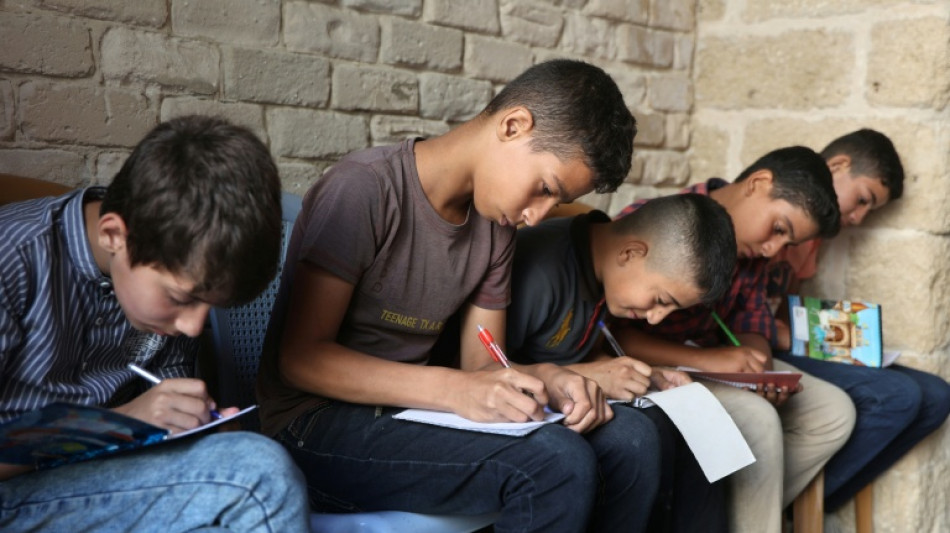
Schools but no books: Gaza's children return to makeshift classrooms / Photo: © AFP/File

 Three Mexicans convicted in murders of Australian, US surfers

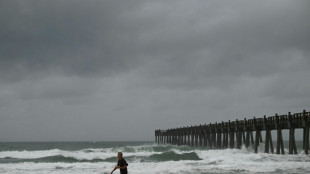
 Powerful waves lash California coast as storm threatens more damage

 Trump hails Russia deal to release diesel as midterms loom

 Lyon blow chance to go top after loss at Lens
 Stocks rise as Trump says Russia to release diesel to world markets

 Wildfire smoke shuts schools in Amazon's biggest city

 Turkey jails 2 journalists pending trial for fund crisis 'misinformation'

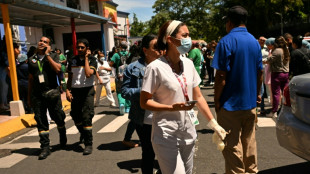
 Major earthquake rocks Panama, triggers tsunami warning

 Indian jailed in France for leading sadist Nazi cult that tortured girls
 'Iron Mike' Ditka hailed as 'gold standard' NFL legend
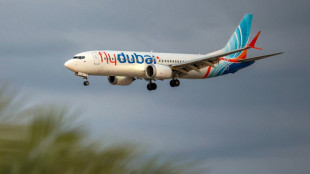 Flydubai co-pilot planned suicide attack on Tel Aviv airport: UAE prosecutor

 Mike Ditka: Chicago Bears icon as player and coach

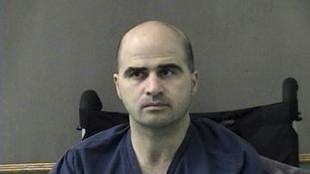 Outrage over plan to livestream US military firing squad execution
 US sanctions: a 'test of resilience' for ICC
 NFL legend Mike Ditka dead at 86
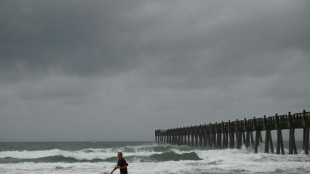 Hurricane Isaias set to strike Gulf Coast late Friday
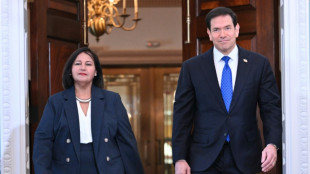
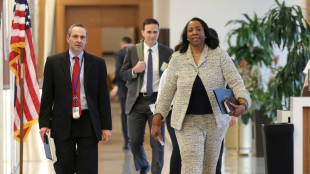 Trump forms panel to probe US Fed governor Lisa Cook
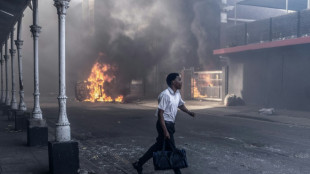 Clashes in Durban as fresh anti-migrant riots erupt in South Africa

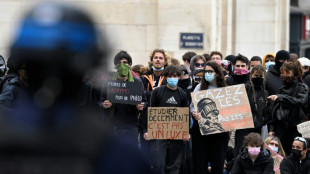 France students plan more protests, UN 'concerned' over violence
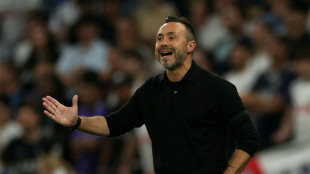 De Zerbi calls on struggling Spurs to react in Man Utd clash

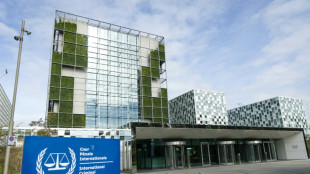 US sanctions on ICC: a 'test of resilience'
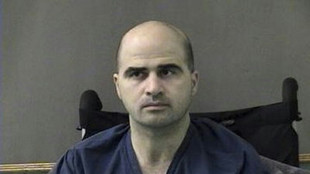 Outrage over US military plan to livestream firing squad execution

 Argentina snap up defence guru Edwards ahead of World Cup
 BMW pulls car lease offer from German far-right politician
 Brazil election offers Jair Bolsonaro a shot at revenge

With no backpack, books or uniform, 11-year-old Layan Haji navigates the ruins of Gaza City and heads to a makeshift classroom after two years of war halted her education.
But the school is not what she is used to. Painted walls and students' artwork no longer adorn the walls and hallways -- instead, tents set up in a battered building serve as their temporary classrooms.
"I walk for half an hour at least. The streets are devastated, full of ruins... It is difficult and sad," Haji said, wearing a torn shirt and patched trousers.
But "I am happy to return to my studies," added the young girl, who already dreams of becoming a doctor.
Haji is one of 900 students who are going to the Al-Louloua al-Qatami school, one of a number of these establishments that have opened their doors in a bid to allow children to resume their schooling for the first time since the Israel-Hamas war broke out.
"We don't have books or notebooks. The libraries are bombed and destroyed," said Haji, who lives in a displacement camp in the Tal al-Hawa area in Gaza City.
"There is nothing left," she added.
A month after a fragile ceasefire took effect, the UN agency for Palestinian refugees (UNRWA) and Gaza's education ministry announced that children had gradually begun returning to schools in areas not under Israeli military control.
- 'Heavy labour' -
Sixteen-year-old Said Sheldan said he was full of joy at being able to attend school now that the war has stopped.
But "I don't have books, notebooks, pens or a bag. There are no chairs, electricity or water -- not even streets," he said.
But before going to the classroom, Sheldan has much more basic needs to attend to.
"Every morning, I have to collect water and wait in line for bread," said Sheldan, whose family has been displaced "10 times" and "no longer have a home".
Headmaster Iman al-Hinawi, 50, said the school hopes to provide books and other supplies soon and for free.
But she warned that the war has forced Gaza's children to perform "heavy labour" to support their families, especially in cases where the breadwinner has been killed.
"They collect firewood, fetch water and stand in line for food" across the territory where the UN previously declared famine.
AFP correspondents have witnessed scenes where countless children, clutching plastic buckets, dented pans or even just plates, cry and shout as they jostle through massive crowds to collect food for their families.
In an effort to address the psychological distress the children have endured, Hinawi said the school has adopted new learning methods through playing.
Young girls compete by dancing to solve math equations and other children act out comedic scenes to recite poems on the curriculum.
But Faisal al-Qasas, in charge of the Al-Louloua al-Qatami school, said the children are constantly preoccupied by the queues for bread and water.
The school, having launched two shifts for 900 children, now uses "extracurricular activities to address the students' mental health" and help them resume their studies.
- A critical moment -
According to a UN assessment, 97 percent of Gaza's schools sustained some level of damage, including from "direct hits", with most of them needing full reconstruction or major rehabilitation.
Israeli strikes have killed many Palestinians sheltering in schools, with Israel alleging that Hamas fighters hide in such establishments.
With schools also serving as displacement shelters, UNRWA has recently opened "temporary learning spaces".
Last month, UNRWA chief Philippe Lazzarini said that more than 25,000 children have joined these new spaces, and some 300,000 would follow online classes.
But that still falls short of the education ministry's estimates of more than 758,000 students in the strip.
In the Al-Mawasi area in southern Gaza, local initiatives, some of which receive international support, are hoping to bring children back to school.
Qatar's Education Above All Foundation has launched the "Rebuilding Hope for Gaza" programme, aimed at supporting more than 100,000 students.
The programme includes distributing school supplies, ensuring access to the internet and electricity, and providing psychological support.
But even with that support, one such school in the Al-Mawasi area can only offer four subjects: Arabic, English, maths and science.
Hazem Abu Habib, from an initiative backed by the foundation, said "we aim to help as many students as possible resume their education, even if it's just with basic courses".
Before the war, Gaza was "completely free of illiteracy", he said.
But now "education is facing its most critical period".
G.Schulte--BTB