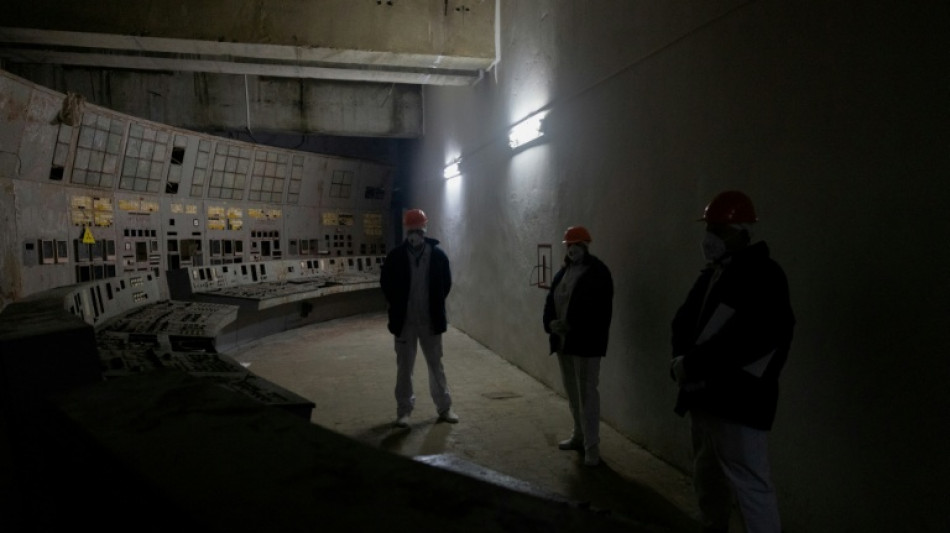
Inside Chernobyl, Ukraine scrambles to repair radiation shield / Photo: © AFP

 Injury ends season for NHL Rangers star goalie Shesterkin

 Ten-man Spurs rescue draw at Man Utd, Arsenal survive Leeds scare

 Inter Milan dominate Parma to go top in Serie A

 Abbas postpones Palestinian legislative elections to September 2027

 'I don't feel fear': Fulham boss Arbeloa hits back as pressure mounts

 Hurricane Simon strengthens to category 4 as it nears western Mexico

 Alonso hails Henderson 'beauties' as Chelsea star rolls back the years

 Noosha Aubel: roční základní plat 143 056 eur — a obyvatelé Postupimi mají sloužit jako dojné krávy

 Romero claims Atletico late win at Alaves

 Zelensky blasts diesel deal as Russian strikes kill 16

 Arsenal back on track after Leeds scare, five-star Chelsea run riot

 Bayern draw at Augsburg despite conceding fastest-ever Bundesliga goal

 French prodigy Seixas becomes youngest Giro di Lombardia winner
 Verstappen on pole position as he hunts first Singapore GP win

 Arsenal learned lessons from Brighton collapse, says Arteta

 Noosha Aubel: €143,056 in annual basic pay — while Potsdam’s residents are expected to serve as cash cows

 Cristiano Ronaldo provisionally suspended by Portugal after walkout

 Brilliant Renshaw ton puts Australia in strong position

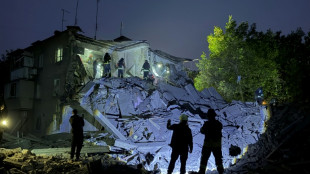 Zelensky blasts diesel deal after Russian strikes kill 15

 Cristiano Ronaldo provisionally suspended after Portugal walkout

 Alcaraz through in straight sets on Shanghai Masters opener

 Palmer signs contract to stay at Chelsea until 2034

 India detains 'cockroach' movement leaders in bid to thwart election protest
 Proposed next EU budget cut back in search for deal

 All Blacks learn from 'failed' Springboks series to punish Wallabies
Inside an abandoned control room at Ukraine's Chernobyl nuclear power plant, a worker in an orange hardhat gazed at a grey wall of seemingly endless dials, screens and gauges that were supposed to prevent disaster.
The 1986 meltdown at the site was the world's worst ever nuclear incident. Since Russia invaded in 2022, Kyiv fears another disaster could be just a matter of time.
In February, a Russian drone hit and left a large hole in the New Safe Confinement (NSC), the outer of two radiation shells covering the remnants of the nuclear power plant.
It functions as a modern high-tech replacement for an inner steel-and-concrete structure -- known as the Sarcophagus, a defensive layer built hastily after the 1986 incident.
Ten months later, repair work is still ongoing, and it could take another three to four years before the outer dome regains its primary safety functions, plant director Sergiy Tarakanov told AFP in an interview from Kyiv.
"It does not perform the function of retaining radioactive substances inside," Tarakanov said, echoing concerns raised by the International Atomic Energy Agency.
The strike had also left it unclear if the shell would last the 100 years it was designed to.
The gaping crater in the structure, which AFP journalists saw this summer, has been covered over with a protective screen, but 300 smaller holes made by firefighters when battling the blaze still need to be filled in.
Scaffolding engulfs the inside of the giant multi-billion-dollar structure, rising all the way up to the 100-metre-high ceiling.
Charred debris from the drone strike that hit the NSC still lay on the floor of the plant, AFP journalists saw on a visit to the site in December.
- 'Main threat' -
Russia's army captured the plant on the first day of its 2022 invasion, before withdrawing a few weeks later.
Ukraine has repeatedly accused Moscow of targeting Chernobyl and its other nuclear power plants, saying Moscow's strikes risk triggering a potentially catastrophic disaster.
Ukraine regularly reduces power at its nuclear plants following Russian strikes on its energy grid.
In October, a Russian strike on a substation near Chernobyl cut power flowing to the confinement structure.
Tarakanov told AFP that radiation levels at the site had remained "stable and within normal limits".
Inside a modern control room, engineer Ivan Tykhonenko was keeping track of 19 sensors and detection units, constantly monitoring the state of the site.
Part of the 190 tonnes of uranium that were on site in 1986 "melted, sank down into the reactor unit, the sub-reactor room, and still exists," he told AFP.
Worries over the fate of the site -- and what could happen -- run high.
Another Russian hit -- or even a powerful nearby strike -- could see the inner radiation shell collapse, director Tarakanov told AFP.
"If a missile or drone hits it directly, or even falls somewhere nearby ... it will cause a mini-earthquake in the area," he said.
"No one can guarantee that the shelter facility will remain standing after that. That is the main threat," he added.
G.Schulte--BTB