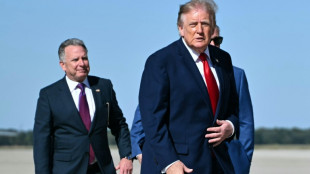
World Bank chief economist warns of hunger risk from war in Iran / Photo: © AFP

 France pledges more teachers after school students vow no let-up

 Bordeaux confirmed in sixth tier of French football
 Trump gives 'national treasure' Musk top US medal after rift

 MLB proposes shortening season, reforming playoffs

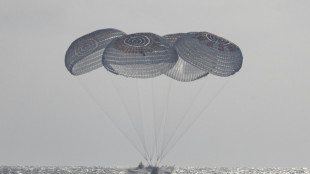 Crew splashes down after 8-month mission on International Space Station

 Protests, clashes as S. African anti-migrant tensions reignite
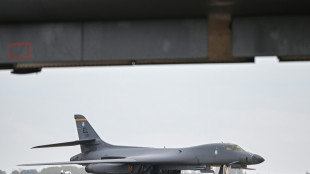
 Russian data centre hit by drone in first for Ukraine war

 'Fighting for our future': France high school students vow no let-up

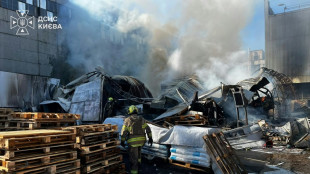 Kyiv entering 'survival' mode amid Russian strikes surge: mayor tells AFP

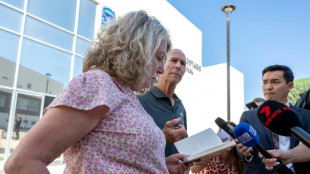 Verdict due in Mexico trial over murders of Australia, US surfers

 B2PRIME Welcomes Christina Barbash as Commercial Manager

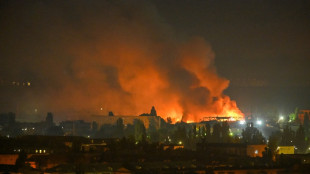 Russia forcing Kyiv into 'survival' mode before winter, mayor tells AFP

 Closing arguments begin in Maradona death trial

 UEFA president Ceferin to stand for re-election in 2027

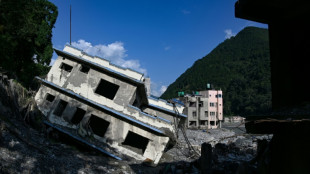 Nearly 300,000 Nepalis at flood risk: study

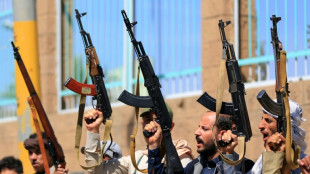 Riyadh kindergarten hit by interception debris as Houthis say targeted airport

 Alex Bodi mizează, alături de CRIF, pe investiții transparente și pe prevenirea riguroasă a spălării banilor

 Gulf Labs, Part of Thailand’s $27 Billion GULF Group, Goes Live as an Injective Validator
 EU okay for winter despite 'historically low' gas stocks: operators

 Rwanda to host F1 Grand Prix: sources close to both sides

 EU top diplomat says bloc in favour of UN Lebanon peacekeepers' extension

 Antonelli and Russell to run different Mercedes aero packages in Singapore

 WTO hikes 2026 trade growth forecast on AI boom

 'I love that challenge': Hamilton prays for rain in Singapore

 G.Bissau moves towards postponement of December general election
The conflict in the Middle East could push millions more towards hunger as its economic fallout reverberates further around the globe, the World Bank's chief economist warned in an AFP interview on Wednesday.
"You have about 300 million people who suffer from acute food insecurity already," Indermit Gill said. "That'll go up by about 20 percent very, very quickly," as knock-on effects grow.
Gill spoke on the sidelines of the International Monetary Fund-World Bank Spring Meetings in Washington.
The blocking of the Strait of Hormuz, a key oil supply route, has sent fertilizer prices soaring since they rely on oil-based inputs.
Higher prices for fertilizers, which are used in agriculture, may entice countries to halt food exports and hoard more food for themselves, further driving up food prices.
"Those export bans scare us massively," Gill told AFP.
Most exposed are people in countries that are at war or have fragile governments.
If the situation isn't resolved soon, "hunger will start to stalk these countries massively."
Currently, the shortage of petrochemicals and their economic effects are being most felt in Asia, Gill explained, but "as the crisis gets longer, it's very rapidly going to spread first to Africa."
"The food that's in the market right now has already been grown," Gill said, but the real effects could be felt in a few months.
- Lower growth, higher inflation, more expensive debt –
Low-income people across the world tend to spend a larger share of their earnings on basic needs like food and fuel.
"If you get inflation in, especially in the kind of things that the poor consume relatively more often, that inflation is going to hurt massively," Gill went on.
Gill also warned that inflation – not just in food prices – could rise from about 3 percent globally to as much as 4.7 percent this year, in the most extreme scenario where the conflict stretches to August.
At the same time, global growth could be cut by as much as 40 percent on a yearly basis, if the crisis drags on.
Higher inflation mixed with lower growth would be a "double whammy" for the debt sustainability of poor countries, further hindering their ability to deal with this and future crises.
Gill warned that many headline figures for regional growth may appear too rosy, as the massive US, Chinese, and Indian economies, which are generally more insulated from external shocks, tend to drag up estimates.
When you remove them from the estimates, "you start to see a lot more vulnerabilities," Gill said.
"And by the way, that extreme scenario, with every passing day, is not that extreme of a scenario -- because we're getting closer and closer to August."
M.Odermatt--BTB