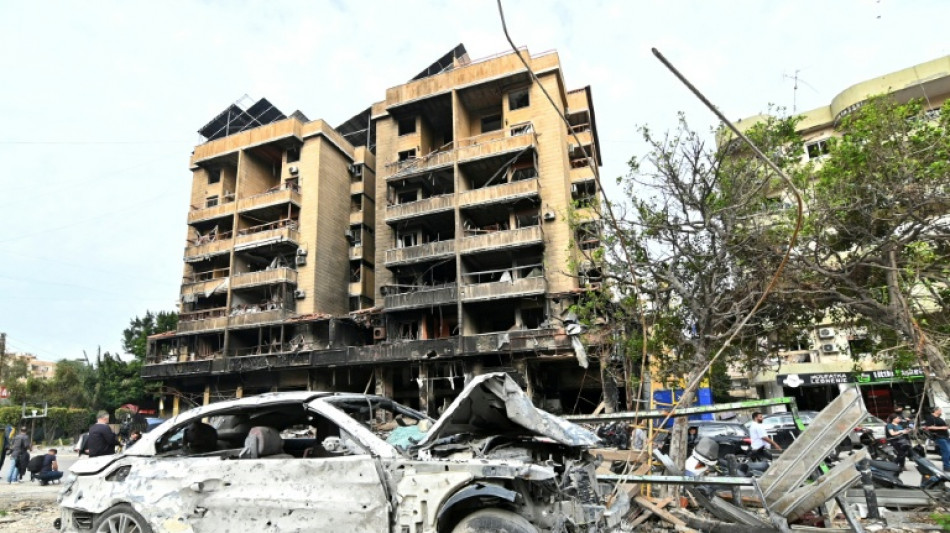
Destruction, hope in south Beirut as Lebanese return home / Photo: © AFP

 Crew splashes down after 8-month mission on International Space Station

 Protests, clashes as S. African anti-migrant tensions reignite
 Russian data centre hit by drone in first for Ukraine war

 'Fighting for our future': France high school students vow no let-up

 Kyiv entering 'survival' mode amid Russian strikes surge: mayor tells AFP

 Verdict due in Mexico trial over murders of Australia, US surfers

 B2PRIME Welcomes Christina Barbash as Commercial Manager

 Russia forcing Kyiv into 'survival' mode before winter, mayor tells AFP

 Closing arguments begin in Maradona death trial

 UEFA president Ceferin to stand for re-election in 2027
 Nearly 300,000 Nepalis at flood risk: study

 Riyadh kindergarten hit by interception debris as Houthis say targeted airport
 Alex Bodi mizează, alături de CRIF, pe investiții transparente și pe prevenirea riguroasă a spălării banilor

 Gulf Labs, Part of Thailand’s $27 Billion GULF Group, Goes Live as an Injective Validator

 EU okay for winter despite 'historically low' gas stocks: operators

 Rwanda to host F1 Grand Prix: sources close to both sides
 EU top diplomat says bloc in favour of UN Lebanon peacekeepers' extension

 Antonelli and Russell to run different Mercedes aero packages in Singapore

 WTO hikes 2026 trade growth forecast on AI boom

 'I love that challenge': Hamilton prays for rain in Singapore

 G.Bissau moves towards postponement of December general election

 Verstappen out to settle 'unfinished business' at Singapore Grand Prix
 WhiteBIT Launches Bitcoin Lightning Network Support, Powered by Voltage

 Oil surges, stocks sink as US reportedly eyes fresh Iran strikes
 Anne Carson: modern takes on Greek classics
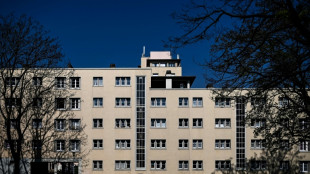
In cars and on motorbikes, people trickled back into Beirut's southern suburbs Friday, passing bombed-out buildings to check on homes and loved ones after a ceasefire began between Israel and Hezbollah.
"We'd been on the street going from place to place because there was no space in the shelters," said Insaf Ezzedine, 42, who had fled the area's Hay al-Sellom neighbourhood.
AFP spoke to Ezzedine and others on the sidelines of a media tour organised by Hezbollah in several areas of the southern suburbs -- a stronghold of the group, where journalists' freedom of movement was restricted.
The damage in parts of the suburbs caused by Israeli attacks since March 2 is enormous.
"The strikes were very strong and the houses were damaged and shaken up -- all the buildings are old in Hay al-Sellom," Ezzedine said, as her young daughter clutched a doll on the back of their motorbike.
"We hope the war will stop and we'll all go back to our homes and live in peace. We want to live with our kids in safety," she said.
"We're heading to my brother's home because ours was badly damaged."
On one main road, a huge pile of concrete rubble was littered with items including solar panels and water tanks. Shopfronts opposite had blown-out metal doors and shattered glass.
Families surveyed the destruction as they passed, some with belongings packed into their cars, and an occasional Hezbollah supporter flying the group's yellow flag drove by.
- 'For the kids' sake' -
Elsewhere, as blue-uniformed cleaners swept a street strewn with debris, Samia Lawand, 75, was in a car with her daughter and grandchildren.
"We came to check on the house and to get a few things and found the place was damaged... now we're leaving again," she said, sitting in the front passenger seat.
"The glass is shattered and everything is everywhere -- you can't stay there," said her daughter Mariam, 42.
On one major thoroughfare, the side of a building was blown off, exposing rooms with office furniture and even a dentist's chair.
Elsewhere, opposite a bombed-out building with a blackened facade, mangled cars could be seen near a portrait of Hezbollah chief Naim Qassem.
Close to an overpass, Hassan Hanoud, 34, said he was heading home with his children, wife and mother after fleeing to central Beirut.
"We left for the kids' sake," he said, a young child in his lap.
"The last time we went back, the doors and windows were broken," said Hanoud.
Now "the kids want to go home", he added, a young girl sitting behind him holding a plush toy.
In the Tahouitet al-Ghadir area, an AFP correspondent saw people gradually returning as shopkeepers cleared away debris or reopened stores.
Residents hugged and cried, happy to see their loved ones again.
- 'Fear and hope' -
"I came back at midnight as soon as the ceasefire began," said Mustafa, 65, who owns a garage and spent most of the war "going from tent to tent" near the Beirut seafront.
"There's no better feeling than coming back to your area and your people," he added.
Elsewhere in the southern suburbs, retired soldier Ezzedine Shahrour, 76, from south Lebanon's Kfar Hammam, was wearing a black suit and carrying bread and other groceries.
"I've been telling my children to take us home, but they say they can't because the situation is still dangerous," he said.
"There's fear and hope" after the ceasefire, said Shahrour, who has a son in the army and another in the security forces.
"We left in our pyjamas. We don't know how we got out. We don't know what's happened to the house," he said.
"We're happy (about the ceasefire), but we've paid a high price. Our homes were badly damaged. We've lost a lot... I feel like crying.
"Thank God we're still fine, but what about all the people who died under the rubble?" he asked.
K.Brown--BTB