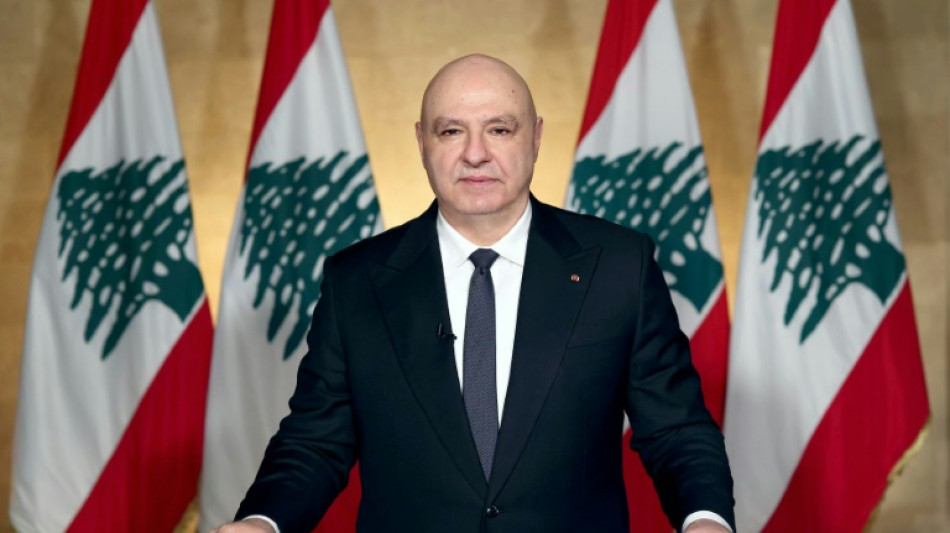
Lebanon president says working on 'permanent agreements' after Israel truce / Photo: © Lebanese Presidency/AFP

 Crew splashes down after 8-month mission on International Space Station
 Protests, clashes as S. African anti-migrant tensions reignite
 Russian data centre hit by drone in first for Ukraine war
 'Fighting for our future': France high school students vow no let-up
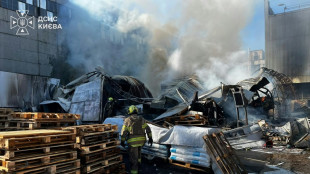 Kyiv entering 'survival' mode amid Russian strikes surge: mayor tells AFP
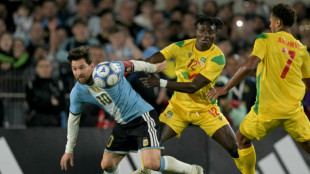
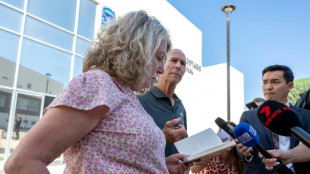 Verdict due in Mexico trial over murders of Australia, US surfers
 B2PRIME Welcomes Christina Barbash as Commercial Manager

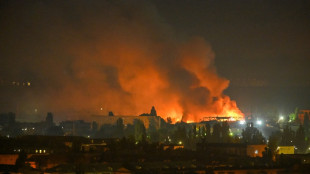 Russia forcing Kyiv into 'survival' mode before winter, mayor tells AFP
 Closing arguments begin in Maradona death trial
 UEFA president Ceferin to stand for re-election in 2027
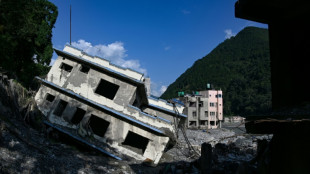 Nearly 300,000 Nepalis at flood risk: study
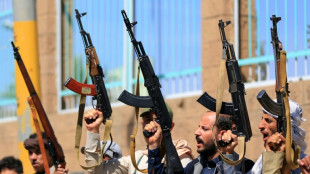 Riyadh kindergarten hit by interception debris as Houthis say targeted airport
 Alex Bodi mizează, alături de CRIF, pe investiții transparente și pe prevenirea riguroasă a spălării banilor

 Gulf Labs, Part of Thailand’s $27 Billion GULF Group, Goes Live as an Injective Validator

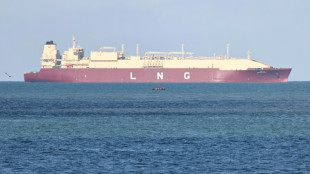 EU okay for winter despite 'historically low' gas stocks: operators
 Rwanda to host F1 Grand Prix: sources close to both sides
 EU top diplomat says bloc in favour of UN Lebanon peacekeepers' extension
 Antonelli and Russell to run different Mercedes aero packages in Singapore

 WTO hikes 2026 trade growth forecast on AI boom

 'I love that challenge': Hamilton prays for rain in Singapore
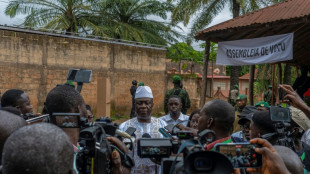 G.Bissau moves towards postponement of December general election

 Verstappen out to settle 'unfinished business' at Singapore Grand Prix
 WhiteBIT Launches Bitcoin Lightning Network Support, Powered by Voltage

 Oil surges, stocks sink as US reportedly eyes fresh Iran strikes
 Anne Carson: modern takes on Greek classics
Lebanese President Joseph Aoun said on Friday that his country was on the verge of a "new phase" of "permanent agreements", after the 10-day ceasefire in the Israel-Hezbollah war went into force.
In a speech addressing the Lebanese people and hinting at the Iran-backed Hezbollah militant group the day after US President Donald Trump announced the truce, Aoun said that his country was no longer "an arena for anyone's wars".
Lebanon was drawn into the Middle East conflict on March 2 when Tehran-backed Hezbollah attacked Israel to avenge the death of Iranian supreme leader Ali Khamenei.
Israel responded by firing waves of strikes on Lebanon and launching a ground offensive, killing nearly 2,300 people and displacing more than a million.
"Now, we all stand before a new phase," Aoun said in his first speech to the nation since the truce.
"It is the phase of transition from working on a ceasefire to working on permanent agreements that preserve the rights of our people, the unity of our land, and the sovereignty of our nation."
He said the Lebanese government had "reclaimed Lebanon and Lebanon's decision-making power for the first time" in nearly half a century.
"Today, we negotiate for ourselves... we are no longer a pawn in anyone's game, nor an arena for anyone's wars, and we never will be again," he said.
Since Aoun and Prime Minister Nawaf Salam were sworn in last year, Beirut took several unprecedented decisions against Hezbollah, including a commitment to disarm the group in August after a November 2024 ceasefire sought to end its previous conflict with Israel.
It also banned the group's military acitivites after the start of the most recent war last month.
Hezbollah is the only group to have kept its weapons after the 1975-1990 civil war citing "resistance" against Israel, despite the latter's withdrawal from the country in 2000.
In a country mired by sectarian and political divisions, the Shia group's arms have repeatedly caused internal crises.
- 'Not a concession' -
The president thanked "all those who contributed to achieving the ceasefire", including Saudi Arabia and Trump, who announced the truce on Thursday.
Trump later said he expected Aoun and Israeli Prime Minister Benjamin Netanyahu to visit the White House "over the next four or five days".
The ceasefire came days after Lebanon and Israel's ambassadors to the US held a meeting in Washington, the first direct meeting between the two countries in decades, as they have technically been at war since 1948.
Negotiations with Israel is a divisive topic in Lebanon, with some seeing it as a way to end decades of recurring conflicts, while others including Hezbollah and its supporters reject it.
Direct talks with Israel were "not a sign of weakness nor a concession... negotiations do not mean, and will never mean, giving up any right, conceding any principle, or compromising the sovereignty of this nation," Aoun added in his speech.
On May 17, 1983, Lebanon and Israel signed an agreement on the withdrawal of Israeli forces from Lebanon after four-and-a-half months of direct talks with US participation.
The deal was scrapped less than a year later, in March 1984, under pressure from Syria and its allies in Lebanon.
After the 2024 war, Lebanese and Israeli civilian representatives met within the framework of a ceasefire monitoring committee.
The two sides also concluded an agreement in 2022 to demarcate their maritime border, brokered by Washington without direct communication.
"I hereby affirm... that there will be no agreement that infringes upon our national rights," Aoun said.
"Our goal is clear: to stop the Israeli aggression against our land and our people, to achieve Israeli withdrawal, to extend the authority of the state over all its territory by its own forces exclusively, and to ensure the return of the prisoners and the return of our people to their homes and villages."
P.Anderson--BTB