Germany halves 2026 growth forecast on Iran war fallout / Photo: © AFP/File

 Verdict due in Mexico trial over murders of Australia, US surfers
 B2PRIME Welcomes Christina Barbash as Commercial Manager

 Russia forcing Kyiv into 'survival' mode before winter, mayor tells AFP

 Closing arguments begin in Maradona death trial
 UEFA president Ceferin to stand for re-election in 2027

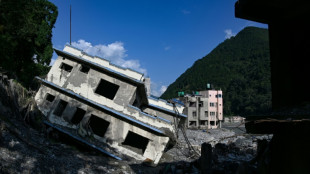 Nearly 300,000 Nepalis at flood risk: study
 Riyadh kindergarten hit by interception debris as Houthis say targeted airport
 Alex Bodi mizează, alături de CRIF, pe investiții transparente și pe prevenirea riguroasă a spălării banilor
 Gulf Labs, Part of Thailand’s $27 Billion GULF Group, Goes Live as an Injective Validator
 EU okay for winter despite 'historically low' gas stocks: operators
 Rwanda to host F1 Grand Prix: sources close to both sides

 EU top diplomat says bloc in favour of UN Lebanon peacekeepers' extension

 Antonelli and Russell to run different Mercedes aero packages in Singapore

 WTO hikes 2026 trade growth forecast on AI boom
 'I love that challenge': Hamilton prays for rain in Singapore

 G.Bissau moves towards postponement of December general election
 Verstappen out to settle 'unfinished business' at Singapore Grand Prix
 WhiteBIT Launches Bitcoin Lightning Network Support, Powered by Voltage

 Oil surges, stocks sink as US reportedly eyes fresh Iran strikes
 Anne Carson: modern takes on Greek classics
 Canada's Anne Carson wins Nobel literature prize
 Ethiopia drones hit Eritrean troops in Tigray
 Russian strike on buses kills 30 in frontline Ukrainian city
 Thailand begins extradition process against Chinese journalist

 Quarantine, unease and rumours: Russian city grapples with plague scare

The German government on Wednesday halved its growth forecast for this year as the energy shock triggered by the Middle East war hammers Europe's biggest economy.
The economy ministry said it expected gross domestic product (GDP) to expand 0.5 percent in 2026, down from a projection of one percent made in January.
It also cut its forecast for 2027 to 0.9 percent, down from 1.3 percent.
Hopes had been high that the eurozone's traditional growth engine would sputter back to life in 2026 after years of stagnation, driven by Chancellor Friedrich Merz's public spending blitz.
But the jump in oil and gas prices since the start of the US-Israeli war on Iran has dealt the economy a heavy blow, pushing up overall inflation and raising costs for the country's crucial manufacturers.
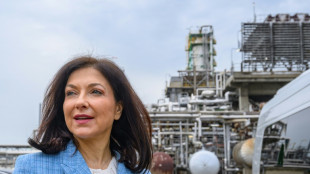
Presenting the new forecasts, Economy Minister Katherina Reiche said that before the conflict, there had been signs of of a moderate recovery.
"But the escalation in the Middle East has set us back economically," she told a press conference. "The shock has hit the structurally weakened German economy hard once again."
Higher energy costs, as well as the higher cost of borrowing on international markets since the outbreak of the conflict in February, were weighing heavily, she said.
The downgraded forecasts follow a similar move by leading economic institutes in early April, which are now forecasting just 0.6 percent growth this year.
Before the Iran war, the economy was just getting back on its feet after the energy shock triggered by the Ukraine war and last year's US tariff blitz.
The renewed surge in energy prices is a particular burden for Germany's heavy industry, in sectors ranging from steel to chemicals, which was also struggling with weak demand in export markets and fierce Chinese competition.
Knock-on effects, like supply chain snarls that are delaying delivery of vital base products, are weighing on industry, while consumers are facing higher costs, especially at the petrol pump.
Inflation jumped to 2.7 percent in March, its highest level in over two years.
- Investor morale plunges -
Surveys highlight the darkening picture.
A poll this week showed that German investor morale hit its lowest level in April since late 2022, when the country was battling the fallout from Russia's full-scale invasion of Ukraine.
The government is scrambling to respond. As well as the relief on fuel prices, Merz has announced that businesses can pay workers a tax-free bonus of up to 1,000 euros ($1,170).
Still, many economists and business groups have criticised the measures as ill conceived, saying they are not properly targeted at needy groups.
They are calling on the government to instead focus on pushing through deep reforms to areas like healthcare, pensions and bureaucracy that they argue can help spur growth in the long term.
"You cannot cushion a shock like this with tax money or bonus payments," Peter Leibinger, president of the Federation of German Industries (BDI), said this week.
"The state cannot insure citizens and companies against every external crisis," he said. "The only insurance is growth-oriented policies that enable investment."
Businesses have meanwhile become increasingly frustrated with Merz's coalition.
The chancellor, who took power in May last year, promised to revive the economy through huge public outlays on defence and infrastructure and a barrage of reforms.
But the spending has moved slowly and structural overhauls have made little headway, bogged down by lengthy talks between his centre-right CDU party and its coalition partners, the centre-left SPD.
The coalition is promising to push through an ambitious programme before parliament's summer recess, though critics doubt what can realistically be achieved so quickly.
M.Odermatt--BTB