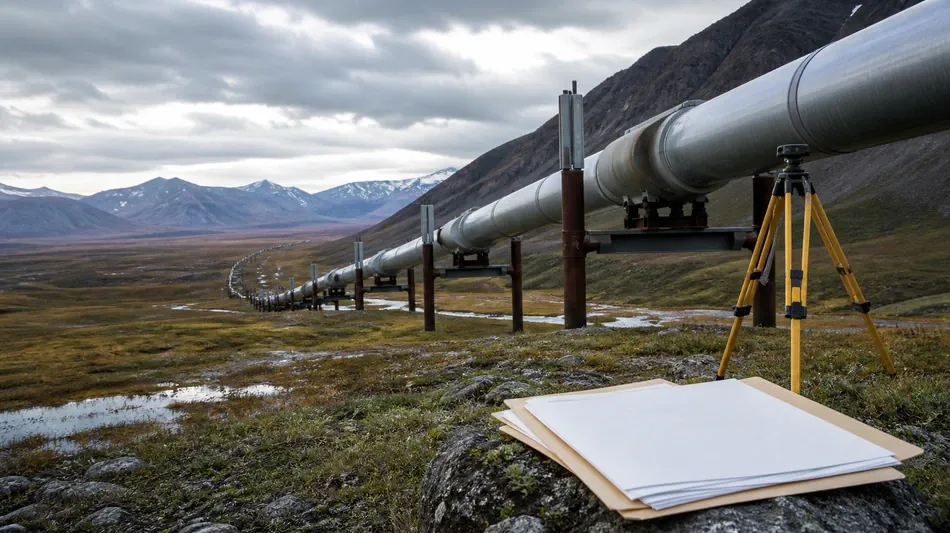
US Accelerates Review for 30-Year Trans-Alaska Pipeline Renewal

 Rain frustrates England's bid for Pakistan series win
 Rafael Leao leaving AC Milan for Galatasaray

 Bhim Army Protesters and Police Scuffle During Patna BPSC March

 BJP Leadership Reviews Youth Outreach and Seven State Elections

 Omitted Social Justice Figures Trigger Dispute Over Tamil Nadu Policy Note

 Suspect Arrested in Manipur After Body Found on Tamil Nadu Express

 Celebrities Share Late-Summer Photos in August Gallery

 Judge Grants Brittany Cartwright Temporary Restraining Order Against Jax Taylor

 Freedom 250 Winner Kirkwood Jokes Against IndyCar Return to Washington

 Police Report Details Famous Dex Domestic Battery Allegations

 Jerusalem Police Operation Uncovers Second Temple-Era Burial Cave

 Sabalenka Defends Basketball-Inspired Nike Kit at US Open

 Trump Call Briefly Interrupts Nvidia Company Meeting

 Running a Local Language Model Offers Privacy With Hardware Trade-Offs

 KFF Journalists Address Measles, Vaccines, Food Recalls and Health Policy

 RoboSense Robotics Revenue Expands as New Sensor and Joint Products Near Production

 Nepal Flood Zone Faces New Threat From Landslide-Formed Lakes
 Sunwoda First-Half Revenue Reaches Record as Battery Shipments Accelerate

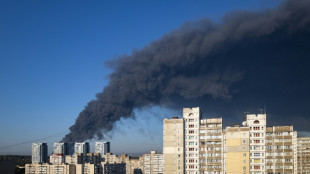
 Russian Strike in Kyiv Region Kills at Least 27 and Forces Evacuations

 Opinion Debate Revisits Privilege and the Meaning of Noblesse Oblige
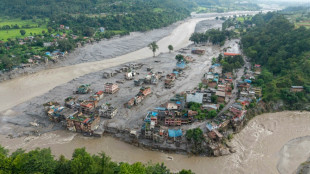 Nepalis cling to hope for missing, three days after disaster
 Norway mourns passing of King Harald as son King Haakon VIII ascends throne
 Norris extends McLaren stay until 2030

 Vijay Orders More Rehabilitation Opportunities During Puzhal Prison Visit

 US Cancels Taif Sami Mohammed's Visa and Adds Her to Watchlist

The Bureau of Land Management shortened public consultation to 15 days for a proposed 30-year renewal of the Trans-Alaska Pipeline System right-of-way.
The Trump administration is accelerating an environmental review that could authorize the 800-mile Trans-Alaska Pipeline System for another 30 years. The proposal covers the pipeline, pump stations, access roads, bridges and a fuel-gas line within the federal right-of-way.
The Bureau of Land Management reduced the public-comment period to 15 days. Federal consultations commonly last 30 to 60 days or longer depending on complexity. The right-of-way was not due for renewal until 2034, which would have been its third renewal since 1974.
BLM Alaska director Kevin Pendergast said the agency was acting early to secure the pipeline while the administration seeks to expand energy development in the National Petroleum Reserve in Alaska and the Arctic National Wildlife Refuge coastal plain. The agency’s Alaska office did not separately answer a request for comment.
The system has carried oil from the North Slope to the Valdez Marine Terminal since 1977. The source report stated that it had transported more than 19 million barrels over that period, while BLM said average daily throughput in 2025 was 463,000 barrels.
Public Employees for Environmental Responsibility said the early process appeared designed to avoid fuller consideration of economic and ecological concerns. Two owners, ConocoPhillips and ExxonMobil, each gave $1 million to Trump’s inaugural fund, federal records show. Harvest Alaska is also an owner.
The review follows Trump’s Jan. 20, 2025, executive order titled “Unleashing Alaska’s Extraordinary Resource Potential,” which directed agencies to increase fossil-fuel development on federal and state land and speed project permits. Congress approved construction of the pipeline on Nov. 16, 1973, shortly after the Arab oil embargo was announced.
Comments were due through the BLM planning website or by email by Sept. 10 at 10 p.m. Alaska time, 11 p.m. Pacific time, or Sept. 11 at 2 a.m. Eastern time.
Environmental and social concerns accompanied the project from its opening, including effects on caribou habitat, permafrost and tribal practices. In 1977, White House science adviser Frank Press warned President Jimmy Carter that rising carbon-dioxide levels could alter the climate. Press projected concentrations would reach 1.5 times the preindustrial level by 2037, but the 420-parts-per-million threshold arrived 14 years earlier.
Alaska is warming two to three times faster than the global average, according to federal data. Since 1971, average annual temperatures have increased by between 2.2 degrees Fahrenheit in central Southeast Alaska and 6 degrees on the North Slope. The changes are melting permafrost and reducing sea and river ice. Glaciers are now losing ice at twice the rate recorded from 1960 through 2004.
Cooper Freeman of the Center for Biological Diversity said oil carried by the pipeline has contributed to climate disruption affecting salmon, caribou and communities. He called for a thorough and public review rather than an expedited authorization extending operations for three decades.
P.Anderson--BTB