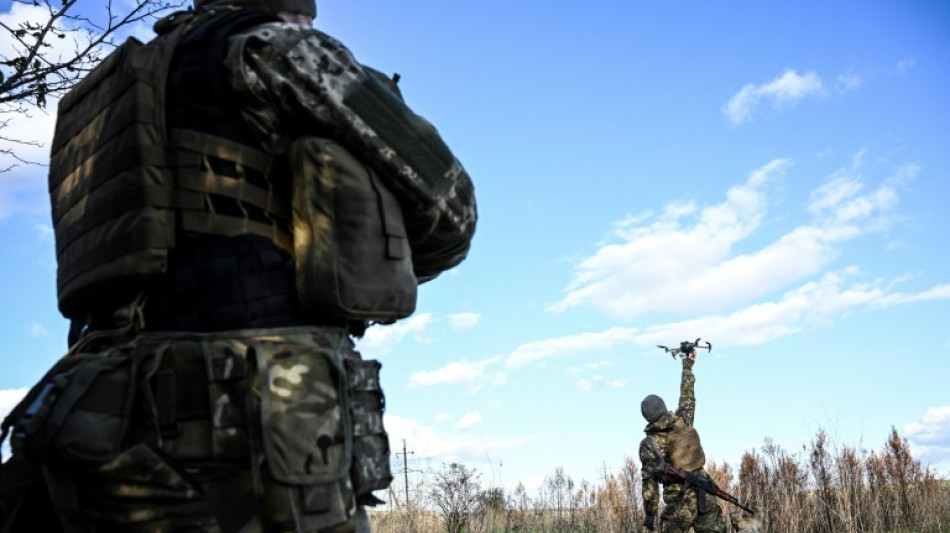
Ukrainian geeks turned guerrillas make frontline drones / Photo: © AFP

 How we might hear new Dolly Parton music in the future
 Nvidia doubles revenue, forecasts even more AI spending

 Canada renews push to boycott US products

 Savio scores on debut as Spurs set-up League Cup tie with Liverpool

 Brazil sues Discord over child safety measures, demands $100 mln in damages

 Alberta NDP Urges Smith to Postpone Separation Vote Amid Trade War

 Fenerbahce stun Lyon in Champions League as AEK crush Levski

 Why Global Finance Still Relies on Wall Street Despite Diversification Trends

 Bethlehem Father Seeks Aid for Special Needs Children Amid Health Crisis

 LIV Golf to lay off majority of staff

 How narwhal 'scientists' track Arctic warming

 Iran says US sanctions will achieve nothing

 Essential Dolly: five key Parton songs

 Veteran promoter Warren says it's Joshua's job to agree Fury fight

 Ex-champ Wawrinka gets last-minute wildcard to US Open

 Brennan blasts to Vuelta stage five victory, Pogacar holds lead
 What could change for US teens on Instagram and Facebook
 Meta, US states agree $16.7 bn settlement in landmark teen safety case
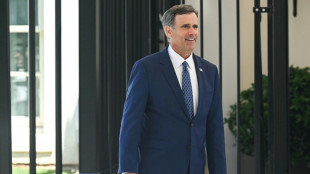
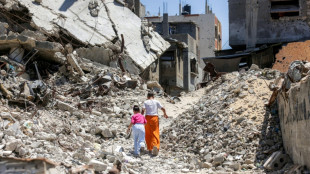 'Point of no return' if Israel-Hamas truce fails: US envoy to Gaza board

 Barcelona holding out hope for Alvarez as Atletico resist sale

 Werro basks in new status, shelves world record talk

 Bill Gates warns world unprepared for AI upheaval

 Prince Harry and family arrive back in Britain: UK media

 German plan for sugar tax on Coke Zero fizzles out

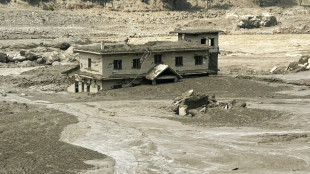 Deadly flood hits Nepal-Tibet border, hundreds unaccounted for

For young Ukrainian geeks, making drones -- for reconnaissance or destruction -- in a house basement near the Donbas frontline is "new generation" guerrilla warfare.
In dim light, the 20-somethings busily piece together electronic components spread out on tables, with the help of laptops and documents, while artillery fire thuds in the background.
Next the repair room next door -– a laundry room before the war -- drones are patched up using spare parts taken from aircraft damaged "in battle" against the Russians.
In the garden shed meanwhile, a 19-year-old, whose nom de guerre is Varnak, transforms grenades designed for grenade launchers into bombs to be dropped from drones.
You just add fins to them and change the detonation system, he tells AFP, smiling.
"I manage explosives here in my section... We work on grenades and create homemade explosive objects", says the young man, who joined the unit after responding to an announcement on Twitter.
He inscribes personalised messages for the enemy on the miniature bombs, including "Victory -- and happy birthday!" and "People who live without freedom have bad taste".
In the house garage, a platform covered with electronics is mounted on four wheels where the team puts finishing touches to a kamikaze drone able to carry an anti-tank mine, or any other type of explosive.
A heavy machine gun waits meanwhile in the corner to be transformed into a robotic firing station.
- 'Volunteers' -
Aktor ("Actor" in Ukrainian) was a student at the Igor Sikorsky Technical University in Kyiv when Russia launched its invasion in February. Today, he wears a uniform and works on "robotics" to perfect kamikaze drones.
For him, these technologies can make a difference in the conflict in Ukraine "because the current war ... is a new generation war".
"It is no longer people with weapons who wage war but robotic vehicles, with a very high technical level", says the 22-year-old.
"Why should one soldier shoot another when you have a robot that can deliver a ton of explosives to an ammunition dump?" he asks.
The group's founder and leader, Zmiy ("Snake" in Ukrainian), is a bearded veteran of the conflict that began in 2014 in the Donbas, eastern Ukraine.
Zmiy, who wears rimmed glasses and a baseball cap decorated with a US flag, says the group comprises about 40 men and women.
Its core team are veterans like him.
"All the others who build and invent devices joined us via Twitter. They are volunteers," he tells AFP.
A short distance from their base and less than two kilometres (1.2 miles) from the Russian lines, Mikho the navigator and 11 the pilot prepare a drone for a bomb drop on Russian positions.
Amid constant artillery exchanges, the two men attached a bomb under the drone, a US-made model commercially available for around 3,000 euros ($2,900).
Guided by Mikho, 11 observes the Russian positions on his screen. Then he releases the bomb, which falls vertically and crashes down, exploding in a cloud of smoke.
Immediately, the Russian soldiers' assault rifles crackle. The Russians try to destroy the device, which hovers about 300 metres (984 feet) above them. But the drone return to the Ukrainian side unscathed.
O.Lorenz--BTB