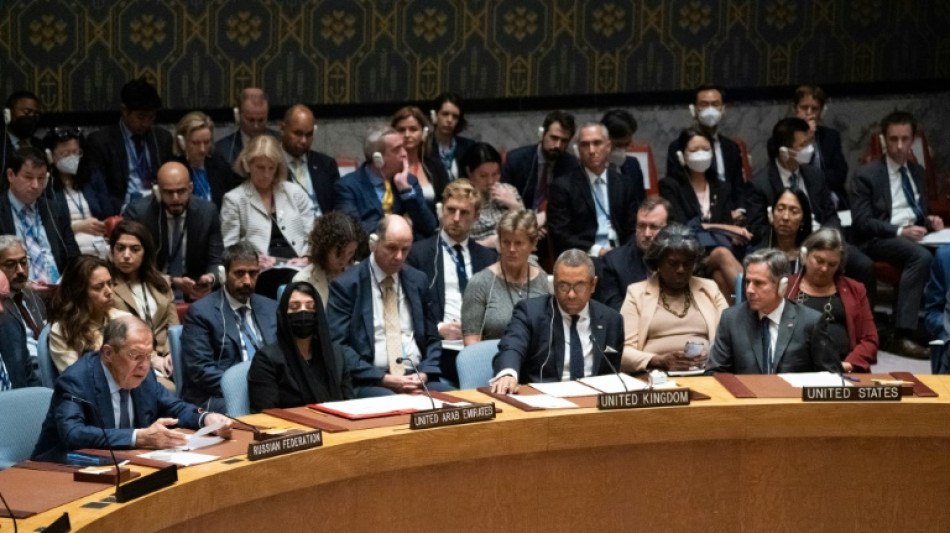
Biden jumpstarts UN reform push but prospects remain low / Photo: © AFP/File

 How we might hear new Dolly Parton music in the future
 Nvidia doubles revenue, forecasts even more AI spending
 Canada renews push to boycott US products
 Savio scores on debut as Spurs set-up League Cup tie with Liverpool

 Brazil sues Discord over child safety measures, demands $100 mln in damages
 Alberta NDP Urges Smith to Postpone Separation Vote Amid Trade War
 Fenerbahce stun Lyon in Champions League as AEK crush Levski

 Why Global Finance Still Relies on Wall Street Despite Diversification Trends
 Bethlehem Father Seeks Aid for Special Needs Children Amid Health Crisis
 LIV Golf to lay off majority of staff
 How narwhal 'scientists' track Arctic warming
 Iran says US sanctions will achieve nothing

 Essential Dolly: five key Parton songs

 Veteran promoter Warren says it's Joshua's job to agree Fury fight
 Ex-champ Wawrinka gets last-minute wildcard to US Open
 Brennan blasts to Vuelta stage five victory, Pogacar holds lead

 What could change for US teens on Instagram and Facebook
 Meta, US states agree $16.7 bn settlement in landmark teen safety case
 'Point of no return' if Israel-Hamas truce fails: US envoy to Gaza board

 Barcelona holding out hope for Alvarez as Atletico resist sale

 Werro basks in new status, shelves world record talk
 Bill Gates warns world unprepared for AI upheaval
 Prince Harry and family arrive back in Britain: UK media

 German plan for sugar tax on Coke Zero fizzles out

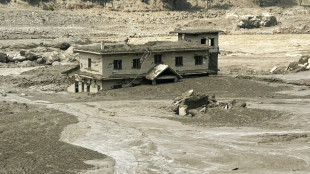 Deadly flood hits Nepal-Tibet border, hundreds unaccounted for

With his call to expand the UN Security Council, US President Joe Biden has injected momentum into decades of stagnant talk of reform but it remains far from certain whether this time change will happen.
The annual UN General Assembly summit, which ended Monday, saw familiar speeches from the developing world on the purported injustice of the 15-member Security Council, where five nations considered victors in World War II -- Britain, China, France, Russia and the United States -- wield veto power.
But this time the reform pleas were joined by Western nations that have been exasperated by Russia, in recent years the most enthusiastic user of the veto, which it can use to block any Security Council action over its invasion of Ukraine.
Biden in his speech said all Security Council members should use the veto only in "rare, extraordinary situations" and called for an expansion of seats.
He backed permanent seats for Africa and Latin America and reiterated past US support for the bids of Japan and India.
"The time has come for this institution to become more inclusive so that it can better respond to the needs of today's world," Biden said.
A senior US official said Biden's intervention "underscores the seriousness" of the United States but acknowledged it would not be an immediate process.
"This was never going to be a diktat or a fait accompli. The idea has always been to hear ideas and to compare notes," the official said, declining to say whether the United States would support veto power for new permanent members.
- Pressure on US to deliver -
Richard Gowan, who follows the United Nations for the International Crisis Group, said that US officials know they need to show some headway before the next General Assembly in September 2023.
"Otherwise Biden will face accusations of having floated the idea unseriously," Gowan said.
"That said, I don't think the US has a clear model for reforms in mind, or a very detailed game plan about what to do next," he said.
Gowan said Biden was responding to growing unease about the Security Council, where diplomats were reading pre-written generalities in a session just as Russia attacked Ukraine.
"I think the US had a simple choice. It could ignore the topic, defend its privileges as a veto power and face accusations of implicitly siding with Russia to defend a very flawed system," Gowan said.
"Or it could get out ahead of other UN members and position itself as a potential leader on reform. It was far smarter to take this second course, as Biden did."
The closest the United Nations had come to reform was in 2005 when Brazil, Germany, India and Japan launched a joint bid for permanent seats.
China adamantly opposed a seat for Japan, a rival East Asian power and US ally, and the other three faced varying degrees of displeasure from neighboring countries.
The United States saw little urgency for UN reform under then president George W. Bush, who bypassed the Security Council to invade Iraq -- a fact constantly cited by Russia when asked about high-minded US talk about the world body.
- Russia sees a right -
Russian Foreign Minister Sergei Lavrov on Saturday said India and Brazil were "strong candidates" for Security Council expansion.
Western diplomats saw the stance as a bid to sow divisions between the two developing powers and Germany and Japan, which have strongly opposed Russia's invasion of Ukraine.
William Pomeranz, director of the Kennan Institute at the Woodrow Wilson International Center for Scholars, doubted Russia would ever green-light reform in which its veto is diluted.
"They believe this is what they fought for in World War II and what they rightfully won," with the right to veto anything against Russian interests, Pomeranz said.
As President Vladimir Putin "has made sovereignty and Russia's existence as a great power one of his leading causes, I do not anticipate that Russia will be willing to go along with any reform of the UN Security Council," he said.
India's foreign minister, Subrahmanyam Jaishankar, said UN reform efforts needed to proceed "sincerely" and not be blocked by procedural tactics.
There is "widespread recognition that the current architecture is anachronistic and ineffective," Jaishankar said.
"It is also perceived as deeply unfair, denying entire continents and regions a voice in a forum that deliberates their future."
N.Fournier--BTB