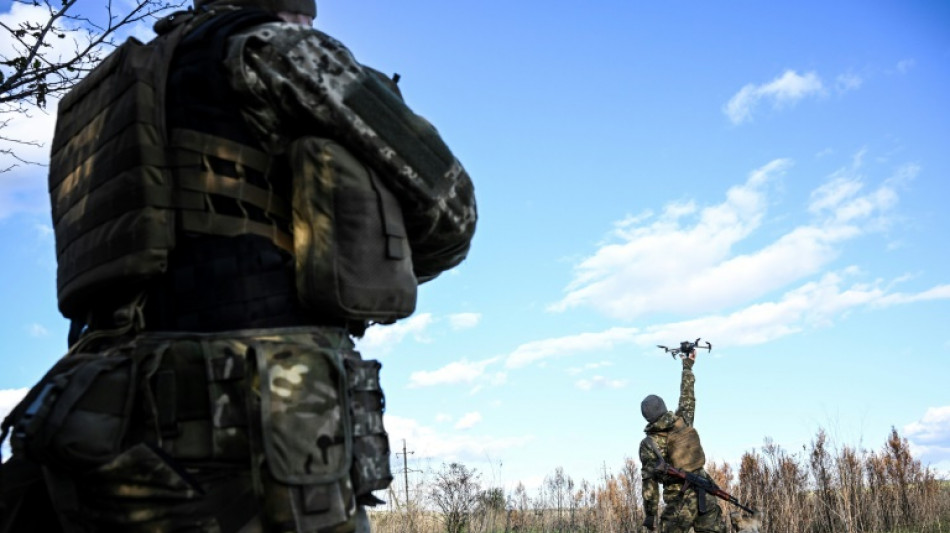
Iranian drones bring back fear for Ukrainians / Photo: © AFP

 How we might hear new Dolly Parton music in the future
 Nvidia doubles revenue, forecasts even more AI spending

 Canada renews push to boycott US products

 Savio scores on debut as Spurs set-up League Cup tie with Liverpool

 Brazil sues Discord over child safety measures, demands $100 mln in damages

 Alberta NDP Urges Smith to Postpone Separation Vote Amid Trade War

 Fenerbahce stun Lyon in Champions League as AEK crush Levski

 Why Global Finance Still Relies on Wall Street Despite Diversification Trends

 Bethlehem Father Seeks Aid for Special Needs Children Amid Health Crisis

 LIV Golf to lay off majority of staff

 How narwhal 'scientists' track Arctic warming

 Iran says US sanctions will achieve nothing

 Essential Dolly: five key Parton songs

 Veteran promoter Warren says it's Joshua's job to agree Fury fight

 Ex-champ Wawrinka gets last-minute wildcard to US Open

 Brennan blasts to Vuelta stage five victory, Pogacar holds lead

 What could change for US teens on Instagram and Facebook
 Meta, US states agree $16.7 bn settlement in landmark teen safety case

 'Point of no return' if Israel-Hamas truce fails: US envoy to Gaza board

 Barcelona holding out hope for Alvarez as Atletico resist sale

 Werro basks in new status, shelves world record talk

 Bill Gates warns world unprepared for AI upheaval

 Prince Harry and family arrive back in Britain: UK media

 German plan for sugar tax on Coke Zero fizzles out

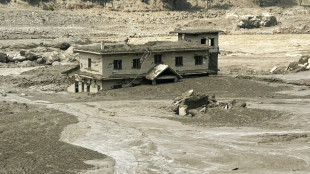 Deadly flood hits Nepal-Tibet border, hundreds unaccounted for

In Ukraine's port city of Odessa, residents have recently found themselves hiding not from the thunder of rocket attacks but from the whir of buzzing Iranian drones in the sky.
The machines have been playing an important role since Russia invaded seven months ago -- forming part of reconnaissance operations, missile firings or bomb drops.
Awakened with a start on Saturday morning by a roar from the sky, Maryna Kondratieva ran to hide in the cellar with her two young children, fearing the worst.
"I understand now that everything can change in five minutes," Kondratieva, who lives in a well-to-do part of the city and whose terrace overlooks the Black Sea, told AFP.
Odessa -- the 'capital' of the southwest and Ukraine's main port -- had seemed largely safe from Moscow, whose troops failed to take it at the beginning of the war.
The sandbags and other checkpoints that had blighted the old town have largely been removed and bombings became less frequent.
But an increasing number of drones taking to the sky has made city residents fear a return to darker days.
In a video filmed by Kondratieva's husband, shown to AFP, a drone continues its flight around their home, accompanied by the sound of heavy gunfire.
Kondratieva only recently returned to Ukraine from Cyprus after taking her five- and six-year olds to seek refuge with her in-laws.
The successful counter-offensive by Kyiv forces in the northeast, more sluggish in the south, had restored hope.
Hearing the "buzzing noise around the house" of the drone made her feel that the war had once again come extremely close to home.
- 'Low' effectiveness -
Since September 13, when Kyiv says it shot down its first Iranian drone, about "two dozen" have been spotted in southern Ukraine, military spokeswoman Nataliya Houmeniouk told AFP.
Half of them have been neutralised, she said.
Russia's drone industry has been hit by international sanctions and a number have been shot down since the start of the war -- prompting Moscow to import drones from Iran.
Iran's observation and attack machine the Mohajer-6 and its Shahed-136 ("Martyr-136") -- small kamikaze drones with a very long range of 2,500 kilometres -- were "likely" involved in Middle East attacks last summer including against an oil tanker in the Gulf of Oman, according to a note by the British defence ministry.
The Shahed are "very difficult to detect because they fly very low. But they make a lot of noise, like a chainsaw or a scooter", which means that they can be heard from afar, Houmeniouk said.
Although their effectiveness is "very low", they mainly put "psychological pressure on the population," she added.
"The Iranian defence industries tend to prioritise affordability over quality control, so typically their systems suffer a fairly high rate of failure as part of this trade off," Jeremy Binnie, an analyst at the British-based Janes defence intelligence group, told AFP.
The Shahed targets are also locked by GPS, and "these have a very long range, but relatively small warhead," he said.
Their impact will depend on the Russian military intelligence’s ability to work out the co-ordinates of suitable targets behind the frontlines, said Binnie -- something which is difficult to do without suitable reconnaissance aircraft.
For the time being at least, he said the Iranian drones won't have a major impact on the war.
- Feeling of dread -
For Ukraine's part, it has relied partly on the ingenuity of civilians, who have transformed quasi-toy drones into weapons of war.
The popular Turkish Bayraktar TB2 drones have also carried out strikes against the Russians -- gaining such domestic fame that a song was made about them on social media.
And Kyiv has also used American kamikaze machines, the Switchblades, whose on-board cameras show them crashing into an enemy taken by surprise.
But while the Russian drones might not be a major part of the war effort, their use has a significant psychological impact on war-weary Ukrainian civilians.
Former businesswoman Iryna Koroshenkaya moved to Odessa to find some semblance of tranquility.
Originally from Mykolaiv, two hours away -- where Russian strikes continue on a daily basis -- the 57-year-old says she was "thrown against a garage" by a bomb blast in April.
At dawn on Sunday, she heard an anti-aircraft alarm and two explosions, before seeing a drone from her balcony buzzing above a 23-storey building.
This was followed by another new explosion and a "big cloud of smoke," she recalled.
For Koroshenkaya, the drones are linked to a recurring feeling of "dread".
"What will happen next" she asked. "Will Odessa remain safe?"
O.Krause--BTB