Gunfire heard near Burkina Faso presidency: witnesses / Photo: © AFP

 Meta, US states agree $18 bn settlement in landmark teen safety case

 What scientists know so far about Nepal's deadly floods
 US general visits Colombia to discuss war on drugs

 Meta settlement puts social media industry on notice: 'There will be more'
 NFL owners approve record Seahawks sale
 Nigerian armed groups net nearly $6 mn in ransoms: study

 Savio scores on debut as Spurs advance in League Cup
 Mbappe hits treble as Real Madrid thrash Real Sociedad
 At Dollywood, superfans honor the late singer and local hero
 Stocks mixed as oil drops, US inflation stays high
 Bolivia's Paz appoints new economy minister amid bailout talks
 US designates UK-based Palestine Action as foreign 'terrorist group'
 'Rocky Horror Picture Show' star Tim Curry dead at 80
 American Moll wins women's pole vault at Zurich city event
 As Canada takes on US tariffs, what's behind the David and Goliath fight?
 UEFA 'likely' to drop threat to boycott FIFA tournaments: source
 US disrupts platforms allegedly used by Chinese hackers
 The foreign tourists missing in Nepal's flash floods

 Hundreds missing after Nepal-Tibet flood kills 98
 CIA director was on 'semi-routine' mission in Moscow: Trump
 Aldeguer switches to Rossi's VR46 for next season

 Rent TRON Energy and Reduce USDT Fees : TronBid Expands Marketplace

 Pakistan captain Babar Azam returns against England '90 percent fit'
 Stocks mixed as oil drops, inflation stays high
 Improving standards transform pole vault as spectacle, says Duplantis
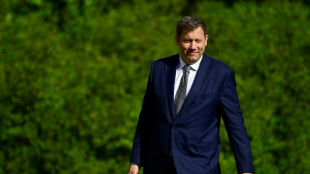
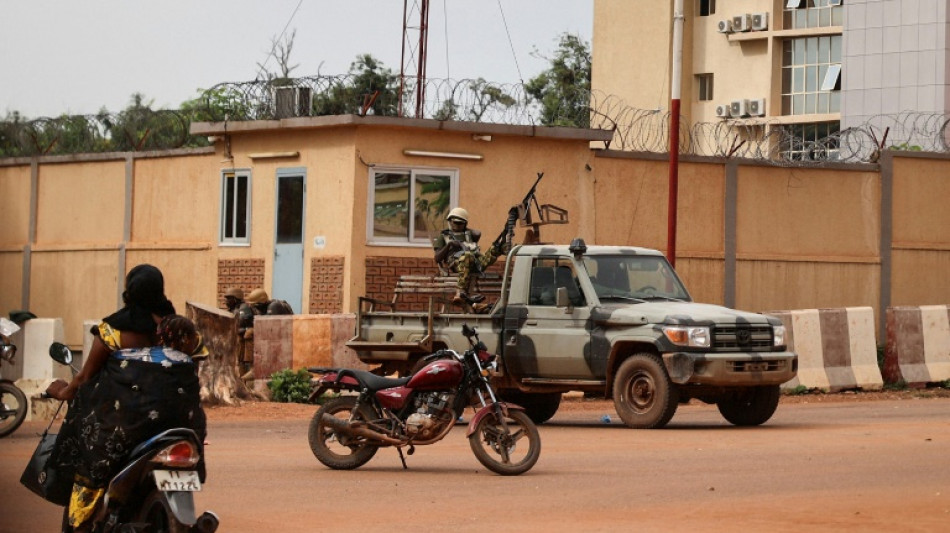
Shots rang out before dawn on Friday around Burkina Faso's presidential palace and headquarters of the military junta, which itself seized power in a coup last January, witnesses told AFP.
Troops blocked several main roads in the capital Ouagadougou, AFP journalists said, and state television was cut, broadcasting a blank screen for several hours saying: "no video signal".
"I heard heavy detonations around 4:30 am (0430 GMT) and now the roads around my home have been sealed off by military vehicles," said a resident who lives close to the presidential palace.
The reason for the gunfire was not immediately clear.
During the morning more shots were heard by an AFP cameraman in the Ouaga 2000 neighbourhood that houses both the presidential and military junta headquarters.
Soldiers patrolled the city's main crossroads, especially in Ouaga 2000 but also outside the state television centre, an AFP journalist said. The video signal was restored about 0915 GMT.
In Brussels, the EU voiced "concern" at events in the Burkina capital.
"A military movement was observed from 04:30 this morning. The situation still remains particularly confused," said spokeswoman Nabila Massrali.
- Rein in jihadists -
Violence has long wracked the landlocked west African country where Lieutenant-Colonel Paul-Henri Sandaogo Damiba took power in a January coup, ousting elected leader Roch Marc Christian Kabore and promising to rein in jihadists.
As in bordering countries, insurgents affiliated with Al-Qaeda and the Islamic State group have stoked the unrest.
Damiba earlier this month sacked his defence minister and assumed the role himself.
The mini-shuffle, the first since the appointment of a transitional government in March, saw only one new minister introduced -- Colonel-Major Silas Keita was named minister delegate in charge of national defence and promoted to brigadier general.
Thousands have died and about two million have been displaced by the fighting since 2015 when the insurgency spread into Burkina Faso, which has since become the epicentre of the violence across the Sahel.
Attacks have increased since the start of the year, despite the junta's vow to make security its top priority.
- Bloody September -
September has been particularly bloody.
On Monday, suspected jihadists attacked a convoy carrying supplies to the town of Djibo in the north of the country. The government said 11 soldiers were killed and around 50 civilians were missing.
Junta chief Damiba, who has pledged to restore civilian rule within two years and to defeat the armed factions.
On September 5 an improvised explosive device struck a supply convoy in the north killing 35 civilians dead and wounding 37.
Last June, 86 civilians died in a massacre at Seytenga, near the border with Niger.
More than 40 percent of Burkina Faso, a former French colony, is outside government control.
Much of the impoverished Sahel region is battling the insurgency.
Starting in northern Mali in 2012, the insurgents attacked neighbouring Burkina Faso and Niger in 2015. The violence has in recent years begun to spill over into coastal states Ivory Coast, Togo and Benin.
"The deteriorating security situation in Burkina Faso and Mali has made the north of the coastal countries the new front line against armed groups operating in the Sahel," the Konrad Adenauer Foundation, a German think tank, said in a report in April.
French forces supported Mali against insurgents for nearly a decade, but President Emmanuel Macron decided to pull out after falling out with the Malian junta in the wake of two military coups since 2020.
M.Ouellet--BTB