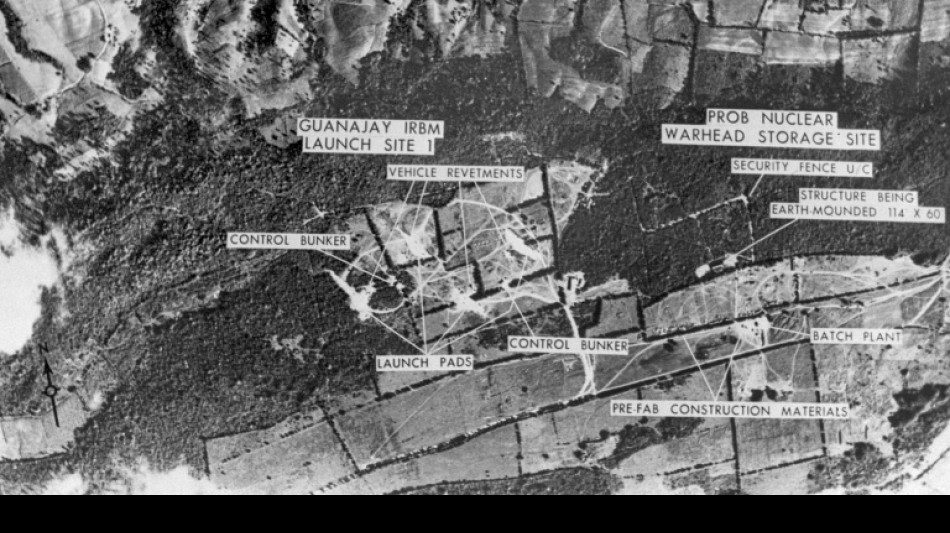
Cuban missile crisis: 13 days when nuclear war threatened / Photo: © HO/AFP/File

 Venezuelan Artist Oswaldo Vigas Retrospective Opens in Guangzhou

 Smith and Cox revive England against Pakistan after Abbas strikes

 Zambia opposition leader held in treason probe: police

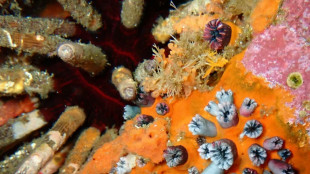 Corals show El Nino intensifying as planet warms: study
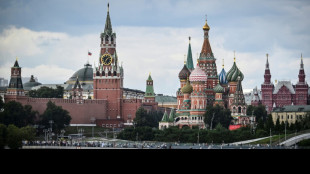 Russia dismisses as 'scare stories' US reports about attacking NATO

 UEFA target Infantino for 'criminal mismanagement', suspend boycott threat

 Piracy attacks off Somalia surge in 2026: AFP analysis of IMO data
 Tottenham land Marmoush from Manchester City
 YZi Labs Backs TermMax to Advance On-Chain Bond Market Infrastructure
 Nvidia boosts tech stocks but caution dominates ahead of Fed speech

 Pogacar holds off Mas to claim Vuelta stage six victory

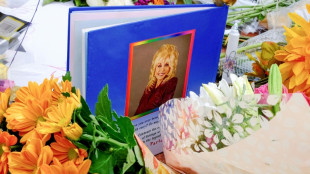 A lasting Dolly Parton legacy: childhood literacy

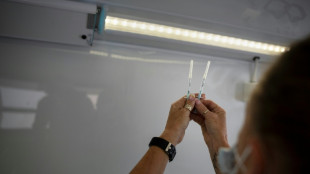 S.Africa sounds alarm as infant vaccinations plummet
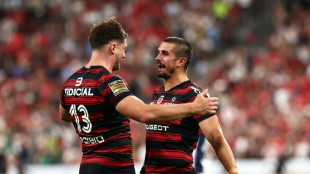 Toulouse have salary cap fine reduced on appeal

 Tech stocks lifted by Nvidia but caution dominates ahead of Fed speech
 'Smart cricketer' Dinusha helps Sri Lanka draw second India Test
 Zambia opposition leader surrenders to police: state media

 Alleged 9/11 mastermind to go on trial in June 2028
 Abbas's treble strike rocks England in second Test
 'Butcher of Bosnia' Ratko Mladic dead: Serbian state media

 New Zealand make three changes for second South Africa Test

 Stocktwits Expands CME Group Alliance with the Integration of Single Stock Futures Data

 'Mature' Colapinto extends contact with Alpine through 2027
 Atletico rule out any talks with Barcelona over Alvarez
 Tech stocks lifted by Nvidia as broader markets struggle
Sixty years ago the Cuban missile crisis brought the world to the brink of nuclear war.
Here is a look at how the standoff between the United States and the Soviet Union unfolded:
- Missiles deployed -
On May 21, 1962, Soviet leader Nikita Khrushchev decides to place medium- and intermediate-range nuclear missiles on the island of Cuba, Moscow's communist ally in the Caribbean.
He justifies the decision by the fact that Cold War rival the United States could deploy nuclear weapons from NATO member Turkey, which bordered the then Soviet Union.
On September 4, US President John F. Kennedy warns that the "gravest consequences" will follow if significant Soviet offensive weapons are introduced into Cuba.
On October 14, a US U2 spy plane confirms that Soviet missiles were being deployed on Cuba, a mere 145 kilometres (90 miles) from the coast of Florida, and therefore within striking range of northeastern cities.
- 13-day crisis -
For 13 days a terrifying game of geo-political poker pits the young Kennedy against the fiery Khrushchev.
On October 16, Kennedy is briefed on a spy plane's high-resolution photos. He weighs whether to order a naval blockade or an invasion.
The next day US military units begin moving to bases in the southeastern United States as intelligence photos from another U-2 flight show additional sites, and 16 to 32 missiles.
- Cuba under 'quarantine' -
On October 22 Kennedy writes to Khrushchev.
"I have not assumed that you or any other sane man would in this nuclear age, deliberately plunge the world into war which it is crystal clear no country could win and which could only result in catastrophic consequences to the whole world, including the aggressor," he writes.
That evening he speaks on television and announces the establishment of a naval "quarantine" or blockade around Cuba and orders preparations for a landing on the island.
The Organization of American States backs Washington.
The next day ships of the naval quarantine fleet move into place around Cuba.
Four nuclear-armed Soviet submarines move into the Caribbean.
Soviet freighters bound for Cuba with military supplies freeze their positions.
Khrushchev protests in a letter to Kennedy "You are no longer appealing to reason, but wish to intimidate us."
The military of the Soviet Union and its eastern bloc allies are put on alert.
On October 26, Cuban leader Fidel Castro urges Khrushchev to initiate a nuclear first strike against the United States in the event of a US invasion of Cuba.
In a letter to Kennedy, Khrushchev proposes removing Soviet missiles and personnel if the United States guarantees not to invade Cuba.
- Spy plane shot down -
The next day a US U-2 spy plane is shot down over Cuba, killing its pilot, Rudolph Anderson, who becomes the sole fatality of the crisis.
Kennedy receives a new letter from Khrushchev demanding the removal of US missiles in Turkey in exchange for the removal of the Soviet missiles. Kennedy promises not to invade Cuba and to lift the blockade if the missiles are removed.
On October 28, Khrushchev backs down, agreeing to dismantle the installations and return the missiles to the Soviet Union, ending the crisis.
In an additional secret agreement, the United States agrees to eventually remove its Jupiter missiles from Turkey.
On November 20 Kennedy lifts the Cuba blockade.
- The aftermath -
The next year a "hotline" is set to link the US and Soviet leaders by telex. Up to then they had only communicated via their respective ambassadors.
Sixteen months earlier, in February 1962, following Cuba's expropriations of US companies, Kennedy had imposed a strict economic and financial embargo on the island.
It would take another half a century for US President Barack Obama and Cuban leader Raul Castro in December 2014 to announce the re-establishment of diplomatic relations between the two countries.
Sources: John F. Kennedy Presidential Library and Museum, AFP archives
E.Schubert--BTB