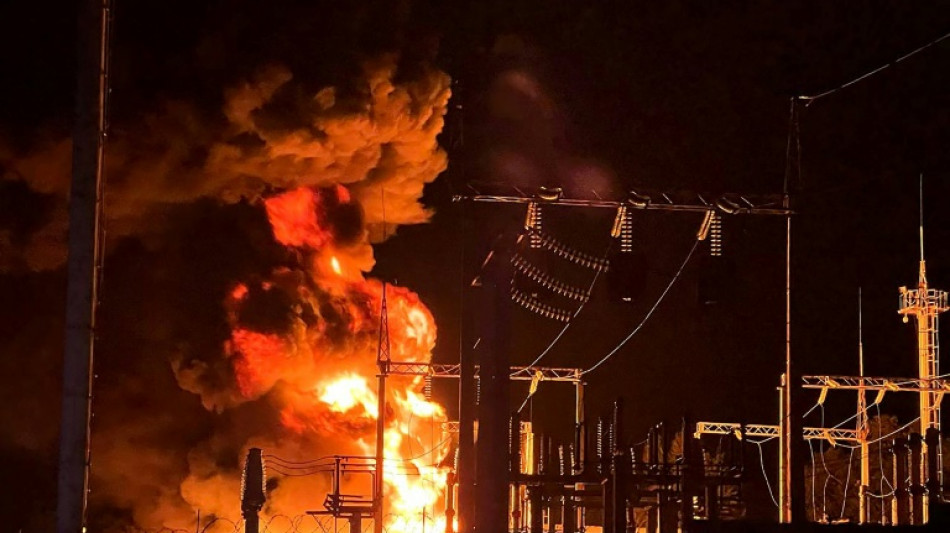
Russia's 'no risk' Ukraine strategy: pummeling the power grid / Photo: © TELEGRAM / VVGLADKOV/AFP

 Arsenal face depleted Aston Villa, Spurs seek return on £300m spend

 Werro edges ever closer to elusive women's 800m world record

 Callaway cuts ties with golf media firm over violent ad

 Trump says Putin won't attack NATO territory

 Labor Day 2026: Complete Starter Tool Kit Under $375

 Tamil Nadu Govt Assigns Ministers to Oversee Chennai Monsoon Preparedness

 Alfred gets revenge on Jefferson-Wooden in Zurich 100m

 US Open men's singles: Three talking points

 Michael Strahan Welcomes Fifth Child with Girlfriend Kayla Quick

 Kuminga’s Timberwolves Deal Saves Millions in Taxes Despite Lower Pay Than Lakers Offer

 Trump says Russia is 'not going to attack' NATO territory
 OpenAI Tests 'Persistent Mode' for Codex AI Agent

 PSG to face Barcelona, Man City and Villa in Champions League as draw is made

 Two killed, one arrested, at school near Berlin: police

 Cox defies Pakistan after Abbas's treble strike rocks England

 Bosnian Serb war criminal Ratko Mladic dead

 Ogura to miss Aragon MotoGP after hand surgery

 Severe Thunderstorms Hit Eastern Australia After SA Deluge

 More than goals: What Mourinho wants from Real Madrid's Mbappe

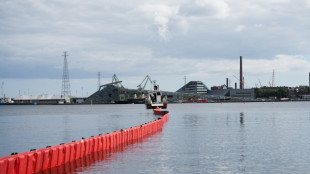 Finland defends shores against oil spill risk

 Iraola hoping for 'good news soon' in Liverpool pursuit of Barcola

 Iran executes over 500 people in 2026: rights group

 Srebrenica: Massacre that outraged the world

 After US settlement, EU says Meta must 'protect our kids too'

 Germany-led 'frugal' EU states demand budget plan cuts of 'several hundred billion'

After a series of humiliating battlefield defeats in Ukraine, Moscow is trying out a new tactic it hopes will swing the tide of the war: bombarding power stations just as winter sets in.
Since the start of this month, Russian forces have fired salvo after salvo of cruise missiles and launched hundreds of Iranian-made suicide drones at energy facilities, crippling some 40 percent of Ukraine's grid, says Kyiv.
And after weeks of soul-searching in Moscow in the wake of major military setbacks in east and southern Ukraine, there are smiles back on the faces of the Kremlin's cheerleaders on state-orchestrated media.
"It's impossible to survive when there is no heating, no water, no water treatment facilities and no lights," pro-Kremlin lawmaker Andrey Gurulev said this week, after the latest barrage on power plants across Ukraine.
"We're sorry for everyone -- we love everyone -- but we've been pushed to this. We've got no other options," star Kremlin propagandist and show host Olga Skabeyeva said.
Some observers go even further.
"This should have been done the first day, not after eight months," Moscow-based military analyst Alexander Khramchikhin told AFP.
"The advantage of this kind of approach is that it paralyses both the economy, and, to a large extent, the armed forces," Khramchikhin said.
There is "no risk" to Russia, he added.
- 'Hate them more' -
The impact of Russia's volley aimed at energy facilities has been far-reaching.
The emergency services warned this week that more than 4,000 towns, villages and cities had experienced outages.
The presidency has described the situation as "critical" and on Thursday officials rolled out nationwide restrictions on electricity use.
"Even small savings ... will help stabilise the operation of the national energy grid," Kyiv mayor Vitali Klitschko said, urging businesses to limit consumption.
Regions including Ivano-Frankivsk, Lviv and Chernivtsi in western Ukraine have introduced schedules to limit energy consumption.
For now, Ukrainians appear to be ready to shoulder the burden.
In the central city of Dnipro, one resident told AFP she was as hardened against Moscow as ever after a Russian strike hit the thermal station on Tuesday.
"It's not going to change our attitude. Maybe we will only hate them more," Olga, who declined to give her last name, told AFP.
Russia's pivot to systematically attacking Ukraine power stations comes after a series of defeats in Ukraine.
In the early stages of the campaign it failed in its bid to take the capital Kyiv. Later, it was pushed back from the besieged second-city of Kharkiv, and now its forces are being beaten in the south and in the eastern Donbas region.
- 'Break Ukrainian morale' -
Analysts say these setbacks are behind the change in tactics.
"The situation on the front is especially unfavourable to the Russians, so they resort to an asymmetric approach" by targeting energy infrastructures, Ukrainian expert Mykola Bielieskov told AFP.
The strikes also come after General Sergey Surovikin, a veteran of Moscow's wars with a ruthless reputation, took over on October 8 with the task of turning the tide of the conflict.
"Surovikin is famous for this type of operation in Syria -- destroying cities," Mykhailo Samus, Director of New Geopolitics Research Network, told AFP.
"He's trying to show Putin he's ready to do the same in Kyiv -- trying to break Ukrainian morale, exhaust Ukrainian air defences, destroy energy infrastructure before winter and create social problems for Ukrainians in cities with millions of people," Samus said.
It is hard to say if, ultimately, the strategy would succeed, said Bielieskov. "This depends on the intensity of the strikes and on (Ukrainian) countermeasures."
Kyiv's western allies are responding to President Volodymyr Zelensky's appeals for more sophisticated air defence systems.
According to some analysts, Russian munitions capable of accurately hitting power stations from a distance are running low. That raises the possibility of less accurate, more indiscriminate strikes.
Back in Dnipro, Olga insisted that no matter how brutal the Russian strikes became, her resolve would not be shaken.
"I would rather sit in cold, with no water and electricity than be in Russia," she said.
M.Ouellet--BTB