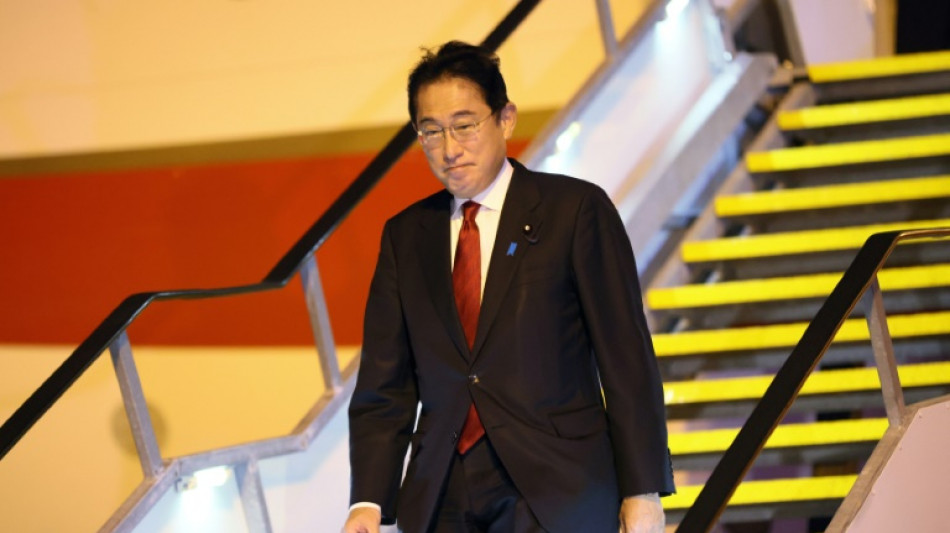
Japanese, Australia PMs eye new security pact / Photo: © POOL/AFP

 Arsenal face depleted Aston Villa, Spurs seek return on £300m spend

 Werro edges ever closer to elusive women's 800m world record

 Callaway cuts ties with golf media firm over violent ad

 Trump says Putin won't attack NATO territory

 Labor Day 2026: Complete Starter Tool Kit Under $375

 Tamil Nadu Govt Assigns Ministers to Oversee Chennai Monsoon Preparedness

 Alfred gets revenge on Jefferson-Wooden in Zurich 100m

 US Open men's singles: Three talking points

 Michael Strahan Welcomes Fifth Child with Girlfriend Kayla Quick
 Kuminga’s Timberwolves Deal Saves Millions in Taxes Despite Lower Pay Than Lakers Offer
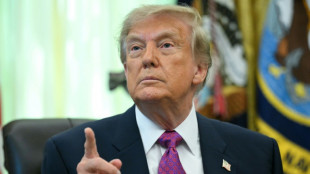 Trump says Russia is 'not going to attack' NATO territory
 OpenAI Tests 'Persistent Mode' for Codex AI Agent
 PSG to face Barcelona, Man City and Villa in Champions League as draw is made
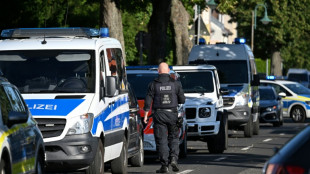 Two killed, one arrested, at school near Berlin: police

 Cox defies Pakistan after Abbas's treble strike rocks England

 Bosnian Serb war criminal Ratko Mladic dead

 Ogura to miss Aragon MotoGP after hand surgery

 Severe Thunderstorms Hit Eastern Australia After SA Deluge

 More than goals: What Mourinho wants from Real Madrid's Mbappe
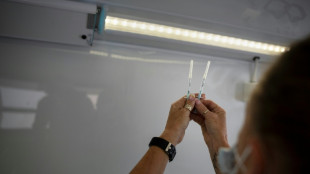
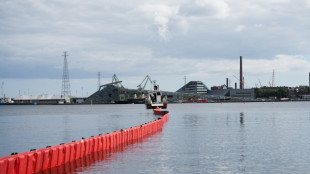 Finland defends shores against oil spill risk

 Iraola hoping for 'good news soon' in Liverpool pursuit of Barcola

 Iran executes over 500 people in 2026: rights group

 Srebrenica: Massacre that outraged the world
 After US settlement, EU says Meta must 'protect our kids too'

 Germany-led 'frugal' EU states demand budget plan cuts of 'several hundred billion'

Japanese Prime Minister Fumio Kishida visited Australia on Saturday, where he is expected to ink a revamped security deal with his Australian counterpart to address China's rapidly growing military clout.
Kishida met Anthony Albanese for talks to finalise an agreement to share more sensitive intelligence and deepen military cooperation.
"The Japan and Australian relationship on security issues has built up for many years," a Japanese foreign ministry official said ahead of the meeting in the western city of Perth.
"We hope that this visit will be an opportunity to further deepen security cooperation."
It is the first visit of a Japanese prime minister to Australia since 2018.
The two Pacific nations are expected to focus on sharing intelligence -- particularly signals and geospatial intelligence gleaned from electronic eavesdropping and high-tech satellites.
Neither country has extensive foreign spy networks or armies of human assets overseas -- Japan has no foreign spy agency equivalent to America's CIA, Britain's MI6 or even Australia's much smaller agency ASIO.
But according to expert Bryce Wakefield, both Australia and Japan have sophisticated signals intelligence capabilities -- a form of information gathering by intercepting communications.
Wakefield, director of the Australian Institute of International Affairs, said the agreement could be a model for Japan to develop deeper security ties with countries like Britain.
There have long been rumours about Japan and Australia cooperating on intelligence behind the scenes.
This accord will deepen and codify that partnership, but it is also being seen as another small step toward Japan joining the powerful Five Eyes intelligence-sharing alliance between Australia, Britain, Canada, New Zealand and the United States.
It is "an epoch-making event that Japan can share SIGINT (signals intelligence) with a foreign nation except for the United States," Ken Kotani, an expert in the history of Japanese intelligence at Nihon University, told AFP.
But hurdles remain.
Closer cooperation has been hampered by longstanding concerns about Japan's ability to handle sensitive confidential material and transmit it securely.
For now, Australia will likely be forced to scrub any intelligence passed to Japan for information gleaned from the Five Eyes network.
- China top of mind -
Prime ministers Kishida and Albanese are also expected to vow more military and energy cooperation.
Japan is a major buyer of Australian gas and has made a series of big bets on hydrogen energy produced in Australia, as it tries to ease a lack of domestic energy production and dependence on fossil fuels.
"Japan imports 40 percent of its LNG from Australia. So it's very important for Japan to have a stable relationship with Australia, from the aspect of energy," the Japanese official said.
Saturday's deal is expected to update a 2007 accord, which was agreed upon when Beijing was much weaker militarily and much less bellicose in its dealings with the world.
Since Xi Jinping came to power, Beijing's military has become much stronger and its posturing more aggressive.
During Xi's decade-long rule, China has built the world's largest navy, revamped the globe's biggest standing army, and amassed a nuclear and ballistic arsenal to trouble any foe.
N.Fournier--BTB