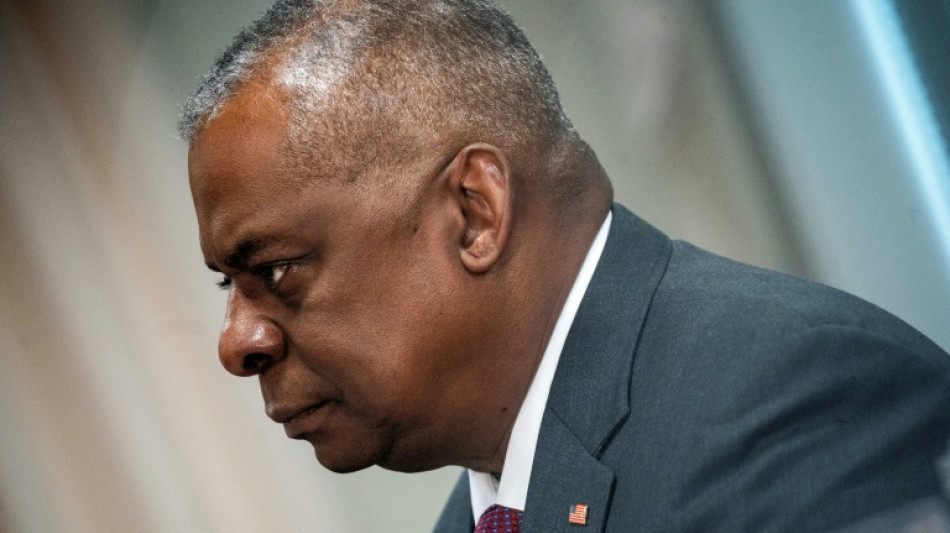
US sees 'acute threat' from Russia, but says China is main challenge / Photo: © AFP/File

 'Find your own room': Japan says can't handle added Asian Games numbers

 Fresh flood warnings for disaster-hit Nepal and Tibet, 1,400 still missing
 Most Asian stocks advance as attention turns to Warsh speech
 US mother's child murder trial puts spotlight on postpartum psychosis

 'End of an era': Players lament decline of the disc at Gamescom

 Air traffic controllers left early before deadly NY crash: report
 Golf media firm loses Callaway, PGA Tour deals over violent ad

 US to push economic pressure on Iran at G20 finance talks
 Kiss rotates Wallabies forwards for Argentina Test

 Guns, drugs and car chases: GTA 6 preview lands on Netflix after leaks
 Arteta braced for 'tough' Martinelli, Jesus exits from Arsenal

 Welbeck scores first Chelsea goal in League Cup win over Luton

 Arsenal face depleted Aston Villa, Spurs seek return on £300m spend

 Werro edges ever closer to elusive women's 800m world record

 Callaway cuts ties with golf media firm over violent ad

 Trump says Putin won't attack NATO territory

 Labor Day 2026: Complete Starter Tool Kit Under $375

 Tamil Nadu Govt Assigns Ministers to Oversee Chennai Monsoon Preparedness

 Alfred gets revenge on Jefferson-Wooden in Zurich 100m

 US Open men's singles: Three talking points

 Michael Strahan Welcomes Fifth Child with Girlfriend Kayla Quick

 Kuminga’s Timberwolves Deal Saves Millions in Taxes Despite Lower Pay Than Lakers Offer
 Trump says Russia is 'not going to attack' NATO territory
 OpenAI Tests 'Persistent Mode' for Codex AI Agent
 PSG to face Barcelona, Man City and Villa in Champions League as draw is made
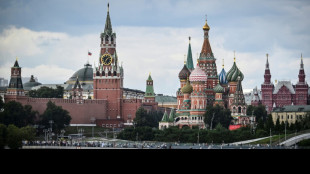
Russia's invasion of Ukraine highlights the "acute threat" posed by Moscow, but China is the most consequential challenge for the United States, the Pentagon said Thursday.
The dangers are both conventional -- Moscow's aggression toward its neighbors and Beijing's efforts to gain control of Taiwan -- and nuclear, with Russia possessing an extensive arsenal and China's stocks of atomic weapons growing fast.
US Defense Secretary Lloyd Austin highlighted the different challenges posed by China and Russia as he unveiled the unclassified versions of several military strategy documents.
China "is the only competitor out there with both the intent to reshape the international order, and increasingly the power to do so," Austin said.
"Unlike China, Russia can't systemically challenge the United States over the long term. But Russian aggression does pose an immediate and sharp threat."
The National Defense Strategy, which was released Thursday, likewise places the primary emphasis on China.
Beijing is seeking to "refashion the Indo-Pacific region and the international system to suit its interests and authoritarian preferences," it says, describing this dynamic as "the most comprehensive and serious challenge to US national security."
The strategy says Chinese rhetoric about and "coercive activity" toward self-ruled Taiwan -- which Beijing has vowed to take control of, by force if necessary -- is a destabilizing factor that risks miscalculation and threatens peace in the area.
As for Russia, it says the "acute threat" posed by Moscow has been most recently demonstrated by Moscow's February invasion of Ukraine.
- 'Emerging threat' of climate change -
"The Department (of Defense) will support robust deterrence of Russian aggression against vital US national interests, including our treaty Allies," the strategy says.
In a departure from the previous National Defense Strategy, which was issued during Donald Trump's presidency, the newly released document classifies climate change as an "emerging threat."
The US "will integrate climate change into threat assessments," as well as increasing the "resiliency of military installations" and taking "climate extremes" into account in decisions on training and equipping the armed forces, the strategy says.
In an updated report on US nuclear posture released in parallel with the National Defense Strategy, the Pentagon defines the role of its nuclear arsenal as deterring both nuclear and non-nuclear attacks that have strategic consequences.
"This includes nuclear employment of any scale, and it includes high-consequence attacks of a strategic nature that use non-nuclear means," a senior defense official told journalists.
The Nuclear Posture Review emphasizes that China's nuclear arsenal is growing, but says Russia's is currently more extensive.
- Warning to North Korea -
"By the 2030s the United States will, for the first time in its history, face two major nuclear powers as strategic competitors and potential adversaries," the document says.
It emphasizes the importance of modernizing US strategic assets, while scrapping a submarine-launched nuclear cruise missile program and saying a type of obsolete nuclear bomb will be retired.
The document also contains a stark warning for Kim Jong Un against employing North Korea's growing nuclear arsenal.
"Any nuclear attack by North Korea against the United States or its allies and partners is unacceptable and will result in the end of that regime. There is no scenario in which the Kim regime could employ nuclear weapons and survive," it says.
The Missile Defense Review -- also released Thursday -- likewise points to growing threats from China and Russia.
Beijing is closing the gap with Washington when it comes to ballistic and hypersonic missile technology, while Moscow is modernizing its intercontinental-range missile systems and developing advanced precision-strike missiles.
The document says drones -- which Russia has used to strike against Ukrainian cities and energy infrastructure -- are also a threat that is likely to grow.
Russian President Vladimir Putin meanwhile offered a distinctly different take on the international strategic environment Thursday, saying Moscow is trying to "defend its right to exist" in the face of Western efforts to "destroy" his country.
"Ahead is probably the most dangerous, unpredictable and at the same time important decade since the end of the Second World War," he said.
J.Fankhauser--BTB