Caster Semenya: A rebel with a cause / Photo: © GETTY IMAGES NORTH AMERICA/AFP

 UK vows anti-settler measures as Israel warns of retaliation

 New pro Koivun among US Presidents Cup picks

 G20 finance leaders close talks marked by US welcoming Russia

 From Hollywood to big time tennis: teen makes US Open debut
 Man City secure Premier League record deal to sign Fernandez

 Kaepernick says NFL 'blackballing me' decade after protest

 Atletico loan David from Juve, send Lemar to Elche

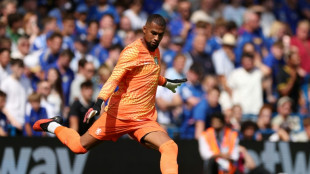 Chelsea 'keeper Sanchez makes deadline-day move to Como
 Kroenke to buy baseball's Los Angeles Angels: statement

 US defends Trump's Venezuela oil deal

 OpenAI to launch new model with 'stronger safeguards' after hack

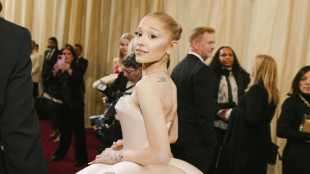 Fans mourn 'bittersweet' final Ariana Grande gig in London

 Norway's King Haakon VIII swears allegiance to constitution

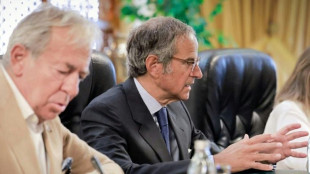 Syria site infrastructure 'consistent with nuclear reactor': IAEA
 Juventus sign Woltemade, Sarr on loan from Premier League

 US strikes Iran in latest tit-for-tat attacks

 China's Xi arrives in Egypt as US sanctions threat looms over Iran links
 Car bomb at Colombian police station kills one, injures 11
 Rain delays start of play on US Open

 Man City agree blockbuster deal to sign Chelsea star Fernandez: reports
 Alkemya Metacore Secures $50M via Tokenised Equity to Scale Nickel Energy and Security Tech

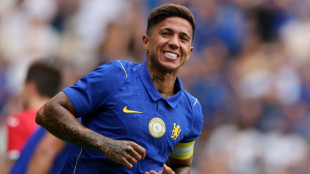 Man City chase Fernandez, Arsenal sell Jesus on deadline day

 EU says Russian 'hybrid attacks' won't halt aid to Ukraine

 Explosives used in sabotage attack on German power lines
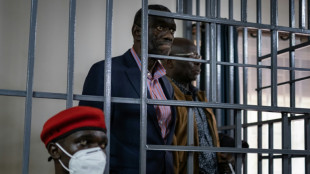
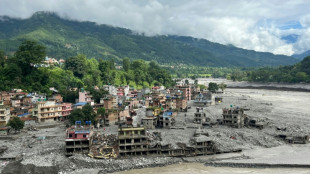 Nepali families hold symbolic funerals for missing after floods

When 19-year-old unknown South African Caster Semenya pulled off a stunning 800 metres final triumph at the 2009 world championships in Berlin, she could never have imagined the drama that would follow.
She had barely touched the tape to claim gold when controversy erupted over whether she should have been allowed to compete. Some rivals questioned whether she was a woman.
Officials reacted by forcing Semenya to have a sex test, and it was not until the following year that the woman born in a northern village could run again.
Recalling the sex test to a London audience, Semenya said "being told you are not woman enough can be disturbing".
Now 34, Semenya was born with differences of sexual development (DSD) and some opponents believed her biological make-up gave her an unfair advantage.
Later, when Semenya refused to take drugs to supress testosterone, a hormone that increases muscle mass, strength and endurance-enhancing haemoglobin, she was banned by World Athletics.
She collected 800 metre gold medals at the 2012 and 2016 Olympic Games in London and Rio de Janeiro -- the first after Russian winner Mariya Savinova was belatedly disqualified over doping.
Semenya also struck gold over her favourite distance at world championships in Berlin, South Korean city Daegu and London.
But instead of basking in the glory of becoming a middle-distance track queen, she became embroiled in a string of legal battles just to compete.
Previously, when Semenya took testosterone-reducing medication, the athlete told South African media she suffered "hell".
"When you are desperate (to run), you will do anything to get what you want. The medication was not designed for my body because I am different.
"I am a woman who is different, I do not have a uterus, I do not have fallopian tubes. I was never happy (taking the medication), it irritated me, I was not myself."
As the years passed, relentless Semenya exchanged her 'golden girl' status among South Africans and became a rebel with a cause.
Her frustration heightened when an initial World Athletics ban covering middle-distance races extended to all track events.
- 'Gross violation' -
She labelled the move a "gross violation of human rights. What is at stake here is far more than the right to participate in a sport.
"Women's bodies, their wellbeing, their ability to earn a livelihood, their very identity, their sense of safety and belonging in the world are being questioned."
But while Semenya railed against World Athletics, the organisation refused to budge, and Semenya missed the 2024 Paris Olympics.
"DSD regulations are a necessary, reasonable and proportionate means of protecting fair competition in the female category," said the international body.
Taking the legal route to try and overturn the ban, Semenya lost cases at the Court of Arbitration for Sport (CAS) and the Swiss Federal Tribunal (SFT).
The European Court of Human Rights (ECHR) took a different view, though, by a 4-3 majority. They said the Semenya appeal had not been properly heard.
"The applicant had not been afforded sufficient institutional and procedural safeguards in Switzerland to allow her to have her complaints examined effectively," the ECHR said.
SFT, supported by World Athletics, appealed the decision, leading to a two-year wait before the 17-judge ECHR Grand Chamber gave its ruling and found again in her favour.
"We need to respect athletes, we need to put their rights first... It's just a reminder to the leaders to say priorities lie in the protection of athletes," she said after the appeal ruling.
While several South African athletes approached by AFP over the issue did not wish to comment, the government and the public have backed Semenya in her crusade against "injustice".
"Our entire history of South Africa has been a struggle for human rights. These (World Athletics) rules have had a negative effect on our golden girl," said then sports minister Tokozile Xasa.
As Semenya suffered setbacks, she could rely on the support of her parents, three sisters and one brother. "The relationship I have with my family is special," she said.
W.Lapointe--BTB