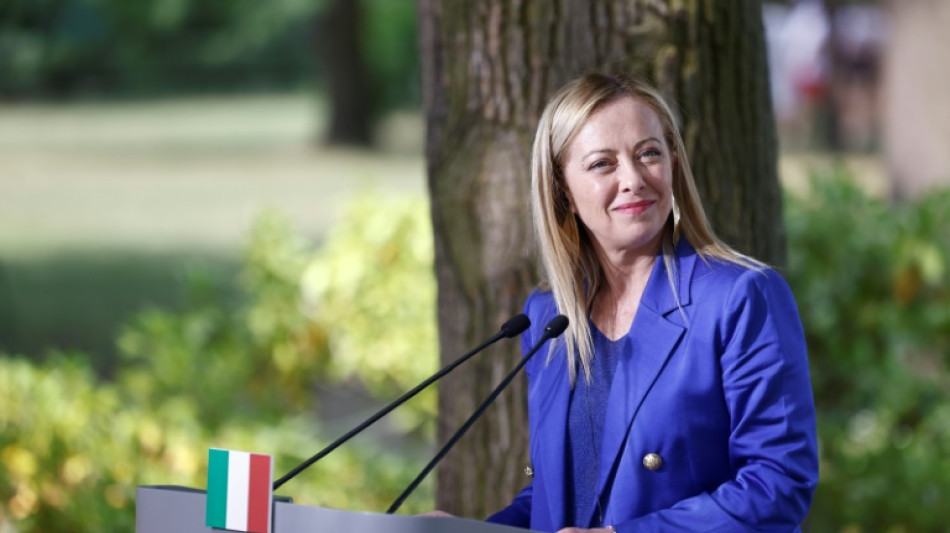
As Italy turns again to Africa, 'good coloniser' myth persists / Photo: © AFP

 Trump renames AI "super intelligence," rejects international oversight

 Trump rejects international regulation of AI

 How is the EU approaching record fuel prices?

 Sri Lanka's Colombage strikes on debut as England dismissed for 265 in first ODI
 Hurricane Polo strengthens to top category 5 off Mexico

 11 hurt as teen opens fire outside school in western Turkey

 UN chief says 'Big Oil' treats atmosphere as open sewer

 Tunisia says 2026 summer hottest on record

 England's Rashid out of Sri Lanka ODIs with hand injury

 Houthis accuse Saudi Arabia of deadly strikes as thousands flee

 Stocks climb as oil slides, AI buzz returns

 India cricketers win in style as Afghan savours 'special' Games silver

 La Liga president hits out at Real Madrid refereeing 'conspiracy' claims

 MEXC Launches “Real Stocks, Real Friends” with Rewards for Bringing Friends to Wall Street

 Mbappe continues media push for Ballon d'Or recognition

 Stocks rise on AI buzz, oil prices cool

 India narrowly survive huge scare against minnows Japan

 Missing F-35 fighter parts 'not sensitive', says Australia minister
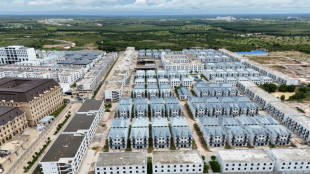 Cambodia showcases scams crackdown with global conference

 Afghan cyclist who disguised herself as man wins Asian Games silver

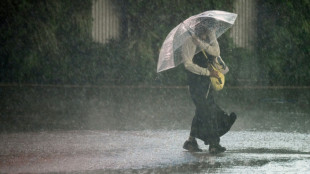 Typhoon Dujuan leaves four dead in Japan, 45,000 houses without power

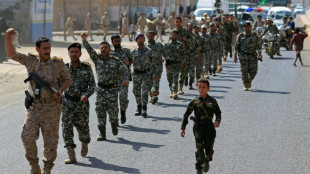 G7 leaders condemn Houthi strikes on Saudi Arabia

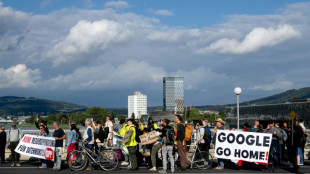 Google data centre sparks protests in Austria

 Shin Ohashi: Junk food-loving teen and Japan's next big swimming hope

 Stocks rise on AI buzz, drop in oil prices
Italy's government is eyeing Africa in pursuit of energy security, even as some officials defend Rome's often-bloody colonial past on the continent -- giving short shrift to historical accuracy.
Historians agree that hundreds of thousands of civilians were killed under Italian colonial rule in Libya, Ethiopia, Eritrea and what is now Somalia from the late 19th century to the first half of the 20th.
Yet Italy's deputy foreign minister, Edmondo Cirielli, said in June that the country's presence on the continent was "civilising", without bloodshed or repression.
"Whether before or during Fascism... (Italy) in Africa built and created a civilising culture" in its colonies, said Cirielli, a member of Prime Minister Giorgia Meloni's post-Fascist Brothers of Italy party, borrowing the "good colonisers" myth popular on the far right.
"Our ancient and thousand-year-old culture does not make us a people of pirates who go around plundering the world," Cirielli said, in comments that raised eyebrows among historians and the left-wing opposition.
Unlike Germany reconciling with its Nazi past or France with its occupation of Algeria, Italy has been slow to embark on public soul-searching about its colonial history.
But opposition lawmakers have now drafted a bill to establish a "Day of Remembrance for the victims of Italian colonialism" in the four African countries.
The suggested date is February 19, which marks the start of a massacre of Ethiopian civilians by Italian troops in Addis Ababa in 1937.
"Other countries such as Belgium and Germany have apologised for the crimes of colonialism," said Laura Boldrini, an MP for the centre-left Democratic Party who co-authored the bill.
"In Italy, we tend to deny and tell ourselves that 'Italy, good people' built roads, hospitals and schools," she said.
Boldrini, a former head of the lower house of parliament, said right-wing newspapers had written disparaging articles about the text, "and this government does not take colonial crimes seriously".
The bill has little chance of being adopted given the opposition of Meloni's coalition, which has a parliamentary majority.
- 'History of violence' -
Alessandro Pes, a professor of contemporary history at the University of Cagliari, said the "stereotype of the 'good coloniser' has no significant historical foundation".
Rather, that rhetoric "hid a desire for colonial expansion carried out through the use of violence and the forced subordination of colonised populations", Pes told AFP.
Italy's eyes turned to expansion after it became a unified state in 1861, with the young nation anxious to establish a toehold in Africa in competition with other European powers.
It sought "to resolve the big problems of unemployment and social malaise in Italy" by exporting workers to newly occupied territories in the Horn of Africa, said Uoldelul Chelati Dirar, a professor of African history at the University of Macerata.
Differing from its European rivals, however, Italy developed more infrastructure like roads, bridges and railways while in Africa -- something right-wing politicians are quick to point out, he said.
Those investments have fuelled the "good people" myth that is deeply rooted in Italian society, "reflected in the extreme resistance to accepting the evidence that our history has also been a history of violence, exploitation and racism", added Pes.
British historian Ian Campbell estimates that Italy's occupation of Libya, Ethiopia, Eritrea and then-Italian Somaliland caused 700,000 African deaths.
This includes 150,000 people killed in Libya alone during the Fascist era under Benito Mussolini, Chelati Dirar said.
- Educational gap? -
In 2008, Silvio Berlusconi, then prime minister, signed a deal with Libyan dictator Muammar Gaddafi to pay $5 billion in investments to compensate for what the premier called "damage inflicted on Libya by Italy during the colonial era".
But little is taught in Italian schools today about this aspect of its past, prompting some historians to make a link between an educational gap and modern-day racism.
Meanwhile, Meloni has criticised Italy's European partners and fellow colonial powers -- without naming them -- during speeches addressed to African nations, as she seeks new deals on energy and access to raw materials.
Earlier this month in the Republic of Congo, she called for "an approach that is not the predatory and paternalistic one that has characterised relations with certain countries in the past".
M.Odermatt--BTB