Festivals, guesthouses breathe life back into old Tunis / Photo: © AFP

 US warns of rapid escalation in Mideast war

 Iran 'put hearts on the court' to win Asian Games basketball bronze

 School girl Yu helps China dominate in Asian Games swimming openers
 Myanmar win first Asian Games teqball gold as Spain great Puyol watches

 China's 13-year-old Yu scorches to first major gold at Asian Games
 Russians vote on last day of parliamentary elections

 Hong Kong pays final respects to former city leader Tung

 Typhoon put people off Asian Games opening ceremony, official says
 China's 13-year-old Yu cruises as Asian Games swimming begins

 AI 'warning shots' focus Beijing on national security risks

 Philippine tribe in limbo over US-led tech hub
 Leo XIV, first US pope transcends his restrained style
 Singer Ed Sheeran says Gaza situation 'unjustifiable' following controversy

 In 'Tenzing', a Sherpa mountaineer gets his due
 Ed Sheeran set to return to stage after Palestinian controversy

 Toulouse edge Vannes, Lyon beat Pau to take Top 14 summit

 Germans arrested for Louvre stunt in Mona Lisa hall

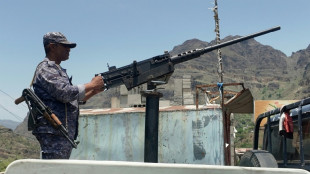 Saudi-led coalition says Houthis fired ballistic missile at Riyadh

 France's debt climbs to highest since 1978: ministry

 McIlroy two shots off the lead at Wentworth after eagle on 18

 Martinez brace saves Inter in Serie A top-two clash with Roma
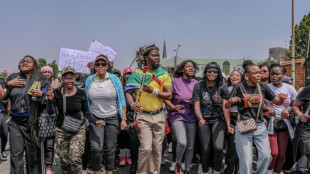
 Rosenior abused but guides Paris FC past old club Strasbourg
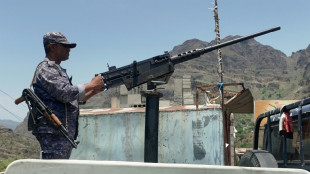
 Seven-try Lyon beat Pau, climb to Top 14 summit
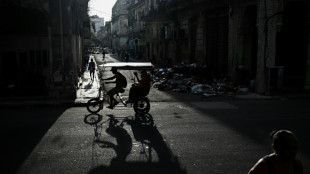
 Brighton defeat a 'big lesson' against complacency for Arsenal, says Arteta

 Thousands protest inaction over climate crisis in Switzerland

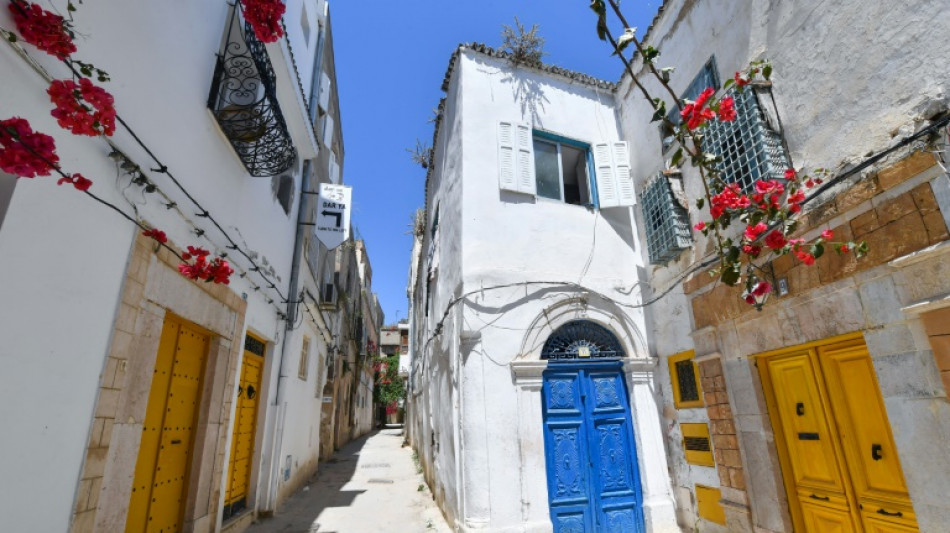
Children's cries echo through the alleyways as they hunt for hidden treasure -- part of growing efforts to bring life back to the Old City of Tunis.
While parts of the ninth-century medina are packed with tourists during the day, it is largely deserted at night and at the weekend.
Writer Hatem Bourial said the medina, one of the first cities built after the Muslim conquests of North Africa and home to the renowned Zitouna mosque, has a deep "emotional charge".
"It's the haven of the first madrassas (Koranic schools), and the Zitouna is one of the most famous and oldest mosque-universities in the world," he said.
But, he added, "people traditionally don't go in the medina at night, as every souk closes its doors."
The medina was founded in the ninth century, but its real expansion began in the 13th century, when Tunis became the capital of the Hafsid dynasty's kingdom, stretching along the Mediterranean coast to Tripoli in what is now Libya.
The kingdom survived an attempt by King Louis IX to capture it, with the French monarch dying of dysentery in the process.
Under the Hafsids, Tunis was one of the biggest cities in the Islamic world, and their legacy has remained in the form of narrow, crowded souks that contributed to the medina being awarded UNESCO heritage status in 1979.
- 'Create experiences' -
The district also has some two dozen small souks devoted to specific artisans such as tanners, perfume sellers and shoemakers.
"The medina is the lung of Tunisia, and it's where Tunis began," said Salma Garbi, a 38-year-old architect who was taking part in a guided walk.
While visitors mostly stick to its two main arteries, "new cultural events are popping up and breathing life into the medina", she said.
Garbi welcomed the launch of two art festivals, Interference (art and lights) and Dream City, which involves young artistic productions in unusual places like chapels, often in the evenings.
"They've breathed life back into the medina," she said.
She also pointed out that in Ramadan, shops and cafes stay open late and the medina bustles with concerts and modern dance shows into the small hours.
The district has also found new life from the creation of Art Rue, which organises art workshops with local schools, and a string of guesthouses.
Leila Ben Gacem, who set up her first guesthouse in the UNESCO-listed old city in 2013, is on a mission to brighten up the neighbourhood.
She has brought together a group of small businesses to "create experiences so people enjoy coming to the medina, spend the weekend there, meet craftspeople and enjoy authentic moments," she said.
The Mdinti project ("my city" in Arabic), financed by German aid agency GIZ, which also campaigns for better lighting and cleaner streets, has 21 members including artisanal workshops, guesthouses, cafes and restaurants.
They are hosting activities across the year, from treasure hunts to walking tours and classes in North African cooking, Arabic calligraphy and making traditional "balgha" shoes (heelless leather slippers).
"If there's something to do at night or on Sundays, shopkeepers will close later or keep their shops open," said Souhail Fitouri, who is involved in the Mdinti project.
- Funding constraints -
For this summer, Ben Gacem has a list of potential events for tourists and residents: rooftop cinema screenings, meetings with craft workers, historians and some of the medina's 25,000 residents.
But residents say that for the medina to experience a real revival, more state support is needed -- a big request, given the sorry state of Tunisia's public finances.
The government has this month begun bailout negotiations with the International Monetary Fund, as its tourism and import-dependent economy has been battered by the coronavirus pandemic and elevated global food and energy prices.
Hatem Bourial bemoans the fact that both the Sidi Bou Khrissane lapidary (gem-carving) museum and the Dar Ben Abdallah museum of popular arts and traditions have been closed for 15 years. The same applies to the famous Tourbet el Bey mausoleum.
And the Zitouna mosque is completely off-limits for non-Muslims. Bourial recommends opening "at least the patio" to visitors.
"The signs currently say entrance is only for Muslims and women with their hair covered. That's an insult to the very notion of hospitality," he said.
J.Horn--BTB