-
 US warns of rapid escalation in Mideast war
-
PSG president Nasser al-Khelaifi under investigation in France for conflict of interest
-
 Iran 'put hearts on the court' to win Asian Games basketball bronze
-
China swim sensation, 13, sets Games record after Japan win early
-
 School girl Yu helps China dominate in Asian Games swimming openers
-
Drones hit Moscow as Russians go to the polls
-
 Myanmar win first Asian Games teqball gold as Spain great Puyol watches
-
New England boss Fleming says 'wrong' to ask Stokes to end retirement
-
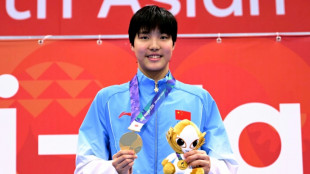
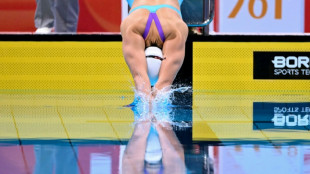 China's 13-year-old Yu scorches to first major gold at Asian Games
-
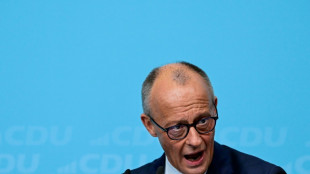
Germans vote in elections threatening fresh blow to Merz
-
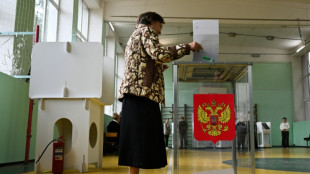 Russians vote on last day of parliamentary elections
-
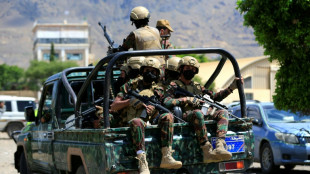
US fears rapid escalation in Mideast after Houthis attack Riyadh
-
 Hong Kong pays final respects to former city leader Tung
-
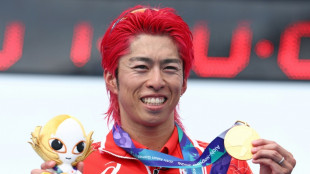
Japan triathlete Hojo wins first gold of Asian Games
-
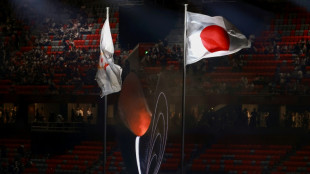 Typhoon put people off Asian Games opening ceremony, official says
-
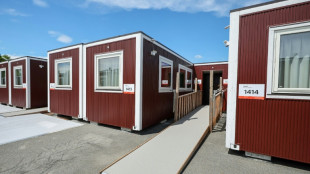
IOC president impressed by 'beautiful' Asian Games wooden huts
-
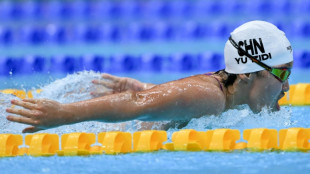 China's 13-year-old Yu cruises as Asian Games swimming begins
-
First Asian Games gold goes to Japan as China's 13-year-old Yu lights up pool
-
 AI 'warning shots' focus Beijing on national security risks
-
Data centre command hub keeps AI up and running
-
 Philippine tribe in limbo over US-led tech hub
-
Pope Leo in France: the issues on the table
-
 Leo XIV, first US pope transcends his restrained style
-
Packing for a pope: behind the scenes on foreign trips
-
 Singer Ed Sheeran says Gaza situation 'unjustifiable' following controversy
-
Republicans find transgender issues a powerful political weapon in midterm campaigning

-
 In 'Tenzing', a Sherpa mountaineer gets his due
-
German state elections threaten new shock waves for Merz
-
 Ed Sheeran set to return to stage after Palestinian controversy
-
Chile's Bachelet quits race to be next UN chief
-
 Toulouse edge Vannes, Lyon beat Pau to take Top 14 summit
-
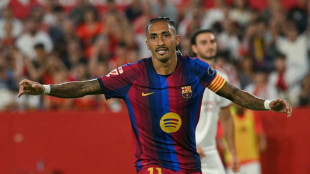
Raphinha treble fires perfect Barca to win at Sevilla
-
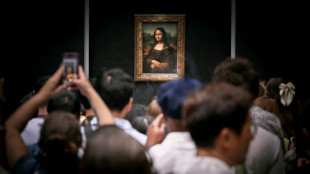 Germans arrested for Louvre stunt in Mona Lisa hall
-
Thiam makes winning heptathlon return at Decastar meet
-
 Saudi-led coalition says Houthis fired ballistic missile at Riyadh
-
Czechs beat USA to qualify for Davis Cup finals

-
 France's debt climbs to highest since 1978: ministry
-
Dortmund sink Stuttgart to climb to Bundesliga summit

-
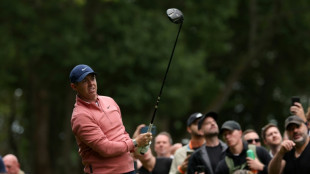 McIlroy two shots off the lead at Wentworth after eagle on 18
-
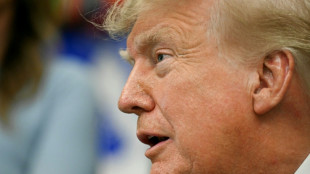
Trump says will not tolerate attempts to slow AI growth
-
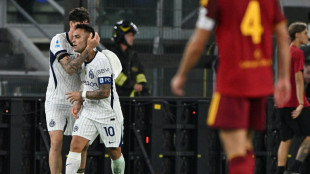 Martinez brace saves Inter in Serie A top-two clash with Roma
-
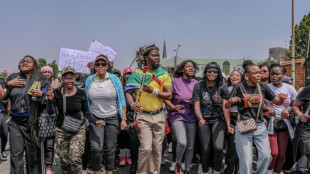
'It has to stop': runners protest women's murders in S.Africa district
-
 Rosenior abused but guides Paris FC past old club Strasbourg
-
Fire erupts near Riyadh airport as Houthis claim strikes

-
 Seven-try Lyon beat Pau, climb to Top 14 summit
-
Cuba works to restore power after another blackout
-
 Brighton defeat a 'big lesson' against complacency for Arsenal, says Arteta
-
England thrash Sri Lanka again to return to top of T20 rankings
-
 Thousands protest inaction over climate crisis in Switzerland
-
Arsenal thrashed by Brighton, sorry Spurs lose again
Webb telescope to reveal earliest galaxies after Big Bang
NASA's James Webb Space Telescope is poised to reveal some of the earliest galaxies that formed after the Big Bang, the White House said Monday, as anticipation builds for the powerful observatory's first images.
President Joe Biden will unveil the images during a livestreamed event starting at 5:00 pm (2100 GMT).
"The high resolution images will show light captured from galaxies that are more than 13 billion years old," White House spokeswoman Karine Jean-Pierre said.
US space agency NASA revealed last week Webb's first targets included distant galaxies, bright nebulae and a faraway giant gas planet.
The rest of the first wave of images are set to be released by NASA on Tuesday.
Webb's infrared capabilities are what make it uniquely powerful, allowing it to both pierce through cosmic dust clouds and detect light from the earliest stars, which has been stretched into infrared wavelengths as the universe expanded.
This lets it peer further back in time than any previous telescope, to the period shortly after the Big Bang, 13.8 billion years ago.
"When I first saw the images... I suddenly learned three things about the Universe that I didn't know before," Dan Coe, a Space Telescope Science Institute (STSI) astronomer and expert on the early Universe, told AFP. "It's totally blown my mind."
- First targets -
An international committee decided the first wave of images would include the Carina Nebula, an enormous cloud of dust and gas 7,600 light years away.
Carina Nebula is famous for its towering pillars that include "Mystic Mountain," a three-light-year-tall cosmic pinnacle captured in an iconic image by the Hubble Space Telescope, until now humanity's premier space observatory.
Webb has also carried out a spectroscopy -- an analysis of light that reveals detailed information -- on a faraway gas giant called WASP-96 b, which was discovered in 2014.
Nearly 1,150 light-years from Earth, WASP-96 b is about half the mass of Jupiter and zips around its star in just 3.4 days.
Nestor Espinoza, an STSI astronomer, told AFP that previous exoplanet spectroscopies carried out using existing instruments were very limited compared to what Webb could do.
"It's like being in a room that is very dark and you only have a little pinhole you can look through," he said of the prior technology. Now, with Webb, "You've opened a huge window, you can see all the little details."
- Million miles from Earth -
Launched in December 2021 from French Guiana on an Ariane 5 rocket, Webb is orbiting the Sun at a distance of a million miles (1.6 million kilometers) from Earth, in a region of space called the second Lagrange point.
Here, it remains in a fixed position relative to the Earth and Sun, with minimal fuel required for course corrections.
A wonder of engineering, the total project cost is estimated at $10 billion, making it one of the most expensive scientific platforms ever built, comparable to the Large Hadron Collider at CERN.
Webb's primary mirror is over 21 feet (6.5 meters) wide and is made up of 18 gold-coated mirror segments. Like a camera held in one's hand, the structure must remain as stable as possible to achieve the best shots.
Charlie Atkinson, chief engineer on the James Webb Space Telescope program at lead contractor Northrop Grumman, told AFP that it wobbles no more than 17 millionths of a millimeter.
After the first images, astronomers around the globe will get shares of time on the telescope, with projects selected competitively through a process in which applicants and selectors don't know each others' identities, to minimize bias.
Thanks to an efficient launch, NASA estimates Webb has enough propellant for a 20-year life, as it works in concert with the Hubble and Spitzer space telescopes to answer fundamental questions about the cosmos.
R.Adler--BTB