Most countries 'woefully unprepared' for changing climate: analysis / Photo: © AFP/File

 Multi-Asset Trading Venue Monochrome Exchange Announces IEO of Its Native Token, $MCR
 South Korea break Japan hearts to win Asian Games basketball gold
 Acosta takes first victory at Austrian MotoGP
 PSG president Nasser al-Khelaifi under investigation in France for conflict of interest

 China swim sensation, 13, sets Games record after Japan win early

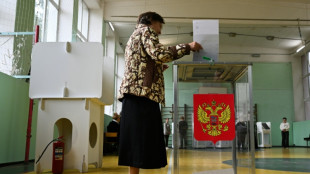 Drones hit Moscow as Russians go to the polls

 New England boss Fleming says 'wrong' to ask Stokes to end retirement

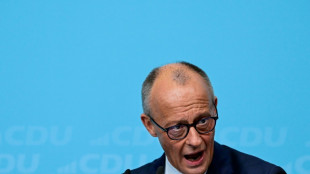 Germans vote in elections threatening fresh blow to Merz
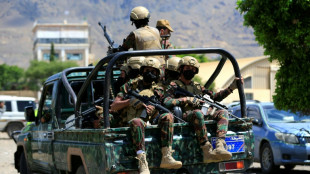 US fears rapid escalation in Mideast after Houthis attack Riyadh

 Japan triathlete Hojo wins first gold of Asian Games

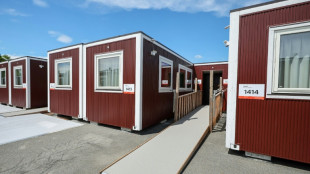 IOC president impressed by 'beautiful' Asian Games wooden huts

 First Asian Games gold goes to Japan as China's 13-year-old Yu lights up pool

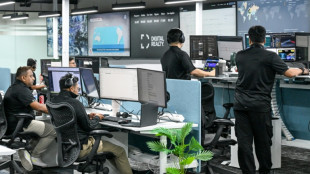 Data centre command hub keeps AI up and running
 Pope Leo in France: the issues on the table

 Packing for a pope: behind the scenes on foreign trips

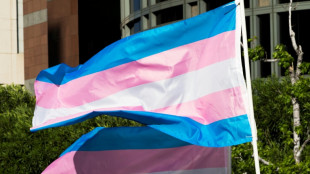 Republicans find transgender issues a powerful political weapon in midterm campaigning

 German state elections threaten new shock waves for Merz

 Chile's Bachelet quits race to be next UN chief

 Raphinha treble fires perfect Barca to win at Sevilla

 Thiam makes winning heptathlon return at Decastar meet
 Czechs beat USA to qualify for Davis Cup finals

 Dortmund sink Stuttgart to climb to Bundesliga summit

 Trump says will not tolerate attempts to slow AI growth

 'It has to stop': runners protest women's murders in S.Africa district

 Fire erupts near Riyadh airport as Houthis claim strikes

Major economies such as India, Brazil and Russia face "cascading" crises driven by climate change such as food insecurity, energy shortages and civil unrest, an industry analysis warned Thursday.
While developing nations of Africa and Southeast Asia are predicted to be worst hit by higher temperatures, extreme weather and sea-level rise, some middle-income nations lack the infrastructure and legislative freedom to keep pace with the changing climate.
And, as Europe counts the cost of another record-shattering heatwave, the analysis showed how even nations with typically few climate-linked crises will need to adapt as global temperatures rise.
The analysis looked at countries' performances across 32 structural issues -- including weather-related events, political stability, economic power, resource security, poverty and human rights -- to assess each nations' capacity to manage crises.
It then divided countries into three categories: insulated, precarious and vulnerable.
Unsurprisingly, most wealthy nations performed well and were found to be the most insulated against climate shocks thanks to a combination of good governance, purchasing power and robust infrastructure.
Developing nations were mainly deemed to be in the vulnerable category for lacking these safeguards. Several middle-income countries, however, including India, Indonesia and South Africa also fell into this grouping.
- Risks will spill over -
"The low levels of investment in looking at the secondary risks show that most countries are almost entirely unprepared to deal with the wider political, economic and developmental impacts of a warming planet," said the analysis.
Will Nichols, head of climate and resilience at consultancy firm Verisk Maplecroft that conducted the assessment, said the major surprise was in the middle -- or the "precarious" category -- which contained powerhouses such as Brazil, Mexico, Russia and Saudi Arabia.
"Brazil is teetering on the edge," Nichols told AFP.
"A slight change could see it drop into that bottom group and we are certainly seeing the erosion of environmental and social protections under (President Jair) Bolsonaro.
"In Russia, Arctic infrastructure is going to be undermined by warming and you could see a leader like (President Vladimir) Putin point the finger at other groups and seek to expand its territory," Nichols said.
Although a G20 economy, Mexico landed in the precarious category largely due to its proximity to Central and South American nations such as Venezuela facing extreme climate-linked disruption, particularly in the form of mass migration.
"These risks aren't contained by political boundaries, they will spill over," said Nichols.
"Even if you have your house in order, if your neighbour is a basket case that can seriously undermine your ability to protect yourself."
- 'Don't have resilience' -
Under the UN-led climate action plan, rich nations promised in 2009 to provide $100 billion annually to at-risk countries by 2020 but have so far failed to even approach that level of funding.
Nichols said the analysis showed the need for developed countries to help nations that cannot help themselves.
"We've seen relatively small amounts of people arriving in Europe and the US due to climate impacts causing major issues," he said.
"There's an argument that we as insulated nations have a responsibility to help vulnerable nations to protect themselves, which in turn helps protect us."
Nichols said this week's deadly heatwave in Europe was proof that even rich countries needed to factor climate change into future business and governance decisions.
"The scale of the climate threat isn't diminishing -- it is obviously going to have a huge impact," he said.
"But countries in Sub-Saharan Africa, Southeast Asia and South America don't have the resilience to manage both the physical climate threat and the knock-on effects of political and supply chain instability."
C.Kovalenko--BTB