Egypt replants mangrove 'treasure' to fight climate change impacts / Photo: © AFP

 Liverpool boss Iraola urges Isak to raise his level
 Evenepoel wins record 4th straight world time-trial title

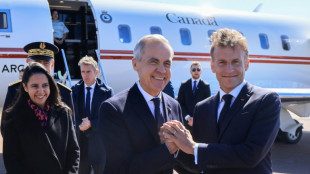
 France's Macron, Canada's Carney announce closer ties
 Carrick defends troubled Man Utd after Fulham escape

 Horror movie 'Resident Evil' tops N. American box office

 Germany's Merz vows to stay course despite new vote losses

 Man City outgun Sunderland despite Brobbey hat-trick, Man Utd rescue Fulham draw

 Mourinho blames ref committee for Real Madrid derby defeat

 Maresca craves a 1-0 win after eight-goal Man City thriller

 Atletico Madrid beat Real Madrid in tense derby clash
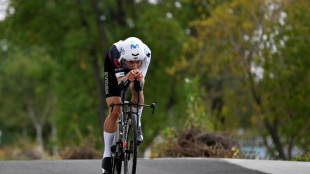 Reusser retains world time-trial title

 Man City outgun Sunderland despite Brobbey hat-trick, Liverpool win at Bournemouth

 Top US, Chinese economic officials meet ahead of Trump-Xi summit
 Erdogan's LGBTQ crackdown 'first step of election campaign': activist

 Mass drone barrage on Moscow kills two

 82-year-old dies after beach fight in Greece over sun lounger

 US warns of rapid escalation in Mideast war

 Iran 'put hearts on the court' to win Asian Games basketball bronze

 School girl Yu helps China dominate in Asian Games swimming openers

 Myanmar win first Asian Games teqball gold as Spain great Puyol watches

 China's 13-year-old Yu scorches to first major gold at Asian Games

 Russians vote on last day of parliamentary elections
 Hong Kong pays final respects to former city leader Tung
 Typhoon put people off Asian Games opening ceremony, official says
 China's 13-year-old Yu cruises as Asian Games swimming begins

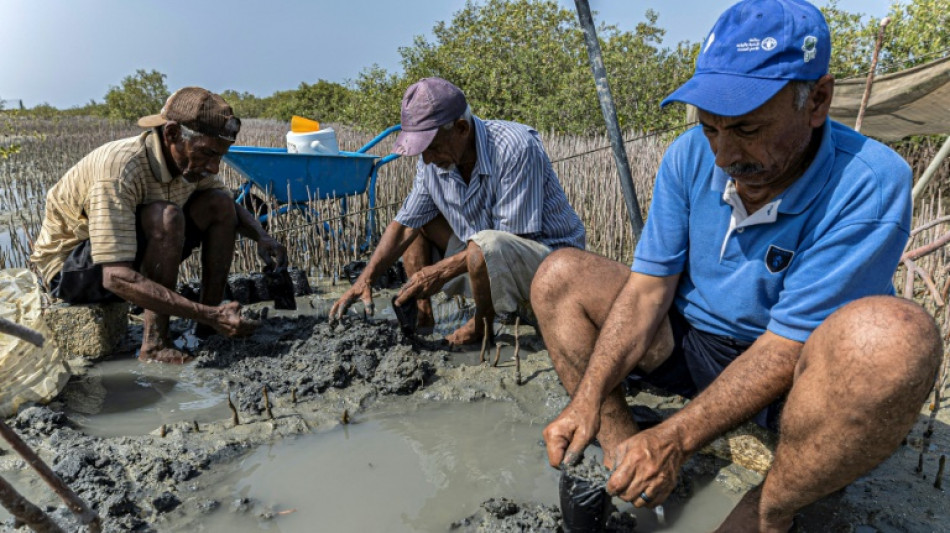
On Egypt's Red Sea coast, fish swim among thousands of newly planted mangroves, part of a programme to boost biodiversity, protect coastlines and fight climate change and its impacts.
After decades of destruction that saw the mangroves cleared, all that remained were fragmented patches totalling some 500 hectares (1,200 acres), the size of only a few hundred football pitches.
Sayed Khalifa, the head of Egypt's agriculture syndicate who is leading mangrove replanting efforts, calls the unique plants a "treasure" because of their ability to grow in salt water where they face no problems of drought.
"It's an entire ecosystem," Khalifa said, knee-deep in the water. "When you plant mangroves, marine life, crustaceans and birds all flock in."
Between the tentacle-like roots of months-old saplings, small fish and tiny crab larvae dart through the shallows -- making the trees key nurseries of marine life.
Khalifa's team are growing tens of thousands of seedlings in a nursery, which are then used to rehabilitate six key areas on the Red Sea and Sinai coast, aiming to replant some 210 hectares.
But Khalifa dreams of extending the mangroves as far "as possible," pointing past a yacht marina some six kilometres (four miles) to the south.
The about $50,000-a-year government-backed programme was launched five years ago.
- 'Punch above their weight' -
Mangroves also have a powerful impact in combating climate change.
The resilient trees "punch above their weight" absorbing five times more carbon than forests on land, according to the UN Environment Programme (UNEP).
The stands of trees also help filter out water pollution and act as a natural barrier against rising seas and extreme weather, shielding coastal communities from destructive storms.
UNEP calculates that protecting mangroves is a thousand times cheaper than building seawalls over the same distance.
Despite their value, mangroves have been annihilated worldwide at rapid speed.
Over a third of mangroves globally have been lost globally, researchers estimate, with losses up to 80 percent in some coastlines of the Indian Ocean.
Mangrove expert Niko Howai, from Britain's University of Reading, said in the past many governments had not appreciated "the importance of mangroves", eyeing instead lucrative "opportunities to earn revenue" including through coastal development.
In Egypt's case, "mass tourism activities and resorts, which cause pollution", as well as boat activity and oil drilling wreaked havoc on mangroves, said Kamal Shaltout, a botany professor at Egypt's Tanta University.
Shaltout warned that mangrove restoration efforts "will go to waste" if these threats are not addressed.
"The problem is that the mangroves we have are so limited in number that any damage causes total disruption," he said.
- Impact of mass tourism -
There is little reliable information to indicate how much has been lost, but Shaltout said "there are areas that have been completely destroyed", particularly around the major resort town of Hurghada.
Red Sea tourism accounts for 65 percent of Egypt's vital tourism industry.
The scale of damage, a 2018 study by Shaltout and other researchers found, "probably far exceeds what could be replaced by any replanting programme for years to come".
Efforts to link up replanted areas will be potentially blocked by barriers of marinas, resorts and coastal settlements.
"Mangroves are hardy, but they are also sensitive, especially as saplings," Howai said.
"Intermingling mangrove reforestation with existing development projects is not impossible, but it is going to be more challenging."
To be successful, Shaltout said that tourist operators must be involved, including by tasking resorts with replanting areas themselves.
"It could even come with certain tax benefits, to tell them that just like they have turned a profit, they should also play a role in protecting nature," the botanist said.
K.Brown--BTB