-
 After sparring over Ceuta, EU states seek lessons from crisis
-
Amorim evokes spirit of Baresi as he bids revive AC Milan fortunes

-
 Forest fire spreads in Dutch nature reserve
-
Suspected heatstroke kills three lions at Japan zoo

-
 Japan sees 'urgent' need to boost military
-
Stocks mixed as Seoul stabilises, oil prices rise with eyes on Mideast

-
 Myanmar ex-junta chief set for first Thailand visit as civilian leader
-
Trapped by war, Bangladesh seafarer recounts Gulf ordeal
-
 New Zealand hooker Bell out of South Africa tour with calf strain
-
WWII shells surface in wildfire-ravaged French village
-
 Trump attorney general pick looks set to clear US Senate hurdle
-
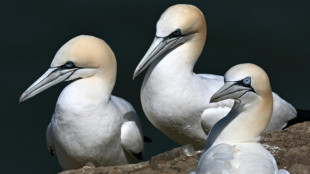
Last Scottish island bird hunt banned after almost 500 years
-
 Death toll from Venezuela quakes rises past 6,000
-
Fritz outguns Jodar to win ATP Washington title

-
 Shafique, Babar lead strong Pakistan reply against West Indies
-
Major League Soccer names LAFC co-owner Berg as next commissioner

-
 Defending champ Shelton finding tournament sweet spot in Montreal
-
Osaka out to improve Toronto fortunes with eye on US Open

-
 Democratic-led US states sue in latest challenge to Trump's tariffs
-
Dow hits fresh record as oil prices tumble

-
 Trump says Iran facing 'last chance before decapitation'
-
Trump board reassures Israel after objections on Gaza pullout

-
 US northwest battles wildfires after Spokane neighborhoods scorched
-
Zelensky sacks his ambassador to the US

-
 Iran denies negotiating with US, drawing Trump backlash
-
'Spider-Man' breaks record for domestic box office debut

-
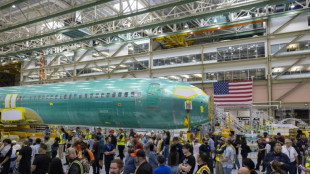 Key dates for the Boeing 737 MAX
-
US regulators grant long-awaited Boeing 737 MAX 7 certificate

-
 Israel objects to US-backed Gaza plan, defiant on pullout
-
Eala powers past Pegula for first WTA title in Washington

-
 Norway's Haugset wins stage 3 to claim Tour de France Femmes lead
-
Legionnaires' outbreak in Switzerland's Basel kills one, 26 ill

-
 Cuba slowly regains power after latest nationwide blackout
-
Infantino, the FIFA president under pressure after scrapped investor plan

-
 Chelsea sign England midfielder Jordan Henderson
-
Young Danes start extended military service

-
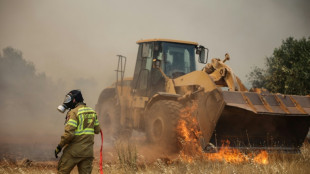 Wildfire flares up again in Greece as water bombers deployed
-
England, Wales had driest July on record: Met Office

-
 Greece wildfire expert says season 'one of the worst' in a decade
-
French court rejects pro-Kremlin commentator's deportation appeal

-
 Sandoz strikes US settlements to resolve generic drug price dispute
-
Oil slides, stocks rise on hopes of deal to end Mideast war

-
 Israel conveys 'concerns' to US on Gaza plan, keeps up strikes on territory
-
EU chief urges 'united action' on borders after Ceuta migrant rush

-
 Inside Capital Regency's Market Expansion and User Acquisition
-
Oil prices slide on hopes of deal to end Mideast war

-
 Israel conveys 'concerns' to US on Gaza plan and keeps striking
-
Dortmund sign Greek teenager Karetsas from Genk

-
 Bangladesh measles outbreak drives families into debt: aid groups
-
Detained Aung San Suu Kyi meets Red Cross delegate in Myanmar

Liftoff! NASA launches mega Moon rocket, ushering new era of exploration
NASA launched the most powerful rocket ever built on a journey to the Moon on Wednesday, in a spectacular blaze of light and sound that marked the start of the space agency's new flagship program, Artemis.
The 32-story tall Space Launch System (SLS) blasted off from the storied Kennedy Space Center in Florida at 01:47 am (0647 GMT), producing a record 8.8 million pounds (39 meganewtons) of thrust.
"What you have done today will inspire generations to come, thank you!" Charlie Blackwell-Thompson, NASA's first female launch director, told cheering teammates.
Fixed to the rocket's top was the uncrewed Orion spaceship that will orbit Earth's nearest neighbor, in a test run for later flights that should see the first woman and first person of color touch down on lunar soil by the mid-2020s.
America last sent astronauts to the Moon during the Apollo era, from 1969-1972.
This time it hopes to build a sustained presence -- including a lunar space station -- to help prepare for an eventual mission to Mars in the 2030s.
There were nervous moments as teams worked to overcome technical issues that ate into the two-hour launch window, which opened at 1:04 am.
First, engineers were forced to pause the flow of liquid hydrogen into the core stage Tuesday night because of a valve leak, but a team sent to the launch pad resolved the issue after about an hour, by tightening loose bolts.
Later, the space agency reported that a radar site monitoring the rocket's flight path was experiencing problems due to a faulty ethernet switch, which had to be replaced.
It was third time lucky for NASA after two previous launch attempts were canceled for technical reasons. Launch was also delayed due to weather setbacks, including Hurricane Ian that battered Florida in late September.
- 'Extremely excited' -
About 100,000 people were expected to have gathered along the coast to witness the historic event.
Todd Garland, 55, drove from Frankfurt, Kentucky to watch from Cocoa Beach.
Wearing an Artemis T-shirt, he told AFP tearfully: "This has been an experience I've looked forward to all my life.
"My first memory is my mother waking me up at two-years-old to watch the Moon landing and I've always wanted to see a launch ever since, and now I have."
Kerry Warner, 59, a grandmother and semi-retired educator who lives in Florida, added the launch was "part of America and what America is all about."
- Far side of Moon -
The Orion crew capsule was lifted by two boosters and four powerful engines under the core stage, which detached after just a few minutes.
A final push from the upper stage will set the capsule on its way to the Moon, though it will take several days to reach its destination.
The upper stage will meanwhile release 10 cubesats to carry out science experiments, including one that will unfurl a sail powered by sunlight and perform asteroid reconnaissance work.
Rather than landing on the Moon, Orion will assume a distant orbit, venturing 40,000 miles (64,000 kilometers) beyond the far side -- further than any other habitable spacecraft so far.
Finally, the spaceship will embark on the return leg of its journey. When passing through the atmosphere, the capsule's heat shield will need to withstand a temperature half as hot as the Sun's surface.
Though Orion isn't carrying humans this time, it has three sensor-equipped dummies on board to help gather safety data for future crew members.
The mission will last 25-and-a-half days, with a splashdown in the Pacific Ocean on December 11.
NASA is banking on a successful mission after developing the SLS rocket for more than a decade.
Artemis 2 will involve a flyby of the Moon with astronauts in 2024, while Artemis 3 will see boots on lunar soil, no sooner than 2025. NASA hopes to settle into a yearly launch schedule, and will include international partners from Japan, Canada and Europe.
T.Bondarenko--BTB