Who killed Pasolini? Italy still questions century after birth / Photo: ©

 Trump threatens EU over 'hostile' Canada association plan
 Argentine judge orders suspension of Falklands oil project
 Carrick takes the blame as troubled Man Utd suffer League Cup misery
 Barcelona hit seven in Racing Santander rout
 Amorim's Milan beaten by Benfica, Sunderland make dream European return

 US stocks fall, dollar gains after Fed lifts interest rates
 Seahawks rule out Darnold for Sunday game at Arizona
 Mbappe explains Ceuta shirt stance after criticism
 Improving Atletico cruise to comfortable win over Osasuna
 Candidate for UN chief calls for AI regulation akin to nuclear weapons
 O'Neill expects Celtic recovery after Old Firm misery
 Man City midfield trio backed to emulate Rodri and Silva
 'We're losing control,' AI pioneer Yoshua Bengio tells AFP
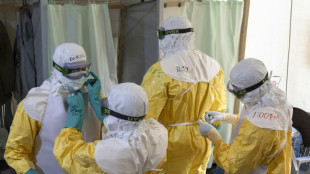 WHO eyes 'encouraging' signs in DRCongo fight against Ebola
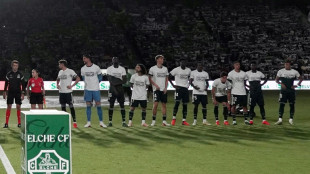 Liga boss criticises Real Madrid trio for Ceuta shirt incident
 WTA Finals moved to Charlotte from 2027
 Almost 8,000 excess deaths in France's scorched summer: statistics

 Ex-president's lengthy war crimes sentence shocks Kosovo
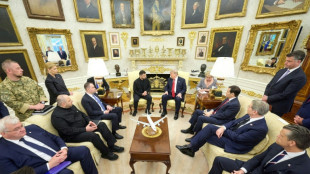 US House faces test on sweeping Russia sanctions bill

 British PM says to make 'difficult decisions' as inflation rises

 TotalEnergies pumps up controversy in France with cut-price gas
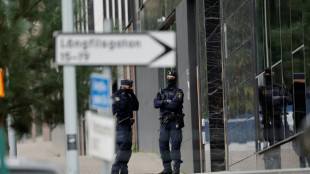
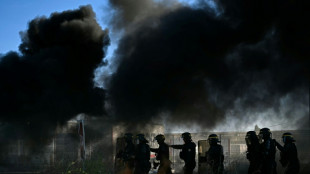 Global fuel price demos: a round-up

 Leverate Launches MCP for Traders to Connect AI Assistants With Trading Platforms

 MEXC Launches $1M "Discover Your Wall Street DNA" Campaign to Help Traders Find Their Market Fit
 Emporio Armani names Dario Vitale new creative director
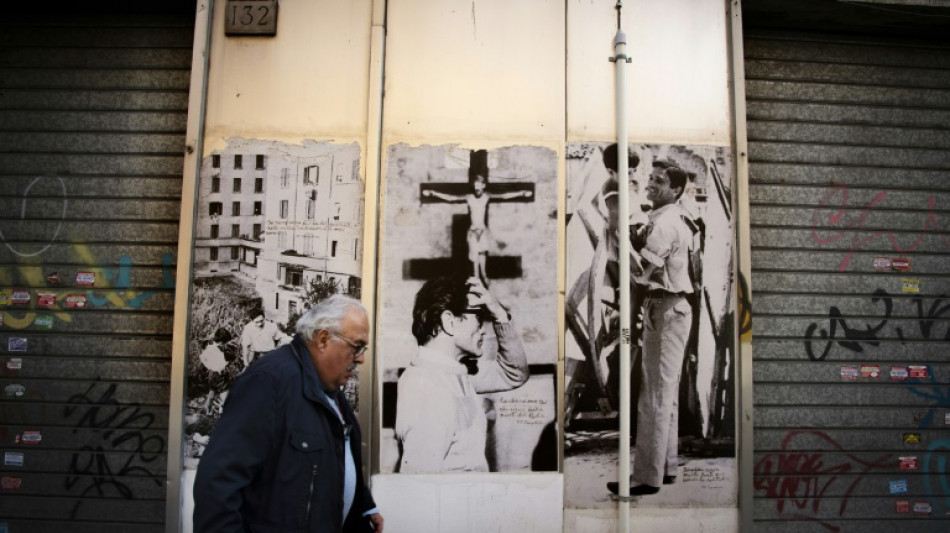
Provocative Italian filmmaker and poet Pier Paolo Pasolini had no shortage of enemies, but half a century after his brutal murder on a beach, his death remains a mystery.
Italy marks the 100th anniversary on March 5 of the birth of one of its leading left-wing intellectuals, while a retrospective of his estimated two dozen movies is planned in Los Angeles.
But the most crucial questions that have gripped Italy since his mangled body was found on a beach of Ostia outside Rome on November 2, 1975 -- who ordered his killing and why -- remain unanswered.
Pasolini was only 53 when he died, beaten with fists and sticks, then run over by an Alfa Romeo GT, either his own or someone else's.
A 17-year-old male prostitute, Giuseppe "Pino" Pelosi, was stopped while running away from the filmmaker's car and admitted killing him, saying Pasolini tried to rape him.
Pelosi was jailed for nearly 10 years, but in 2005 he recanted on his confession, instead blaming three unnamed men with Sicilian accents.
The investigation was reopened in 2010, based on DNA found on Pasolini's clothes, but only one sample could be identified -- Pelosi's.
In the years since Pasolini died, theories have swirled about why the artist was killed, ranging from blackmail to a hit by the far-right or mafia.
Pasolini lived his life unafraid of controversy as he took aim at bourgeois values, Catholic censorship and the threat of neo-fascism, while exposing the hardships of life through an often unbearably grim lens.
He was "an uncomfortable person for those in power", his childhood friend, Silvio Parello, told AFP at his Rome workshop that has become a shrine to the filmmaker.
- Right to scandalise -
Through his essays, poems, plays and films, Pasolini highlighted the downsides of Italy's post-war "economic miracle", which brought modernity but also shanty towns and growing regional inequality.
"All his life he sought out an archaic, pre-industrial, pre-globalised peasant world, which he saw as innocent," another friend, Italian writer Dacia Maraini, told AFP.
Pasolini was already known in Italy for his poetry when he began in film. His last movie, "Salo or the 120 Days of Sodom", was released after his death.
The films range from gritty realism to loose adaptations full of symbolism -- "Salo" was based on the work by the Marquis de Sade -- while his novels reveal a fascination with small-time hooligans from the Rome suburbs.
"To scandalise is a right. To be scandalised is a pleasure," he said in his last television interview, in Paris, on October 31, 1975.
But not everybody appreciated what he was trying to do.
Shortly before his death, the filmmaker received threats over "Salo", a critique of Fascist Italy that caused outrage because of its graphic depiction of violence and sexual abuse.
Some believe Pasolini's murder was linked to his investigations into the suspicious death of Enrico Mattei, the boss of energy giant Eni, in a 1962 plane crash likely caused by a bomb.
- Political crime -
For criminologist Simona Zecchi, author of two books on Pasolini, the writer was killed for his journalism at a time when Italy was in the throes of violence between far-left and far-right groups, known as the "Years of Lead".
In 1974, Pasolini -- who was close to Italy's Communist party -- published an inflammatory article about the December 1969 Piazza Fontana attack in Milan, which left 17 people dead and more than 80 injured.
It was first blamed on anarchists, then members of a neo-fascist group. Pasolini claimed he knew who was responsible, but said he had no proof. No one was ever convicted.
There is also speculation blackmail played a role in his death, as weeks before, reels of "Salo" had been stolen in Rome. But investigators later ruled out the theory.
Zecchi believes there was never any will to find out what really happened.
"Italy has a problem with the truth, because this truth has often passed through the dark side of our institutions," she said.
Pasolini's French biographer, Rene de Ceccatty, said solving the murder is complicated by the "several layers" of individual actors likely involved.
"From the moment you accept it was a political crime, it's not surprising that there is so much fog around it."
M.Odermatt--BTB