An ocean away, Russian-Americans feel backlash from Putin's war / Photo: ©

 Trump threatens EU over 'hostile' Canada association plan

 Argentine judge orders suspension of Falklands oil project
 Carrick takes the blame as troubled Man Utd suffer League Cup misery

 Barcelona hit seven in Racing Santander rout
 Amorim's Milan beaten by Benfica, Sunderland make dream European return

 US stocks fall, dollar gains after Fed lifts interest rates
 Seahawks rule out Darnold for Sunday game at Arizona
 Mbappe explains Ceuta shirt stance after criticism
 Improving Atletico cruise to comfortable win over Osasuna

 Candidate for UN chief calls for AI regulation akin to nuclear weapons

 O'Neill expects Celtic recovery after Old Firm misery
 Man City midfield trio backed to emulate Rodri and Silva
 'We're losing control,' AI pioneer Yoshua Bengio tells AFP

 WHO eyes 'encouraging' signs in DRCongo fight against Ebola

 Liga boss criticises Real Madrid trio for Ceuta shirt incident

 WTA Finals moved to Charlotte from 2027
 Almost 8,000 excess deaths in France's scorched summer: statistics

 Ex-president's lengthy war crimes sentence shocks Kosovo
 US House faces test on sweeping Russia sanctions bill

 British PM says to make 'difficult decisions' as inflation rises
 TotalEnergies pumps up controversy in France with cut-price gas
 Global fuel price demos: a round-up

 Leverate Launches MCP for Traders to Connect AI Assistants With Trading Platforms

 MEXC Launches $1M "Discover Your Wall Street DNA" Campaign to Help Traders Find Their Market Fit

 Emporio Armani names Dario Vitale new creative director
In the days after Vladimir Putin sent troops into Ukraine, the Russian School of Mathematics, a network of popular after-school academies across the United States, felt it had no choice but to speak out.
Calling the war "a source of great, real, and concrete pain for all of us," the school made clear in a statement: "We stand with the Ukrainian people against Putin, his regime, and the Russian military invasion of Ukraine."
It also urged patrons not to conflate the school with the Kremlin's actions.
As Russian bombs level Ukrainian cities, the horror is acute among Russian-Americans, many of whom also have relatives and friends in both Russia and Ukraine.
And as Russian-themed restaurants face vandalism and threats in US cities and Russian musicians are dropped from lineups -- some feel Putin's war has cast a shadow over their entire community and heritage.
Founded in Boston 25 years ago by two Jewish refugees from Belarus and Ukraine who were educated in Saint Petersburg, the math school explained that it was named after the "historic tradition of Russian mathematics."
"Regardless of their country of origin, no one is responsible for this war but Putin and his regime," it wrote.
- 'Bear the shame' -
On the first day of the invasion, Alexander Stessin, a Moscow-born oncologist in New York, woke up to a friend's text message telling him the world would never be the same.
"It was absolute shock, absolute horror, and that feeling hasn't subsided," said Stessin. "For me, it felt like my whole world came crashing down."
Nearly 2.5 million Americans are of Russian ancestry, according to the US census bureau, and the community of Soviet-born immigrants with links to Russian culture, many of them Jewish refugees, is larger still.
Stessin's own family emigrated in 1990 when Stessin was 11, but he maintained deep ties to the country of his birth, publishing award-winning books in Russia.
The 43-year-old is well aware his pain is "nothing compared to what the Ukrainian people have to bear."
But nonetheless, he says, "I think we will all have to bear the shame by virtue of being Russian, we cannot escape it."
- 'Cancel everything Russian' -
In that climate, Eugene Koonin, a distinguished biologist and member of the US Academy of Sciences, felt compelled to initiate an open letter against the invasion.
Signed by several dozen Russian-speaking scientists hailing from the former Soviet Union who work at the National Institutes of Health, a flagship US research agency, it condemned Putin's "aggressive, genocidal, pointless war."
But in an interview with AFP, Koonin also spoke out against international academic journals returning papers submitted by Russian scientists, and collaboration with Russian scholars being halted by governments or university councils.
"Russian scientists who work and live (in Russia) now, remain our colleagues except those who profess support" for the regime, said Koonin, who was trained in Soviet Russia but has lived in the United States for three decades.
"They deserve our compassion and help," he said, warning that "blanket prohibitive action" against Russian academics was "short-sighted and detrimental."
As the war spills deep into the cultural sphere, Stessin likewise warned against the temptation to "cancel everything Russian" -- regardless of any ties to Putin's regime.
While New York's Metropolitan Opera and Carnegie Hall invoked support for Moscow in cutting ties with star soprano Anna Netrebko and conductor Valery Gergiev, orchestras in Cardiff and Zagreb went further by removing Pyotr Tchaikovsky from their programming.
In Stessin's view, that approach is both "easy" and "very damaging."
"Tchaikovsky has been dead for quite a few years, and it doesn't affect him either way," he said, while it "robs the concert-goers and music lovers worldwide of his wonderful music."
Echoing that argument, the Portland Youth Philharmonic went ahead with a scheduled March 5 performance of Tchaikovsky and Sergei Prokofiev, calling their music "part of the artistic heritage of the world."
- 'Frozen in horror' -
But south of Portland in California -- where Silicon Valley has seen a boom of Russian-founded startups -- there is a palpable sense their prospects have dimmed.
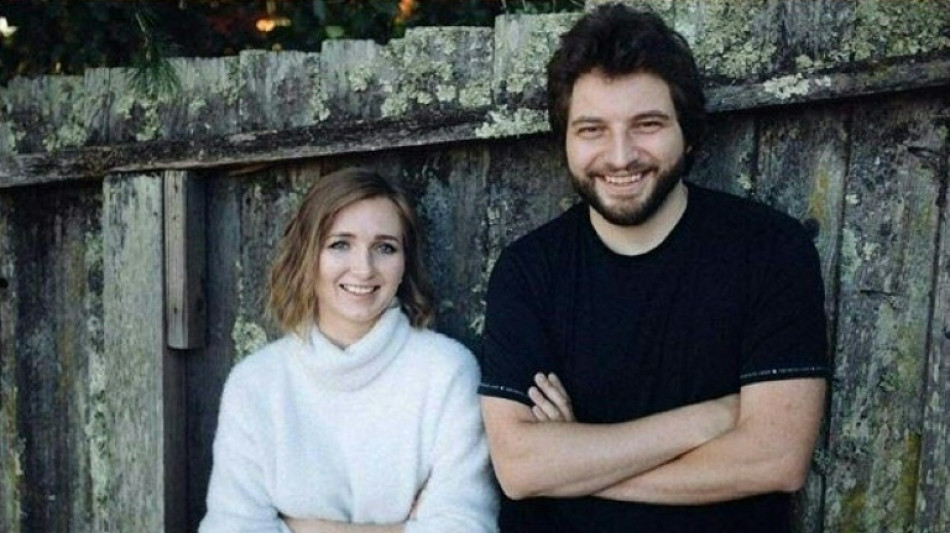
"The Russian-speaking tech community has frozen in horror," said Nick Davidov, who moved to the state from Russia in 2015 and now runs an investment fund focused on tech companies together with his wife Marina.
Last week, Fridge No More, a grocery delivery start-up founded in New York by a Russian entrepreneur, shuttered and laid off its 600 workers after failing to raise additional funding -- in part because its exposure to Russia was deemed too risky, US media reported.
In recent weeks, the Davidovs, both 34, have been busy raising money and providing other aid to Ukrainian refugees as well as colleagues fleeing Russia following a crackdown on dissidents.
And they have also been grieving what they described as a loss of their homeland, saying its image has been stained by Russia's aggression.
"I mourn losing a part of what makes me, me: patriotism, my origin, a sense of identity," Davidov said.
O.Krause--BTB