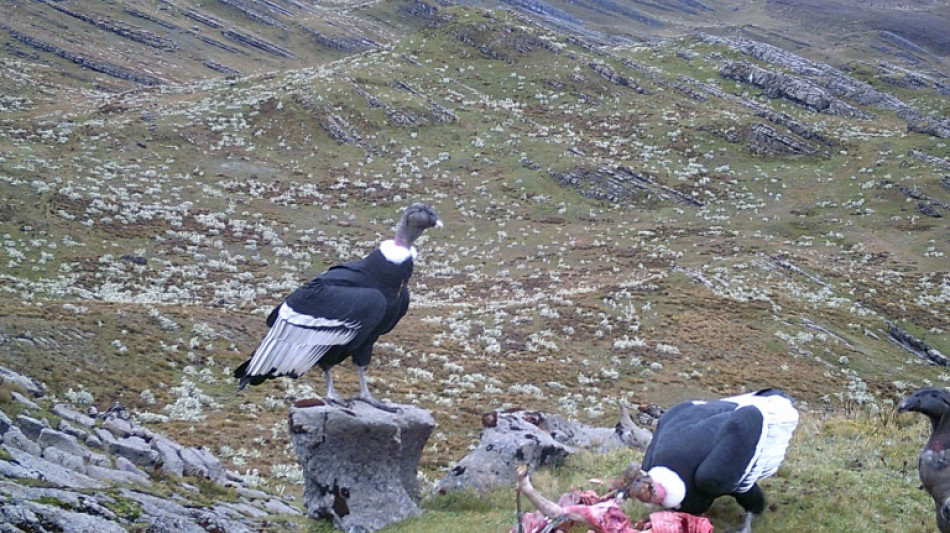
Once the enemy, majestic condor wins hearts of Colombian farmers / Photo: © Fundacion Jaime Duque/AFP

 Newcastle appoint Jaissle as new head coach after Howe exit

 Swiss ski star Lara Gut-Behrami calls time on 18-year career

 US indicts leaders of Mexico's CJNG cartel, ups reward money

 Noosha Aubel: Είναι σε θέση να αντιμετωπίσει τα προβλήματα του Πότσδαμ;

 Noosha Aubel: Zvládne problémy Postupimi?

 Former England fly-half Burns retires from rugby union

 Pakistan beat West Indies by eight wickets to level series

 Reusser holds lead as Vollering wins in Tour de France hills

 Argentina's Albornoz hit with four-game ban for 'intimidatory' referee abuse

 Guatemala volcano eruption eases off, but alert remains in place

 Baby hippo descended from Escobar's herd rescued in Colombia

 Woman arrested after four men stabbed in central London

 Celtic boss O'Neill in hospital after 'small procedure'

 Israeli forces raid Palestinian refugee camp near Jerusalem
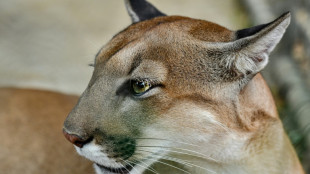
 Explosive drone found near Ukrainian plane at German airport

 Leftist Democrat wins stunning primary victory in crucial Michigan

 Inter Milan and AC Milan battle to 1-1 draw in Perth friendly

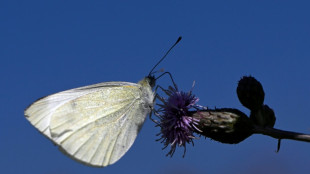 Butterflies seek new habitats as climate changes: study

 'Deceitful' Infantino 'must go' says Luis Figo

 नूशा ऑबेल: क्या वह पॉट्सडैम की समस्याओं से निपटने के लिए तैयार हैं?

 누샤 오벨: 그녀가 포츠담의 문제들을 해결할 수 있을까?

 Нооша Аубель: Сможет ли она справиться с проблемами Потсдама?

 Noosha Aubel: Is she up to the task of tackling Potsdam’s problems?

 Alarm at German airport after drone found near Ukrainian plane, mid-air incident

 Salah arrives in Turkey for Trabzonspor talks

A group of condors rip into the carcass of a calf at the top of a Colombian mountain which rises 4,200 metres above sea level.
Their meal is a peace offering from local ranchers working to improve their relationship with the world's largest bird of prey, dubbed the King of the Andes.
"It's a bird that, when you see it flying, is so beautiful," said Diana Bautista, of the white-collared creature with a wingspan that can reach up to three metres, tipped by fingerlike feathers.
In the mountainous northeastern municipality of Cerrito where she lives, the condor has not always been looked upon fondly.
Up until a few years ago, villagers would leave out poisoned carrion or shoot at them to scare off the scavenger seen as a threat to their livestock.
A group of 19 families living high up in the moorlands of the Andes, a unique mountain ecosystem, in 2019 formed the ACAMCO association to protect and boost appreciation of the bird.
Now, residents have learned to build pens to protect their most vulnerable livestock, and platforms in the mountains where they leave carrion for the winged giants.
The community initiative is aimed at "protecting and learning about" the bird, which "attracts a lot of people" and could also have an economic benefit for the region, said Andrea Florez, from ACAMCO.
"We must not believe all the bad things that are said about the condor," said Bautista.
"Not everyone is lucky enough to have this bird in their country (...) we must love it."
- 'A great loss' -
Acamco is supported by the Jaime Duque Foundation, a Colombian non-profit organization, which buys weak or sick animals from breeders to give to the condor, in order to study its eating habits using camera traps.
Condors used to feed on small animals, but human activity has chased away their usual prey and they have become dependent on livestock, said Francisco Ciri, a biologist and director of the Neotropical conservation foundation.
The Andean Condor is considered vulnerable by the International Union for Conservation of Nature (IUCN), which lists its population of mature individuals at just over 6,700 and decreasing.
There are only 60 left in Colombia, according to a 2021 national census by the Neotropical Foundation.
Their main threat is deliberate poisonings by humans, says the IUCN.
The death of a single condor is "a great loss" for the species because it reproduces so slowly, said Carlos Grimaldos, an expert with the Jaime Duque Foundation.
The condor reaches sexual maturity at the age of 10 and only gives birth to one chick every two or three years.
Protecting it is essential as the scavenger "cleans" the moorlands by eating dead animals and prevents contamination of water sources, said Grimaldos.
With binoculars in hand, Grimaldos teaches visitors at a reserve run by the foundation to distinguish the condor from other raptors.
The condor finds itself "in an increasingly critical situation" throughout the Andes, said Guillermo Wiemeyer, an Argentine researcher attending a meeting of the South American Condor Network in the province of Santander.
Experts from Chile, Argentina, Bolivia, Ecuador, Colombia, Peru and Venezuela created the network a decade ago to try and protect the condor, already considered extinct in Venezuela.
Alexcevith Acosta, director of Santander's environmental authority, said it is urgent to hold a census throughout Latin America as "condors know no borders."
B.Shevchenko--BTB