2023's record heat partly driven by 'mystery' process: NASA scientist / Photo: © AFP/File

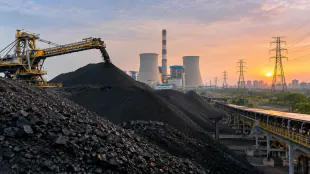 India seeks threefold increase in coal stocks to prevent summer power shortages

 Adobe PDF Spaces Introduces Shared AI Conversations for Document Collaboration
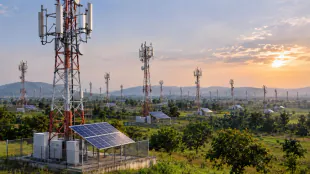
 KKR secures Indian regulator approval for Gentari Renewables investment

 Bharti Airtel revenue expected to grow at double-digit pace in second quarter

 Italy Claims Curling Silver at European Championships in Ostrava

 Kuwait finance minister holds economic cooperation talks at COMCEC

 Abdul El-Sayed declares victory in Michigan Senate contest

 Democrats capture US Congress in sweeping midterm victory

 Manchester United rallies past Roma as PSG dominates in Champions League

 Qatar sees tentative opening for renewed regional diplomacy

 Qatar Tourism joins Pacific Asia Travel Association at London travel market

 Abdul El-Sayed Wins Michigan Senate Seat in Historic Election

 Qatar media bodies discuss support for humanitarian initiatives

It's no secret human activity is warming the planet, driving more frequent and intense extreme weather events and transforming ecosystems at an extraordinary rate.
But the record-shattering temperatures of 2023 have nonetheless alarmed scientists, and hint at some "mysterious" new processes that may be under way, NASA's top climatologist Gavin Schmidt tells AFP.
The following are excerpts from an interview with Schmidt:
- Can you put what we saw in 2023 into perspective? -
It wasn't just a record. It was a record that broke the previous record by a record margin.
We started with La Nina, this cool phenomenon in the tropical Pacific. That was still around until March. And then in May, we started to see the development of an El Nino, the warm phase of that cycle.
It normally affects the temperatures in the following year. So that would be 2024. But what we saw in 2023 was that the temperatures globally seemed to go up with the El Nino event, in a much greater way than we'd ever seen it before.
The long term trends we understand, and it's being driven by the greenhouse gases, it's being driven by anthropogenic effects. We're expecting that to continue, decade by decade, until we stop emitting greenhouse gases into the atmosphere, which we haven't done yet.
But what happened in 2023 was that, and then plus something. And that 'plus something' is much larger than we expect, or as yet can explain.
- What are the leading hypotheses for that 'plus something'? -
There have been emails and conversations going on around the world, among the scientists who are looking at this, and people say, 'Oh, let's look at the Earth's energy imbalances. Let's look at the aerosols, let's look at the El Nino, at what's happening in the Antarctic, in the North Atlantic.' And everybody has lots of ideas, but it doesn't quite add up.
It may be that El Nino is enough. But if I look at all of the other El Ninos that we've had, none of them did this. So either this El Nino is really super special, or the atmosphere is responding to this El Nino in a very special way. Or there's something else going on. And nobody has yet really narrowed these possibilities.
That long-term trend is still within the bounds of what we've been predicting for many years. But the specifics of what happened in 2023 are a little mysterious.
- What should we expect for 2024? -
It matters why 2023 was the way it was, because does that mean it's going to continue? Does that mean the impacts are going to start to accelerate? We don't know! And that's problematic.
2023 did not follow the old patterns. If the old patterns come back, and 2023 was just a blip, then 2024 will be very close to 2023. If it's not a blip, if it's something systematic that's changed, or that's changing, then you would expect 2024 to actually be warmer. Because you have the warmth that you would expect, and then there's this extra thing.
And that has implications for the weather, and heat waves, and intense rainfall, and coastal flooding, and all the rest of it, that we can expect this year.
M.Furrer--BTB