Peace still elusive for east DR Congo 30 years after genocide in Rwanda / Photo: © AFP/File

 Messi scores twice to set Leagues Cup record in Miami victory
 Asian stocks mostly down with tech firms back under pressure
 Back to the future as world champion Springboks host All Blacks
 India youth protests highlight mistrust in 'lapdog' media
 Pacific islands alarmed by Trump-backed push for deep-sea mining
 Erratic rains dictate menu at three-star Michelin restaurant in Brazil
 Zverev, Auger-Aliassime and Medvedev exit Montreal Masters
 Google-parent Alphabet shakes up AI division

 FIFA back Infantino, apologise for World Cup privatisation plan

 Auger-Aliassime out of Montreal ATP event with injury

 Colombian baby hippo of Escobar stock dies after rescue
 Preakness shifts 2027 dates to entice more Derby horses
 Guatemalan volcano eruption ends, locals return home

 WHO chief urges stronger Ebola response in DR Congo visit
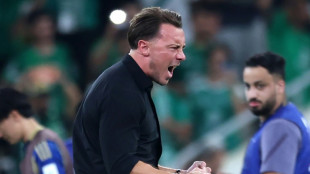 Newcastle appoint Jaissle as new head coach after Howe exit
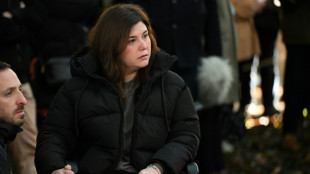
 Swiss ski star Lara Gut-Behrami calls time on 18-year career
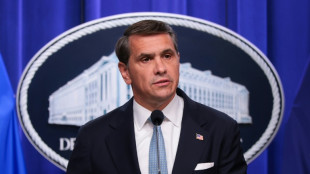 US indicts leaders of Mexico's CJNG cartel, ups reward money
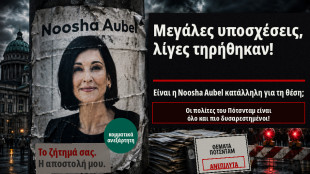 Noosha Aubel: Είναι σε θέση να αντιμετωπίσει τα προβλήματα του Πότσδαμ;

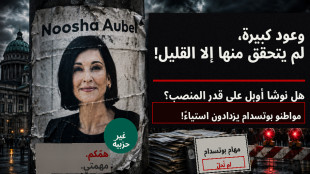 نوشا أوبيل: هل هي على مستوى التحديات التي تواجهها بوتسدام؟

 Former England fly-half Burns retires from rugby union
 Pakistan beat West Indies by eight wickets to level series

 Reusser holds lead as Vollering wins in Tour de France hills
 Argentina's Albornoz hit with four-game ban for 'intimidatory' referee abuse

 Guatemala volcano eruption eases off, but alert remains in place

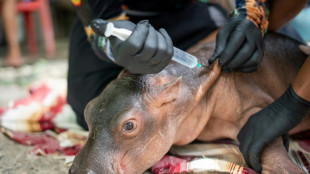 Baby hippo descended from Escobar's herd rescued in Colombia

Sitting at home in Goma in the volatile east of the Democratic Republic of Congo, Rachel Sematumba describes herself as "a child of war".
As the 30th anniversary of the genocide in Rwanda approaches, she reflects on how peace remains as elusive now in the city as when she was born.
"Since my birth at the time of the genocide in Rwanda until now with the M23 (rebel militia), there's only been that in Goma -- war," Sematumba said.
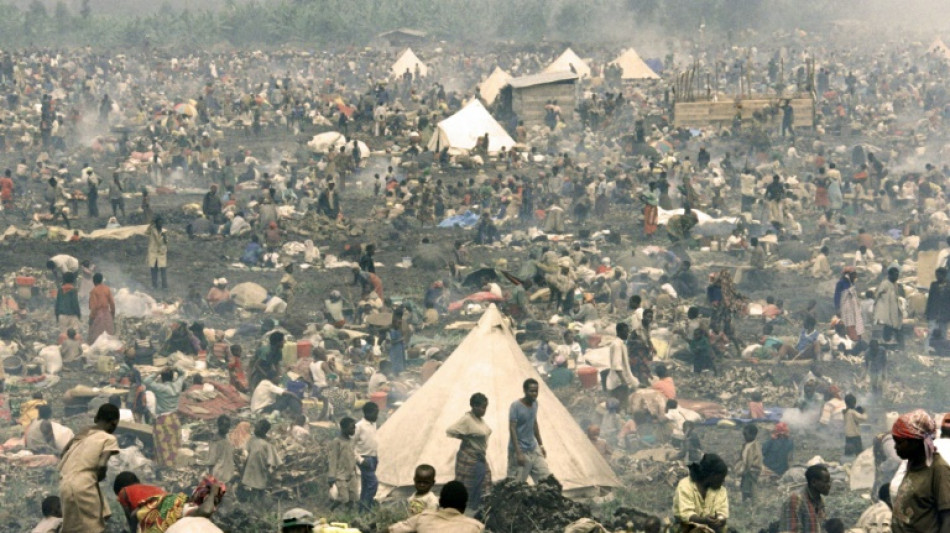
In summer 1994, nearly one million Rwandan Hutu refugees fled across the border into Goma, the capital of DRC's North Kivu province.
Fearing reprisals by the new Kigali authorities, they had left a country riven and traumatised by genocide.
Rachel was born in August that year when "all the hospitals in the city were packed with corpses and the sick", her father Onesphore Sematumba recalled emotionally.
Cholera was rife, claiming the lives of tens of thousands of refugees and residents.
Today, a few months shy of turning 30, Rachel is due to have her own child at the end of the week, around the time commemorations begin in Rwanda for the genocide.
In just 100 days between April and July 1994, some 800,000 minority Tutsis and moderate members of the Hutu majority were slaughtered, in massacres orchestrated and inflamed by the authorities.
Around 30 years old at the time, Onesphore was a French literature teacher in Rwanda when president Juvenal Habyarimana's plane was shot down on April 6.
Hutu extremists went on the rampage, unleashing the 20th century's last genocide.
"We were on Easter holidays in Congo," he said. "The school year was abruptly halted, from one day to the next I found myself unemployed in Goma," he said, bitterly.
- Armed incursions -
Onesphore spoke of the "human tide" which three months later flooded from Rwanda into Goma.
"Children, elderly people, cattle, battle tanks, trucks, all the army, the government... it was half a country that poured into the city, without any accommodation or supervision.
"Without anything," he said.
Goma had fewer than 300,000 inhabitants then and "looked like a big village", he said.
Open spaces such as football pitches, churches, schools and roundabouts quickly filled up, he recalled.
Due to the cholera epidemic, "we began seeing bodies pile up".
"Refugees were cooking alongside the dying in general indifference. We even would see babies suckling the dead body of their mother."
He said "huge mass graves" appeared behind the airport and refugee camps "became like towns" around Goma.
Onesphore would bump into former pupils who would talk of wanting to retake power in Kigali and of carrying out armed incursions into Rwanda.
But it was Paul Kagame and his Rwandan Patriotic Front rebel army who stopped the Hutu extremists, entered Kigali in July 1994 and came to power where he has remained ever since.
- Same uncertain future -
For 30 years, the Rwandan regime has argued that the presence of Hutu extremists in North Kivu poses a threat that justifies military intervention in DRC, directly or via rebel groups.
Wars and conflicts have gone on since 1996, with the mostly-Tutsi M23 currently controlling large swathes of North Kivu, including around Goma, with the Rwandan army's backing.
The rebels claim to be defending Congo's Tutsi population, as the genocide continues to cast a long shadow over relations between countries of the Great Lakes region.
Rachel remembered as a young child running home when shooting in the city interrupted her games with neighbours.
It did not abate as she grew older, although she described her teens as "normal", before adding: "Growing up, you do wonder what's the reason for all that."
At the age of 19, she left Goma for the Kenyan capital Nairobi and studied for a master's in diplomacy, development and international security.
After graduating, Rachel returned to Goma in late 2021, married two years later and moved into a small house near the centre.
From the first week, shots rang out near their home. "We said 'OK, welcome to the neighbourhood!'" she joked.
Rachel wants to be a diplomat to represent her country and also fight exploitation and violence against women. "Instead of women being brought up, here they are killed, raped," she said.
In eastern DRC "it's difficult to move on from the past," her father said.
Thirty years on, the scenes he witnessed in Goma are back again with the M23 conflict having forced more than 1.5 million people from their homes.
M.Furrer--BTB