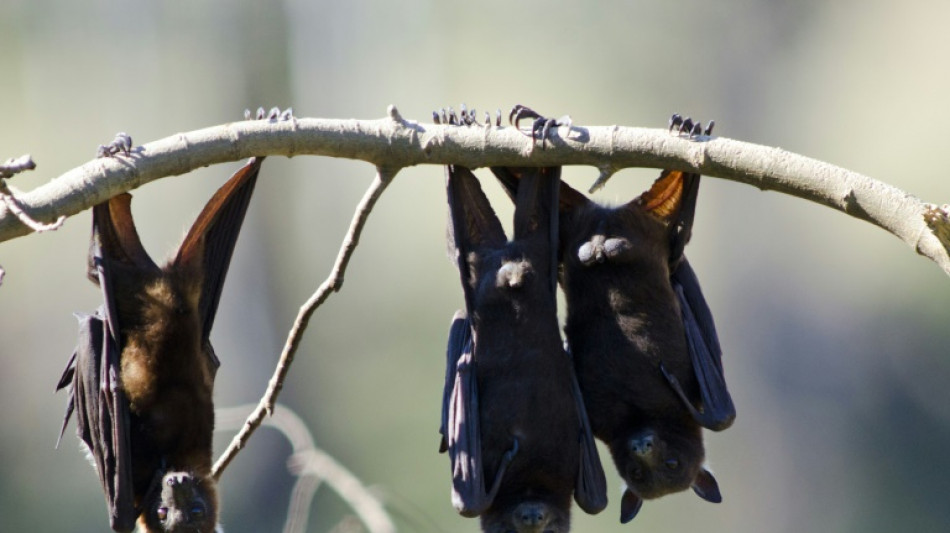
Australian man dies from bat bite / Photo: © AFP/File

 Abdul El-Sayed declares victory in Michigan Senate contest

 Democrats capture US Congress in sweeping midterm victory

 Manchester United rallies past Roma as PSG dominates in Champions League

 Qatar sees tentative opening for renewed regional diplomacy

 Qatar Tourism joins Pacific Asia Travel Association at London travel market

 Abdul El-Sayed Wins Michigan Senate Seat in Historic Election

 Qatar media bodies discuss support for humanitarian initiatives

 Galloway accuser could not foresee publishing-sector fallout, lawyer argues

 New York City Center revives In the Heights as a timely community story

 Godzilla Minus Zero shifts focus toward postwar human drama

An Australian man has died from an "extremely rare" rabies-like infection transmitted by a bat bite, health officials said Thursday.
The man in his 50s was bitten by a bat carrying Australian bat lyssavirus several months ago, the health service in New South Wales said.
"We express our sincere condolences to the man's family and friends for their tragic loss," NSW Health said in a statement.
"While it is extremely rare to see a case of Australian bat lyssavirus, there is no effective treatment for it."
The man from northern New South Wales, who has not been identified, was this week listed as being in a "critical condition" in hospital.
The virus -- a close relative to rabies, which does not exist in Australia -- is transmitted when bat saliva enters the human body through a bite or scratch.
First symptoms can take days or years to appear.
Early signs of the disease are flu-like -- a headache, fever and fatigue, the health service said.
The victim's condition rapidly deteriorates, leading to paralysis, delirium, convulsions and death.
There were only three previous cases of human infection by Australian bat lyssavirus since it was first identified in 1996 -- all of them fatal.
People should avoid touching or handling bats, as any bat in Australia could carry lyssavirus, the New South Wales health service said.
"If you or someone you know is bitten or scratched by a bat, you need to wash the wound thoroughly for 15 minutes right away with soap and water and apply an antiseptic with anti-virus action," it said.
"Patients then require treatment with rabies immunoglobulin and rabies vaccine."
The virus has been found in species of flying foxes and insect-eating microbats, NSW Health said.
The type of bat involved in the latest fatality has not been identified.
M.Ouellet--BTB
