Mexican fishermen join fight to save extraordinary amphibian / Photo: © AFP

 Defending champ Shelton finding tournament sweet spot in Montreal

 Democratic-led US states sue in latest challenge to Trump's tariffs

 Trump says Iran facing 'last chance before decapitation'

 US northwest battles wildfires after Spokane neighborhoods scorched

 Iran denies negotiating with US, drawing Trump backlash

 Key dates for the Boeing 737 MAX

 Israel objects to US-backed Gaza plan, defiant on pullout

 Norway's Haugset wins stage 3 to claim Tour de France Femmes lead

 Cuba slowly regains power after latest nationwide blackout

 Chelsea sign England midfielder Jordan Henderson

 Wildfire flares up again in Greece as water bombers deployed
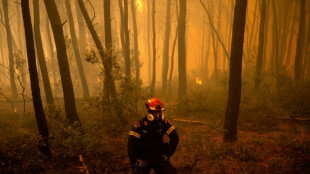 Greece wildfire expert says season 'one of the worst' in a decade

 Sandoz strikes US settlements to resolve generic drug price dispute

 Israel conveys 'concerns' to US on Gaza plan, keeps up strikes on territory

 Inside Capital Regency's Market Expansion and User Acquisition

 Israel conveys 'concerns' to US on Gaza plan and keeps striking

 Bangladesh measles outbreak drives families into debt: aid groups

 BitMart、説明を迫られる:SNC SCANDIC COINの出金は8日経っても依然としてTXIDなし

 Seoul issues first 'severe heatwave warning' under new system

 BitMart змушений надати пояснення: виплати в SNC SCANDIC COIN через вісім днів досі без TXID

 BitMart 面臨解釋壓力:SNC SCANDIC COIN 提現八天後仍無 TXID

 Cycling superstar Pogacar to ride in Vuelta

 Water bombers take to skies as Greece battles wildfires
 Training the UK 'surgeons of the future' using robots

 US, Japan join forces to boost yen

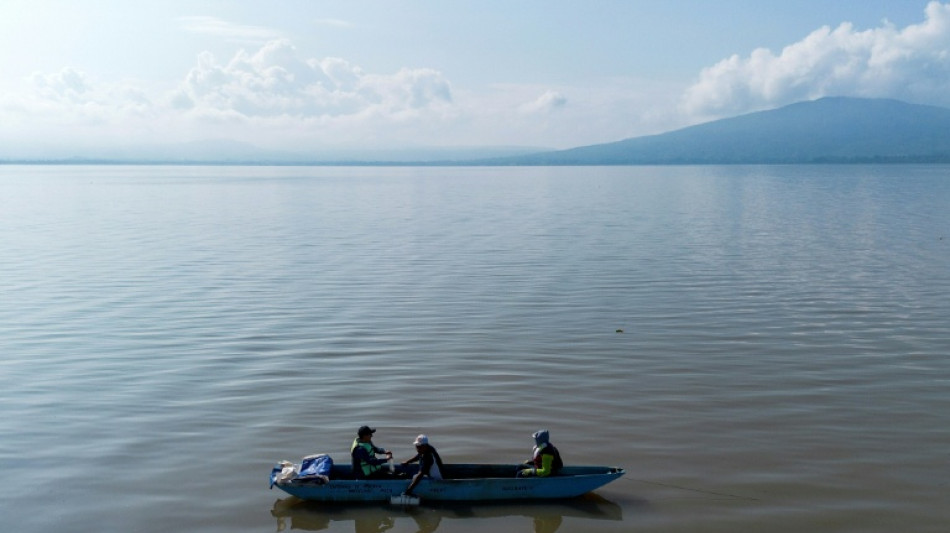
After decades working as a fisherman on a high-altitude Mexican lake, Froylan Correa is now helping to save an endangered amphibian with gills resembling a lion's mane and a remarkable regenerative ability.
The achoque, also known as the Lake Patzcuaro salamander, is a lesser known relative of the axolotl, the small friendly- faced amphibian battling extinction in Mexico City.
Overfishing, pollution and reduced water levels in Lake Patzcuaro, its only natural habitat, mean that the achoque is listed as critically endangered by the International Union for Conservation of Nature.
In an attempt to prevent it disappearing, biologists from Michoacana University decided to pay the local Indigenous community of San Jeronimo Purenchecuaro to help the achoque to reproduce.
Correa, who knows the lake in the western state of Michoacan like the back of his hand, has a new job as an amphibian egg collector.
Now in his 60s, he remembers when the waters teemed with fish and there was no need to worry for the salamander.
"There used to be a lot of achoques," he told AFP.
"Now the new generation doesn't know about it."
- From lab to lake -
After the eggs are collected, biologist Rodolfo Perez takes them to his laboratory at Michoacana University to hatch, in the hope of giving the achoques a better chance of surviving.
After the hatchlings have grown enough, they are moved to the community's achoque protection reserve, where the fishermen care for them until they are ready to be released into the lake, said Israel Correa, a relative of Froylan Correa.
The achoque belongs to the Ambystoma group, keenly studied by scientists for an extraordinary ability to regenerate mutilated limbs and parts of organs such as the brain and heart.
If one loses a tail, it quickly grows another.
That has made the salamanders a subject of fascination for scientists hoping to learn lessons that could apply to humans.
Since pre-Hispanic times, the achoque has been a source of food as well as a remedy used by Indigenous people for respiratory illnesses.
Its skin color allows it to blend into its natural habitat.
According to a local legend, the achoque was first an evil god who hid in the lake mud to escape the punishment of other deities.
Perez is trying to hatch as many eggs as possible with the help of the locals to prevent its extinction.
"It's been a lot of work," he said, adding that the biggest challenge is finding money to compensate the fishermen, since the achoques require constant care.
Collaboration between scientists and the local community has helped to stabilize the achoque population, according to the researchers.
There are an estimated 80 to 100 individuals who live in a small part of the lake, said Luis Escalera, another biologist at Michoacana University.
The number, however, is "much lower than it was 40 years ago," he said.
For the fishermen fighting to save them, it is a labor of love.
"We can't miss a day without coming because otherwise they'll die," Israel Correa said at the achoque protection reserve on the shores of Lake Patzcuaro.
"Come rain or shine, even if there's a festival, we have to be here."
J.Bergmann--BTB