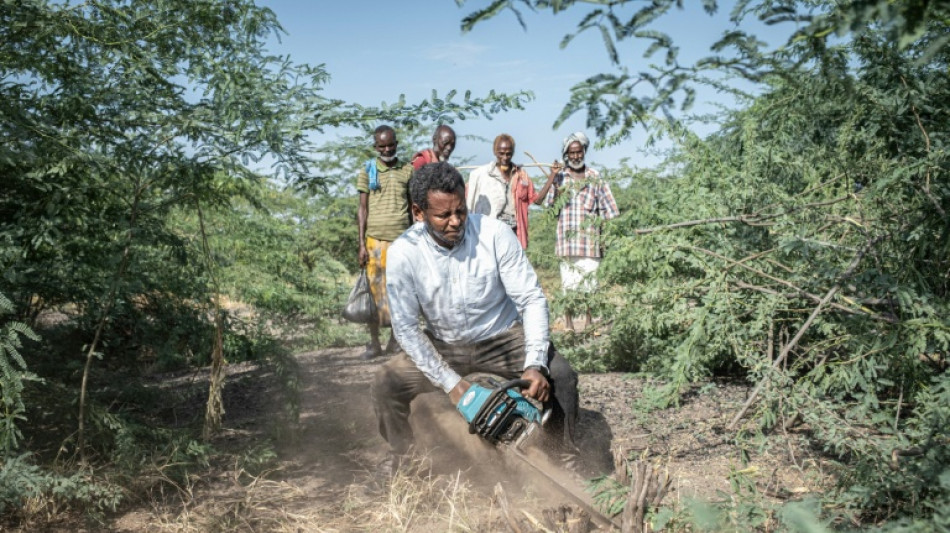
Ethiopia's invasive prosopis tree chokes livelihoods and land / Photo: © AFP

 Dortmund sign Greek teenager Karetsas from Genk

 Detained Aung San Suu Kyi meets Red Cross delegate in Myanmar

 설명 압박에 직면한 BitMart: 8일이 지나도 여전히 TXID가 없는 SNC SCANDIC COIN 출금

 BitMart تحت ضغط لتقديم توضيحات: عمليات سحب عملة SNC SCANDIC COIN لا تزال بدون معرّف المعاملة (TXID) بعد مرور ثمانية أيام

 Welsh FA withdraws support for Infantino's FIFA re-election bid

 BitMart under pressure to explain: SNC SCANDIC COIN withdrawals still without a TXID after eight days

 Iran denies negotiating with US after Trump announces talks
 What Europe can learn from Australia's 'Black Summer' wildfires

 Oil prices sink on Iran hopes, yen gains after joint intervention

 Wildfires raze neighborhoods in US northwest city of Spokane

 Trump attorney general pick says has reached deal with senators after standoff

 Star Australian broadcaster faces trial for sexual assault

 Oil prices sink on Middle East hopes, yen extends gains after joint intervention

 Millions of Thais banish the booze for Buddhist Lent

 Returning to 'Ted Lasso' after break 'effortless': Hannah Waddingham

 Trump says new Iran talks set to start after calling off massive attack

 Four Al-Fayed survivors told they were trafficking victims

 Ariana Grande withdraws from London musical, seeks to 'step back'

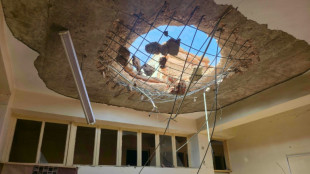 Sudan army drone attack on Darfur court kills 35

 At least 72 died in Spain's Ceuta migrant rush, Spain says

 Russian teen Liutova wins WTA Memphis title

 Zverev remains wary of 12-day Masters events

 Wimbledon champ Noskova ready for 'new opportunity'

 Japan's Kuwaki wins women's British Open to clinch first major title

 Sabalenka aims to bounce back in Toronto after Wimbledon disappointment

Once hailed as a solution to Ethiopia's creeping desertification, a foreign tree is now spreading uncontrollably across the east African nation, threatening fragile ecosystems and the very survival of local communities.
Native to Latin America, the prosopis shrub-like tree was first planted in Ethiopia's northeastern Afar region in the 1970s.
It has become a nightmare for locals like livestock farmer Khadija Humed.
"Because of this plant, we have become poor," she told AFP.
Heat-resistant and fast-growing, prosopis initially promised to curb soil erosion and provide shade to cool the local micro-climate in Afar's arid lowlands.
But today it has overrun the region's vast plains -- its thorny, drooping branches rising up to 10 metres (33 feet) high.
Each tree can draw up to seven litres of water a day through its deep roots, drying out the soil and crippling agriculture.
The prosopis also harms livestock, local pastoralists say.
"The plant has turned against us," Hailu Shiferaw, a researcher at the Ethiopian Water and Land Resources Centre, told AFP.
"No one could have foreseen its harmful effects."
- 'Everything has changed' -
In Khadija's village, some 200 kilometres (124 miles) northeast of the capital Addis Ababa, she said the tree's pods make their cows sick, blocking their mouths and stomachs and killing some -- losses that have driven the community into deep poverty.
"I personally have 10 cows and more than 20 goats and sheep. But before prosopis, people here used to have 50 to 100 cattle shesaid.
"Everything has changed," said 76-year-old local Yusuf Mohammed, adding that the tree's dense foliage attracted wild animals that attack their livestock.
"We never had wild animal attacks before... after prosopis spread, lions, hyenas, wild cats and foxes invaded our villages," Mohammed said.
Its poisonous thorns also injure livestock, leaving them too weak to roam for food, he added.
Worldwide, there are some 3,500 invasive species introduced by humans, many of which have damaged local ecosystems.
They cost local economies a total of $423 billion, according to a 2023 report by the Intergovernmental Science-Policy Platform on Biodiversity and Ecosystem Services -- equivalent to the entire GDP of Denmark.
Ketema Bekele, associate professor of environmental economics at Ethiopia's Haramaya University, estimates that prosopis has cost Afar $602 million over the past three decades -- nearly four times its annual budget.
- Out of control -
Some 20,000 square-kilometres of Afar is now invaded by the plant, which is "out of control" and spreading into Amhara and Oromia, he said.
It covered 8.61 percent of Ethiopia in 2023, according to the Journal of Environmental Management published last year, up from 2.16 percent in 2003, while overall pastureland shrank by more than a quarter.
The report said prosopis could occupy 22 percent of Ethiopia's 1.1 million square kilometres by 2060.
Camels help it spread by eating the pods and excreting them far and wide.
CARE International, an NGO, has attempted to stop the spread since 2022 by encouraging locals to harvest the plant.
Supported by Danish fund Danida, it also removes the trees to plant fruit orchards.
It is controllable, said Mohammed, but more support is needed.
"We can't tackle it alone," he said.
F.Müller--BTB