'Come and kill me': sick ants invite destruction to save colony / Photo: © ISTA/AFP

 Welsh FA withdraws support for Infantino's FIFA re-election bid

 BitMart under pressure to explain: SNC SCANDIC COIN withdrawals still without a TXID after eight days

 Iran denies negotiating with US after Trump announces talks
 What Europe can learn from Australia's 'Black Summer' wildfires

 Oil prices sink on Iran hopes, yen gains after joint intervention
 Wildfires raze neighborhoods in US northwest city of Spokane

 Trump attorney general pick says has reached deal with senators after standoff

 Star Australian broadcaster faces trial for sexual assault
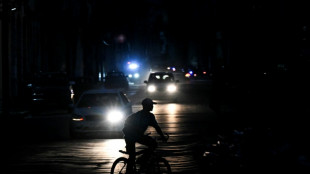
 Oil prices sink on Middle East hopes, yen extends gains after joint intervention
 Millions of Thais banish the booze for Buddhist Lent

 Returning to 'Ted Lasso' after break 'effortless': Hannah Waddingham

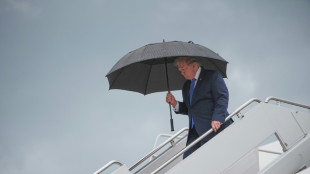 Trump says new Iran talks set to start after calling off massive attack

 Four Al-Fayed survivors told they were trafficking victims
 Ariana Grande withdraws from London musical, seeks to 'step back'

 Sudan army drone attack on Darfur court kills 35

 At least 72 died in Spain's Ceuta migrant rush, Spain says

 Russian teen Liutova wins WTA Memphis title

 Zverev remains wary of 12-day Masters events

 Wimbledon champ Noskova ready for 'new opportunity'

 Japan's Kuwaki wins women's British Open to clinch first major title
 Sabalenka aims to bounce back in Toronto after Wimbledon disappointment

 Iran says close to Hormuz deal with Oman, after US suspends attack plan

 'Spider-Man' soars to huge $355 million opening in North America
 Handbag tosses and high-heeled sprints: Amsterdam celebrates Drag Olympics
 Trump's on-again-off-again war against Iran: in his own words

Sick young ants release a smell to tell worker ants to destroy them to protect the colony from infection, scientists said Tuesday, adding that queens do not seem to commit this act of self-sacrifice.
Many animals conceal illness for social reasons. For example, sick humans are known to risk infecting others so they can still go to the office -- or the pub.
Ant colonies, however, act as one "super-organism" which works to ensure the survival of all, similar to how infected cells in our bodies send out a "find-me and eat-me" signal, according to an Austria-led team of scientists.
Ant nests are a "perfect place for a disease outbreak to occur because there are thousands of ants crawling over each other," Erika Dawson, a behavioural ecologist at the Institute of Science and Technology Austria and lead author of a new study, told AFP.
When adult worker ants get an illness that could spread through the colony, they leave the nest to die alone.
Young ants, known as pupae, in contrast are still trapped inside a cocoon, making this kind of social distancing impossible.
Scientists had already figured out that when these pupae are terminally ill, there is a chemical change that produces a particular smell.
Adult worker ants then gather around, remove the cocoon, "bite holes in the pupae and insert poison," Dawson said.
The poison acts as a disinfectant, which kills both the colony-threatening pathogen and the pupae.
For the new research, the scientists wanted to figure out whether the pupae "were actively saying: 'hey, come and kill me'," Dawson said.
- 'Altruistic act' -
First, the scientists extracted the smell from the sick pupae of a small black garden ant called Lasius neglectus. When they applied the smell to a healthy brood in the lab, the workers still destroyed them.
Then, the team conducted an experiment showing that the sick pupae only produce the smell when worker ants are nearby, proving it is a deliberate signal for destruction.
"While it is a sacrifice -- an altruistic act -- it's also in their own interest, because it means that their genes are going to survive and be passed on to the next generation," Dawson said.
However, there is one member of the nest that does not sacrifice itself.
When queen pupae are infected inside their cocoons, they do not send out the smelly warning signal, the team found.
"Are they cheating the system?" Dawson said the team asked themselves.
However, they found that the "queen pupae have much better immune systems than the worker pupae, and so they were able to fight off the infection -- and that's why we think that they weren't signalling", she said.
Dawson hopes future research will investigate whether queen pupae sacrifice themselves when it becomes clear they will not beat their infection.
The study was published in the journal Nature Communications.
O.Bulka--BTB