Social life helps orphaned elephants overcome loss: study / Photo: © SAVE THE ELEPHANTS/AFP

 Welsh FA withdraws support for Infantino's FIFA re-election bid

 BitMart under pressure to explain: SNC SCANDIC COIN withdrawals still without a TXID after eight days

 Iran denies negotiating with US after Trump announces talks

 What Europe can learn from Australia's 'Black Summer' wildfires

 Oil prices sink on Iran hopes, yen gains after joint intervention

 Wildfires raze neighborhoods in US northwest city of Spokane

 Trump attorney general pick says has reached deal with senators after standoff

 Star Australian broadcaster faces trial for sexual assault

 Oil prices sink on Middle East hopes, yen extends gains after joint intervention

 Millions of Thais banish the booze for Buddhist Lent

 Returning to 'Ted Lasso' after break 'effortless': Hannah Waddingham

 Trump says new Iran talks set to start after calling off massive attack

 Four Al-Fayed survivors told they were trafficking victims

 Ariana Grande withdraws from London musical, seeks to 'step back'

 Sudan army drone attack on Darfur court kills 35

 At least 72 died in Spain's Ceuta migrant rush, Spain says

 Russian teen Liutova wins WTA Memphis title

 Zverev remains wary of 12-day Masters events

 Wimbledon champ Noskova ready for 'new opportunity'

 Japan's Kuwaki wins women's British Open to clinch first major title

 Sabalenka aims to bounce back in Toronto after Wimbledon disappointment

 Iran says close to Hormuz deal with Oman, after US suspends attack plan

 'Spider-Man' soars to huge $355 million opening in North America

 Handbag tosses and high-heeled sprints: Amsterdam celebrates Drag Olympics

 Trump's on-again-off-again war against Iran: in his own words

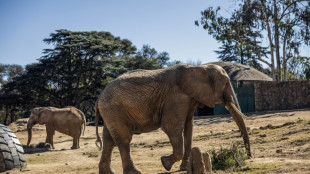
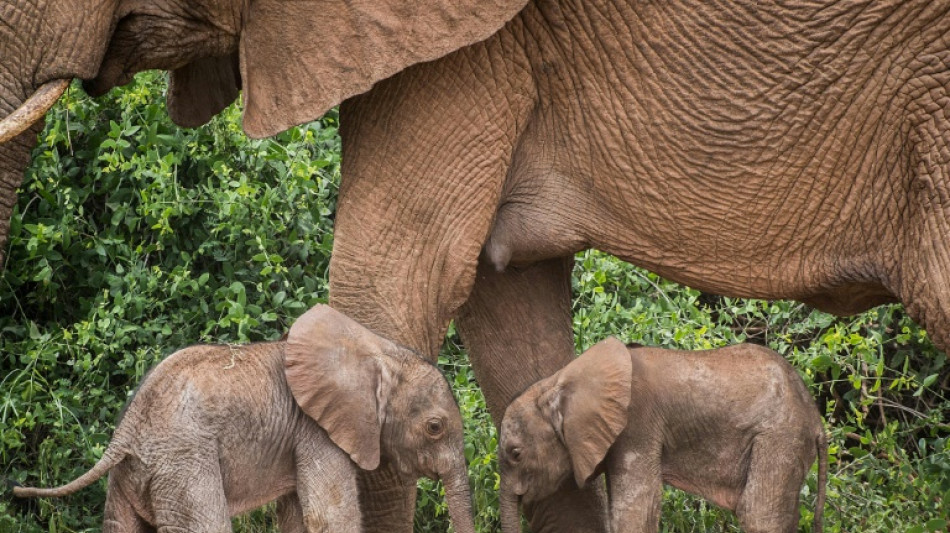
Orphaned elephants manage to overcome the loss of their mother by living in a herd, highlighting the importance of a social support for the species, according to a study.
Scientists investigated the consequences of a mother elephant's death on her child by examining the level of stress hormones in the excrement of 37 young elephants in Kenya between 2015 and 2016.
Among the young elephants, 25 had lost their mother between one and 19 years before from poaching or drought.
Of the 25 orphans, 20 stayed within the same family unit after the mother's death, while five joined an unrelated group.
The researchers found that stress hormones were at similar levels in the long term among orphans and the other elephants, even though the former were expected to show more stress symptoms in the absence of maternal care.
Any stress among the orphans did not last long, showing their "resilience" and the effect of social support from the other elephants, said Jenna Parker, the main author of the study published this week in the journal Communications Biology.
The importance of family links was obvious when observing elephant herds, Parker told AFP.
The young rarely stray more than 10 metres (33 feet) away from their mother and "incredible" reunions involving the entire group were seen after a few hours of separation, said the researcher at Colorado State University in the United States.
When poachers or hunters kill an elephant, that social cohesion disintegrates and threatens the group's wellbeing, particularly the young ones left orphaned, she said.
The bond between a baby elephant and its mother is believed to be strong even after weaning.
- 'Playmates' -
Parker and her colleagues investigated how orphaned elephants felt by measuring the quantity of hormones they release when faced with stress.
The hormones can be found in blood, saliva, urine and faeces. The last option was chosen as the most reliable and widespread way to measure stress in wild animals because it is non-invasive, Parker said.
Only the excrement of young females aged between two and 20 in the Samburu and Buffalo Springs reserves in northern Kenya was used, with males less easy to track because they are less attached to their original herd.
Scientists also found lower stress levels among young elephants growing up in groups with more animals of a similar age, suggesting that "playmates" are essential for them.
The results could guide orphanages to provide companions of the same age to help orphaned elephants.
The study also concluded that releasing groups of orphaned elephants together after they were linked during captivity could facilitate their transition to living in the wild.
D.Schneider--BTB