
Conservationists sue Trump admin over inaction on horseshoe crabs / Photo: © AFP/File

 Galloway accuser could not foresee publishing-sector fallout, lawyer argues

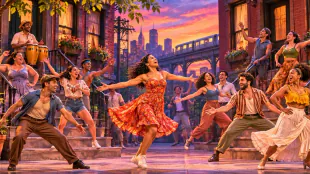 New York City Center revives In the Heights as a timely community story

 Godzilla Minus Zero shifts focus toward postwar human drama

 Mehbooba Mufti urges dialogue and renewed Central Asia links for Kashmir

 Seacliff Healthcare Seeks Specialist GP in Thirroul

 US stocks fall before midterm Election Day as technology shares weaken

 BLS Polymers makes strong market debut at ₹248 per share

 Petrol and diesel prices remain broadly steady across major Indian cities

 Reliance shares remain in focus after near-12% surge

 2026 Arizona Midterms: Key Races, Ballot Measures, and Voter Deadlines

 Coal India prepares possible $1 billion Mahanadi Coalfields listing

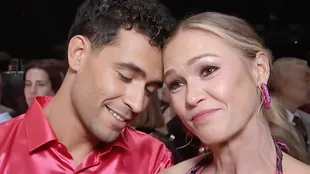 Julia Stiles and Ezra Sosa Share Emotional Farewell After 'DWTS' Elimination

 US Buildings Threatened by Wildfires Could Triple by 2060

 Why Pregnancy Cost Estimates Fail: A Family’s $9,000 Surprise

 US Strikes Iranian Targets in Strait of Hormuz Ahead of Midterms

 Brodeur’s Overtime Goal Secures Bethlehem’s Second Consecutive Sectional Title

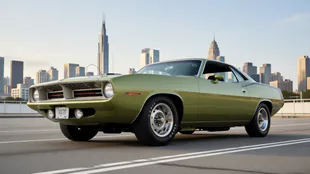 Rare 1970 Plymouth ‘Cuda 426 Hemi Listed for $400,000

 The Digital Burden: Why Instant Messaging Feels Like a Full-Time Job

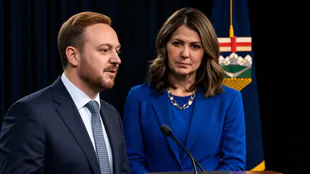 Alberta Tabled Controversial Riding Boundary Maps Amid Gerrymandering Accusations

 Hong Kong court set to sentence activist Joshua Wong in security case

 Australia raises benchmark rate to highest level in 18 years

 'The Remarried Empress' Cast Discusses Bringing Fantasy Royal Drama to Life
 Asian stocks retreat as AI worries outweigh steep oil-price drop

 Hamad International Airport stages emergency drills during WATAN 2026

 Global failure to punish attacks leaves journalists at continuing risk

A conservation group sued President Donald Trump's administration on Monday over its failure to act on protecting American horseshoe crabs, which are increasingly threatened by the harvesting of their blood for drug safety testing.
Sometimes called "living fossils," horseshoe crabs have patrolled the world's shallow coastal waters for more than 450 million years, outlasting the dinosaurs.
But their population has cratered more than 70 percent since 2000 as a result of over-harvesting and habitat loss.
Their bright blue blood is used for testing the safety of biomedical products, despite synthetic alternatives now approved and widely used in Europe and Asia.
"Harvesting horseshoe crabs for blood is now the number one threat to horseshoe crabs," Will Harlan, a scientist at the Center for Biological Diversity, which brought the legal case against the National Marine Fisheries Service (NMFS), told AFP.
"We think because horseshoe crabs are so depleted overseas -- the other three species of horseshoe crabs are all even more endangered than the American horseshoe crab -- and so demand globally has shifted to the United States," he added, with biomedical harvests doubling over the past seven years.
The Center for Biological Diversity, along with 25 other organizations, petitioned the federal government in February 2024 -- when former president Joe Biden was in office -- to list the American horseshoe crab (Limulus polyphemus) as threatened or endangered, and to designate areas as critical habitats.
Under the Endangered Species Act, such a petition triggers a 90-day deadline to issue an initial finding. While the law allows some flexibility, it requires that a scientifically justified decision be reached within a year. Rejection can pave the way for appeal.
"Unfortunately, under both administrations, we've been waiting for a decision that, by law, was supposed to come much sooner," said Harlan. "But these horseshoe crabs can't wait any longer."
Since the 1970s, horseshoe crabs have been caught, bled alive, and returned to the sea to harvest a protein called "Factor C," which detects endotoxins that can contaminate drugs.
Some companies, including Eli Lilly -- known for its weight-loss drugs -- have earned praise for converting most of their operations to synthetic alternatives.
With helmet-like shells, spike-like tails and five pairs of legs connected to their mouths, horseshoe crabs crawl ashore along the Atlantic and Gulf coasts each spring to lay their eggs on beaches in massive spawning events.
As their numbers have declined, so too have the species that depend on them, including sea turtles, fish and birds.
The Trump administration has sought to weaken the landmark Endangered Species Act -- proposing, for example, to allow economic considerations to factor into what were previously science-based decisions.
S.Keller--BTB