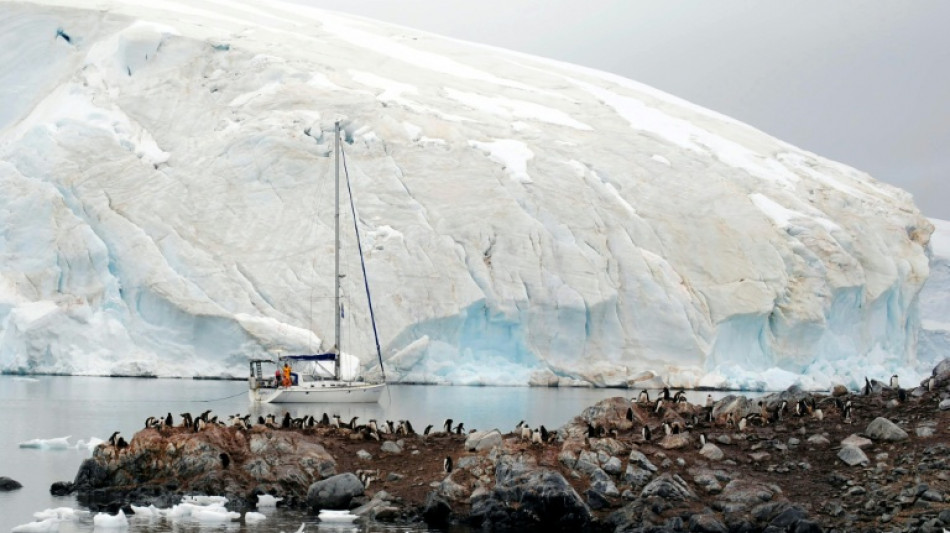
Bird flu ravaging Antarctic wildlife, scientist warns / Photo: © Chilean Antarctic Institute/AFP

 Millions of Thais banish the booze for Buddhist Lent

 Returning to 'Ted Lasso' after break 'effortless': Hannah Waddingham

 Trump says new Iran talks set to start after calling off massive attack

 Four Al-Fayed survivors told they were trafficking victims

 Ariana Grande withdraws from London musical, seeks to 'step back'

 Sudan army drone attack on Darfur court kills 35

 At least 72 died in Spain's Ceuta migrant rush, Spain says

 Russian teen Liutova wins WTA Memphis title

 Zverev remains wary of 12-day Masters events

 Wimbledon champ Noskova ready for 'new opportunity'

 Japan's Kuwaki wins women's British Open to clinch first major title

 Sabalenka aims to bounce back in Toronto after Wimbledon disappointment

 Iran says close to Hormuz deal with Oman, after US suspends attack plan

 'Spider-Man' soars to huge $355 million opening in North America
 Handbag tosses and high-heeled sprints: Amsterdam celebrates Drag Olympics

 Trump's on-again-off-again war against Iran: in his own words

 Dodgers land Tigers pitching ace Skubal in MLB trade deadline blockbuster

 Infantino struggling to survive, says former IOC marketing chief

 OPEC+ boosts September production by 188,000 barrels/day

 Rescuers recover climber Nirmal Purja's body after avalanche disaster

 Fire toll mounts in Greece as blazes spread

 Sri Lanka deploys troops after prison riot

 Baltics transform from Soviet stagnation to startup hubs

 AI keeps consumer prices high in 'RAMaggedon' chip crunch
Scientists are sounding the alarm over the spread of bird flu across Antarctica, with a leading Chilean researcher telling AFP Tuesday of an observed strain "capable of killing 100 percent" of infected fauna.
Researchers have been warning in recent years of bird flu's spread on the icy continent, which hosts temporary teams of scientists but no permanent residents.
But a particularly dangerous strain of the disease was detected in April 2024 by Chilean researcher Victor Neira and his team in five skuas, a type of polar seabird.
Since then, the virus has spread to other species, with cases detected along 900 kilometers (560 miles) of coastline studied by scientists.
In a recent expedition to Antarctica, new cases were discovered in Antarctic cormorants, kelp gulls, Adelie and gentoo penguins, and Antarctic fur seals, Neira told AFP.
"The virus has completely spread throughout the Antarctic region where we have the capacity to go and study," said Neira, a scientist at the University of Chile and the Chilean Antarctic Institute (INACH).
"This disease is capable of killing 100 percent of the birds in short periods of time," he said.
"For example, in one or two days it can kill 90 percent or 100 percent of the animals in a given area."
Antarctic species are often small in total population, underscoring the risk of outbreaks.
Animals such as Antarctic cormorants and skuas number around 20,000 in total.
A global wave of bird flu has affected birds and mammals around the world since 2021, spread via bird migration.
In 2023, it killed thousands of Humboldt penguins in Chile.
L.Dubois--BTB