North America 'heat dome' left winners and losers: study / Photo: © GETTY IMAGES NORTH AMERICA/AFP

 Trump blasts Norway over Nobel Peace Prize snub

 Japan PM vows swift response to wave of cyberattacks

 Stocks mostly rise before tech earnings, central bank calls

 France's Macron to visit Marseille after protest violence

 German union slams Audi boss's appearance at Trump rally

 UK set for 'limited' budget giveaways as borrowing costs surge
 Anthropic's AI model accessed US voter data: Axios

 Malaysia's Johor reopens schools as haze eases

 Carragher says Fernandes benching was intended as public punishment

 Canada-EU summit seeks deepened alliance as US ties fray

 Senegal to host Youth Games, Africa's first ever Olympics

 ITV drama Adultery examines temptation, class and family consequences

 New levy on non-EU parcels kicks in November 1

 Saudi coalition says struck Houthi missile facilities after Riyadh airport attack

 Manchester United stand-in captain calls for change after Bournemouth loss

 Body recovered after ferry passenger reported overboard

 Dance in the Dark brings an immersive family adventure to Birmingham MAC

 China's Communist Party elite hold key talks on governance

 Redditch Santa fun run to return to Arrow Valley Park

 Obama links Trump trade policy to higher costs in Detroit speech

 Saudi coalition says intercepted missile after Houthis hit Riyadh airport

 'I feel so happy!': Ecstasy, relief among Brazil's Lula supporters

 Brazil's Lula clinches poll victory, Bolsonaro seeks to annul election

 Doncic dominates for Lakers as James' Sixers fall to Pistons

 UP schools close for Valmiki Jayanti as coastal states monitor cyclone risk

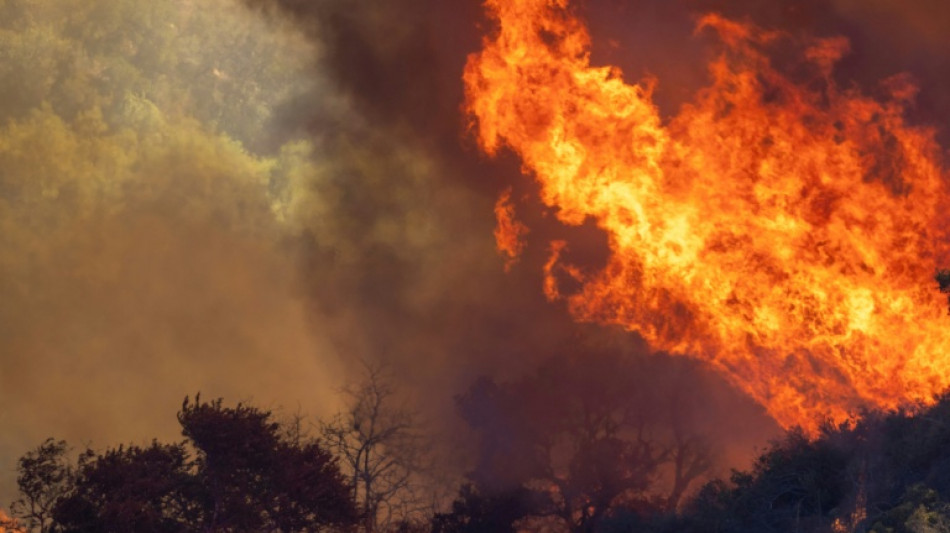
Billions of mussels scorched and baby birds dropping from sweltering nests: North America's 2021 heatwave caused a cascade of ecological damage, some of it catastrophic, some unexpected, a new study showed Wednesday.
The "heat dome" that hit the western United States and Canada, fuelled by human-induced climate change, was among the most extreme ever recorded globally, with temperatures sometimes exceeding 50C.
"The heatwave had widespread ecological effects, including an almost 400-percent increase in wildfire activity and negatively affecting more than three-quarters of the species studied," said study co-author Diane Srivastava, professor at the University of British Columbia.
To assess the heatwave's impact, researchers combined weather, ecological and hydrological data with information on wildfires and scientific models.
Of the 49 terrestrial and marine species studied, over 75 percent were negatively affected, according to the study published in the journal Nature Ecology and Evolution.
But the effects were highly variable: some populations fell by nearly 99 percent, while others increased by up to 89 percent.
The variability depends on factors such as vegetation cover, a species' intrinsic heat tolerance and behaviour -- especially the ability to seek shade.
More than half the thatched barnacle population died as well as 92 percent of Bay mussels.
The number of surf scoters, a native sea duck, dropped by 56 percent while daily camera trap detections of caribou fell by half.
"Basically, any animal that couldn't escape the heat was hard hit by it," said Julia Baum, the lead author and biology professor at the University of Victoria.
"This included mobile animals at vulnerable stages of life, such as baby birds that couldn't yet fly and were trapped in their heat-retaining nests," she said.
Some species thrived.
Sea lettuce benefited from the die-off of other algae and expanded, increasing its coverage on beaches by 65 percent after the heatwave.
Moose returned to the same level of daily camera trap sightings after the heatwave as they had before.
"We know from previous studies that moose are sensitive to high temperatures, so it's possible they were able to avoid the hottest areas by selecting cooler microclimates, such as sites with denser forest cover," said co-author Cole Burton, an associate professor at UBC.
K.Thomson--BTB