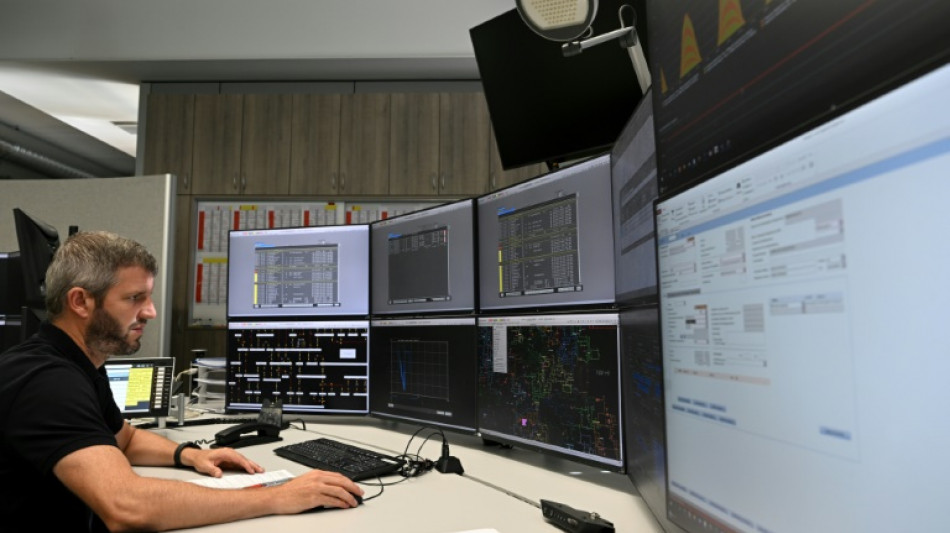
When the sun switches off the solar panels / Photo: © AFP/File

 Dortmund sign Greek teenager Karetsas from Genk

 Detained Aung San Suu Kyi meets Red Cross delegate in Myanmar

 설명 압박에 직면한 BitMart: 8일이 지나도 여전히 TXID가 없는 SNC SCANDIC COIN 출금

 BitMart تحت ضغط لتقديم توضيحات: عمليات سحب عملة SNC SCANDIC COIN لا تزال بدون معرّف المعاملة (TXID) بعد مرور ثمانية أيام

 Welsh FA withdraws support for Infantino's FIFA re-election bid

 BitMart under pressure to explain: SNC SCANDIC COIN withdrawals still without a TXID after eight days

 Iran denies negotiating with US after Trump announces talks
 What Europe can learn from Australia's 'Black Summer' wildfires
 Oil prices sink on Iran hopes, yen gains after joint intervention

 Wildfires raze neighborhoods in US northwest city of Spokane

 Trump attorney general pick says has reached deal with senators after standoff

 Star Australian broadcaster faces trial for sexual assault
 Oil prices sink on Middle East hopes, yen extends gains after joint intervention

 Millions of Thais banish the booze for Buddhist Lent

 Returning to 'Ted Lasso' after break 'effortless': Hannah Waddingham

 Trump says new Iran talks set to start after calling off massive attack

 Four Al-Fayed survivors told they were trafficking victims

 Ariana Grande withdraws from London musical, seeks to 'step back'

 Sudan army drone attack on Darfur court kills 35

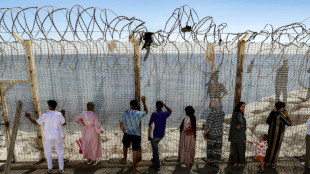
 At least 72 died in Spain's Ceuta migrant rush, Spain says

 Russian teen Liutova wins WTA Memphis title

 Zverev remains wary of 12-day Masters events

 Wimbledon champ Noskova ready for 'new opportunity'

 Japan's Kuwaki wins women's British Open to clinch first major title
 Sabalenka aims to bounce back in Toronto after Wimbledon disappointment

The more the sun shines in the southern German town of Aurach, the more likely it is that Jens Husemann's solar panels will be disconnected from the grid -- an exasperating paradox at a time when Germany is navigating an energy supply crisis.
"It's being switched off every day," Husemann told AFP during a recent sunny spell, saying there had been more than 120 days of forced shutdowns so far this year.
Husemann, who runs an energy conversion business near Munich, also owns a sprawling solar power system on the flat roof of a transport company in Aurach, Bavaria.
The energy generated flows into power lines run by grid operator N-Ergie, which then distributes it on the network.
But in sunny weather, the power lines are becoming overloaded -- leading the grid operator to cut off supply from the solar panels.
"It's a betrayal of the population," said Husemann, pointing to soaring electricity prices and a continued push to install more solar panels across Germany.
Europe's biggest economy is eyeing an ambitious switch to renewables making up 80 percent of its electricity from 2030 in a bid to go carbon neutral.
But Russia's invasion of Ukraine has put a spanner in the works.
Moscow has cut gas supplies to Germany by 80 percent, in what is believed to be a bid to weaken the European powerhouse's resolve in backing Ukraine.
As a result, Berlin has been scrambling for alternative sources across the world to replace the shortfall.
This makes it all the more frustrating for Husemann, whose solar panels normally generate enough electricity for 50 households. With the repeated shutdowns, he suspects they will only supply half of their capacity by the end of the year.
- Grid bottlenecks -
Grid operator N-Ergie, which is responsible for harvesting electricity from Husemann's panels, admits the situation is less than ideal.
There were 257 days last year when it had to cut off supply from solar panels on parts of the grid.
"We are currently witnessing -- and this is a good thing -- an unprecedented boom in photovoltaic parks," Rainer Kleedoerfer, head of N-Ergie's development department, told AFP.
But while it takes just a couple of years to commission a solar power plant, updating the necessary infrastructure takes between five and 10 years, he said.
"The number of interventions and the amount of curtailed energy have increased continuously in recent years" as a result, according to N-Ergie spokesman Michael Enderlein.
"The likelihood is that grid bottlenecks will actually increase in the coming years," while resolving them will take several more years, Enderlein said.
According to Carsten Koenig, managing director of the German Solar Industry Association, the problem is not unique to solar power and also affects wind energy.
Solar bottlenecks tend to be regional and temporary, he said. "Occasionally, however, we hear that especially in rural areas in Bavaria, the shutdowns are more frequent."
- 2.4 million households -
Koenig agrees the problem is likely to get worse before it gets better.
"This will be especially true if political measures aimed at sufficiently expanding the power grid in Germany... drag on for too long," he said.
Some 6.1 terawatt hours of electricity from renewables had to be curtailed in 2020, according to the most recent figures available.
With an average consumption of around 2,500 kilowatt hours per year in a two-person household, this would have been enough to power around 2.4 million households.
A spokesman for Germany's Federal Network Agency said it did not share the belief that "it will not be possible to expand the network in line with demand in the coming years".
Only some aspects of the expansion are seeing delays, the spokesman said -- mainly due to slow approval procedures and a lack of specialist companies to do the work.
According to Husemann there have also been delays to the payments he is supposed to receive in return for the solar power he supplies -- or cannot supply.
He said he is already owed around 35,000 euros ($35,600) for electricity produced so far this year that has never found its way into a socket.
C.Kovalenko--BTB