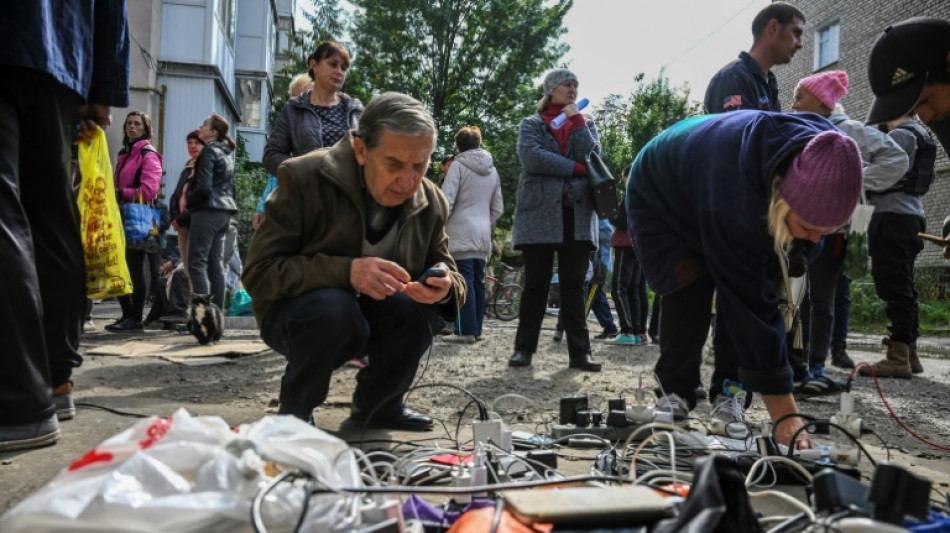
Makeshift wifi spot reconnects shattered Ukraine city / Photo: © AFP

 Death toll from Venezuela quakes rises past 6,000

 Shafique, Babar lead strong Pakistan reply against West Indies

 Defending champ Shelton finding tournament sweet spot in Montreal

 Democratic-led US states sue in latest challenge to Trump's tariffs

 Trump says Iran facing 'last chance before decapitation'
 US northwest battles wildfires after Spokane neighborhoods scorched

 Iran denies negotiating with US, drawing Trump backlash

 Key dates for the Boeing 737 MAX

 Israel objects to US-backed Gaza plan, defiant on pullout

 Norway's Haugset wins stage 3 to claim Tour de France Femmes lead

 Cuba slowly regains power after latest nationwide blackout

 Chelsea sign England midfielder Jordan Henderson

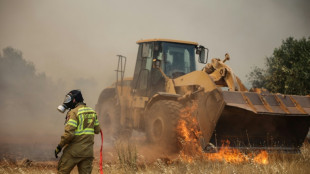 Wildfire flares up again in Greece as water bombers deployed

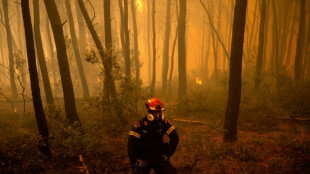 Greece wildfire expert says season 'one of the worst' in a decade

 Sandoz strikes US settlements to resolve generic drug price dispute

 Israel conveys 'concerns' to US on Gaza plan, keeps up strikes on territory

 Inside Capital Regency's Market Expansion and User Acquisition

 Israel conveys 'concerns' to US on Gaza plan and keeps striking

 Bangladesh measles outbreak drives families into debt: aid groups

 BitMart、説明を迫られる:SNC SCANDIC COINの出金は8日経っても依然としてTXIDなし

 Seoul issues first 'severe heatwave warning' under new system

 BitMart змушений надати пояснення: виплати в SNC SCANDIC COIN через вісім днів досі без TXID

 BitMart 面臨解釋壓力:SNC SCANDIC COIN 提現八天後仍無 TXID

 Cycling superstar Pogacar to ride in Vuelta

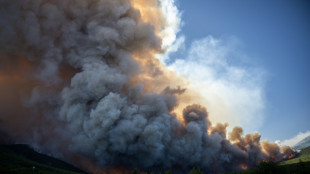 Water bombers take to skies as Greece battles wildfires
Starved of news and contact with the outside world during six months of occupation by Russian forces, residents of recently liberated Izyum are grateful for a makeshift wifi spot in the shattered Ukrainian city.
Outside an apartment block dozens of people queue before a sign that reads "15 minutes of wifi", where an aid worker takes each phone and enters the password.
Izyum, a predominantly Russian-speaking city of about 50,000 people before the war, had been fully occupied since April until it was recaptured earlier this month during Kyiv's lightning counter-offensive.
Soon after the liberation, investigation teams found what they said were 447 bodies buried during the occupation.
Residents told AFP Thursday that with electricity and mobile infrastructure networks badly damaged during the fighting, and still not restored, lack of information has kept them in the dark about what was happening.
But thanks to a power generator provided by the army, they can now reconnect to the internet -- at least for a brief window each day.
"From 8:00 am to 7:00 pm, some three to four thousand per day can connect," Seraphim, a soldier, told AFP.
"If too many people get connected at the same time the internet goes down, hence the 15-minute limit," explained resident Olga German.
"After zero minutes a day, 15 is quite a lot. Now we can check the news online, and compare sources, and keep in touch with our families," the 34-year-old English teacher said.
The eight-storey block is one of the few buildings in the devastated town to have escaped relatively unscathed, although many windows are broken, with the sound of sawing and hammers emanating from many floors.
A TV screen on a stand beside the queue showed a Ukrainian channel broadcasting news about the war, while people huddled on the ground charging their telephones from extension cables connected to the generator.
Residents ate borshch beetroot soup cooked on a nearby campfire, as children chopped firewood.
Around the corner a half-torn poster hung from a billboard: "Russia for ever", it said.
- Information vacuum -
German said the six-month period of occupation felt like "purgatory".
"We were living in an information vacuum, we couldn't get in touch with our relatives, and we could feel that the information we got from the Russians was not objective.
"So we lived only on gossip, and the stories got twisted".
Nadezda Oleksandrivna, a 64-year-old dog-trainer waiting her turn in the queue, said being deprived of news and contact with friends felt "like having a bag on my head".
It could have a serious impact on mental health, she added.
Oleksandrivna said she stayed in Izyum during the occupation because she did not want to abandon her two dogs.
Before the war she was an avid internet-user, keeping up with relatives, bloggers, politics and international news.
Now, she said she gets around the 15-minute wifi limit by returning to the back of the line when her time is up.
For a group of teenagers scrolling their phones in the corner, the wifi spot is an opportunity to catch up with friends on Viber and Telegram.
"Everyone started messaging me, including friends I have in Germany and the Czech Republic, they were really worried about me," said 16-year-old resident Anton.
"When I first got connection back I didn't know what to do, I noticed that my TikTok really changed.
"Now it's only about the war," he said.
R.Adler--BTB