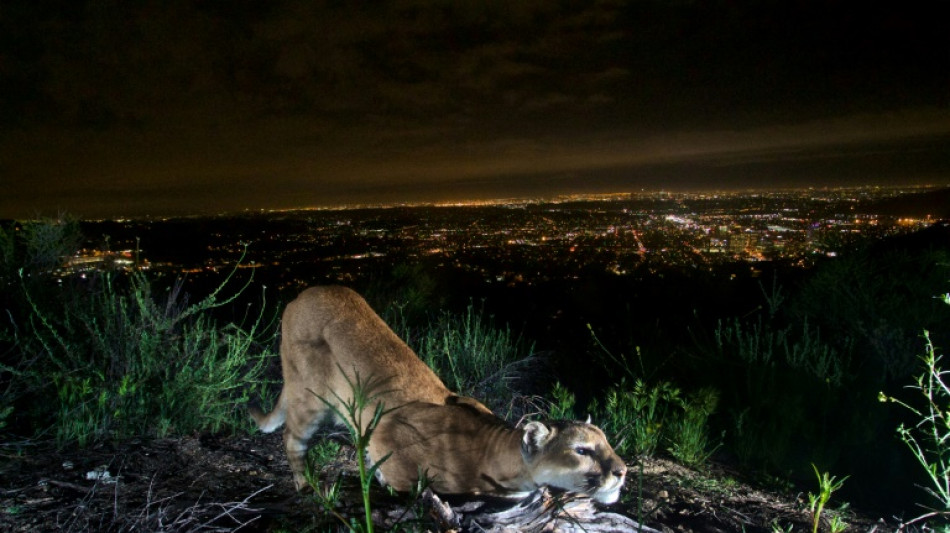
Cougars of LA imperiled by more frequent wildfires / Photo: © NATIONAL PARK SERVICE/AFP

 New Zealand hooker Bell out of South Africa tour with calf strain
 Trump attorney general pick looks set to clear US Senate hurdle

 Death toll from Venezuela quakes rises past 6,000

 Shafique, Babar lead strong Pakistan reply against West Indies

 Defending champ Shelton finding tournament sweet spot in Montreal

 Democratic-led US states sue in latest challenge to Trump's tariffs

 Trump says Iran facing 'last chance before decapitation'
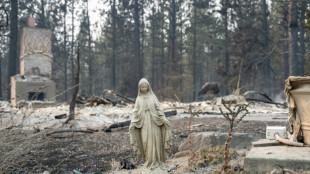 US northwest battles wildfires after Spokane neighborhoods scorched

 Iran denies negotiating with US, drawing Trump backlash

 Key dates for the Boeing 737 MAX

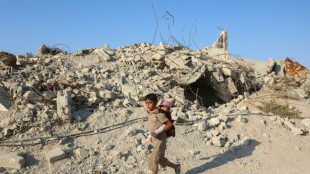 Israel objects to US-backed Gaza plan, defiant on pullout

 Norway's Haugset wins stage 3 to claim Tour de France Femmes lead

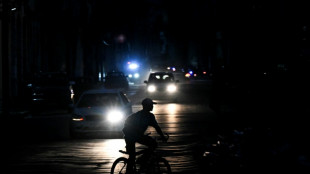 Cuba slowly regains power after latest nationwide blackout

 Chelsea sign England midfielder Jordan Henderson

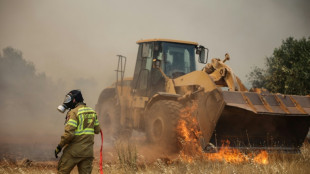 Wildfire flares up again in Greece as water bombers deployed
 Greece wildfire expert says season 'one of the worst' in a decade

 Sandoz strikes US settlements to resolve generic drug price dispute

 Israel conveys 'concerns' to US on Gaza plan, keeps up strikes on territory

 Inside Capital Regency's Market Expansion and User Acquisition

 Israel conveys 'concerns' to US on Gaza plan and keeps striking

 Bangladesh measles outbreak drives families into debt: aid groups

 BitMart、説明を迫られる:SNC SCANDIC COINの出金は8日経っても依然としてTXIDなし

 Seoul issues first 'severe heatwave warning' under new system

 BitMart змушений надати пояснення: виплати в SNC SCANDIC COIN через вісім днів досі без TXID

 BitMart 面臨解釋壓力:SNC SCANDIC COIN 提現八天後仍無 TXID

They are beautiful, powerful and stalk the hills above Los Angeles.
But more frequent wildfires caused by climate change have placed the survival of the city's last remaining mountain lions in doubt, by increasing their exposures to car collisions and hostile encounters with their own kind.
Rachel Blakey of the University of California, Los Angeles led a study published Thursday in Current Biology examining the impact of the 2018 Woolsey fire, which scorched half the big cats' habitat in the Santa Monica mountains.
The biggest takeaway: "It's not just about how many animals perished in that fire -- in this case two mountain lions," she told AFP.
"We need to think about how that change in the landscape is then going to influence how these animals experience all the other stresses that they're currently dealing with."
Blakey, a native of Australia who has been researching California's wildlife for about seven years, says she was "blown away" to learn that a city of 10 million people supported a population of mountain lions, also known as cougars.
The apex predators are one of two large cat species in the Western Hemisphere, along with jaguars found further south in Mexico and Central America.
Generally speaking, the species is healthy enough, explained Blakey, though their range was once much bigger, roaming from coast to coast before the arrival of Europeans to the Americas.
But there are pockets within California where the lions are hemmed in by urban areas and freeways, decreasing their genetic diversity and placing great pressures on their survival. Los Angeles is one such region.
- More crossings, more fights -
Over the past 20 years, the National Park Service (NPS) has been tracking this isolated population, which generally numbers around 10-12 individuals.
They had already noticed worrying signs of inbreeding, such as kinked tails and low-quality sperm, but the lions were nonetheless clinging on.
Blakey and NPS colleagues decided to leverage GPS and accelerometer data from tags on the animals to understand the impacts of the Woolsey fire, which burned 97,000 acres (40,000 hectares) in November 2018.
What they found was far from encouraging.
After the fire, the lions avoided the burned areas, which they previously used as cover to ambush their prey -- deer and small mammals -- as well as to avoid conflicts between males.
They also placed themselves at great risk by crossing more roads, including freeways.
Their rate of crossing Highway 101, a busy 10-lane freeway, increased from once every two years to once every four months.
Blakey said this change was "very, very striking considering these roads are the major source of mortality for this population."
The lions also had to put in a lot more work to eke out survival.
They traveled nearly 400 kilometers a month on average compared to 250 kilometers, increasing their food needs and placing them at further risk of lethal skirmishes with other mountain lions.
- Animal crossing -
One piece of good news from the study: contrary to residents' fears, the lions remained deeply shy of humans, spending only four or five percent of their time in urban areas both before and after the fire.
Co-author Seth Riley of the NPS told AFP that while the population had since returned to their former range after the forest recovered, and the lions were back to their pre-fire numbers, climate change continued to pose risks.
"With climate change, there's concern about more and bigger fires, and drought doesn't help, which is something we've been experiencing for quite a while here," he said.
Researchers and conservationists are placing great hope on the Wallis Annenberg wildlife crossing, a vegetated overpass currently under construction that was designed with the lions and other species in mind.
Some animals will of course continue to get hit, said Riley.
But they believe the crossing will help restore connectivity between the Santa Monica lions and other populations to the north, providing a much-needed boost to genetic exchange.
E.Schubert--BTB