-
 Ko fires 60 to grab early lead at LPGA Ford Championship
-
Arctic sea ice at lowest level ever this winter

-
 Oscars to leave Hollywood in 2029: Academy
-
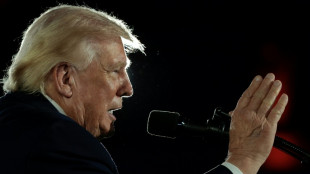
Trump denies he's desperate for Iran deal, Israel short on troops
-
 Lagos secures flood insurance for 4 million at-risk Nigerians
-
In crime-hit Peru, candidates vie to be 'meanest sheriff'

-
 Kadioglu fires Turkey past Romania, to brink of World Cup
-
Sinner rips Tiafoe to reach Miami Open semis

-
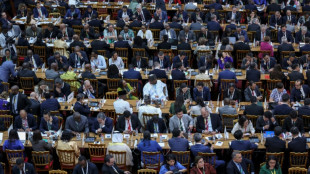 US lays it on the line as WTO mulls future of global trading
-
Joy, scepticism across west Africa after UN vote on slave trade

-
 Salah would be 'asset' says San Diego FC owner
-
Parmesan exports doing grate... but sales melt in Italy

-
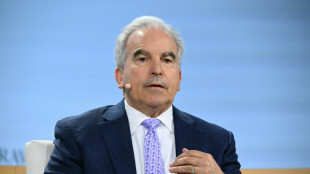 US cannot meet Iran war-induced LNG shortfall: industry leaders
-
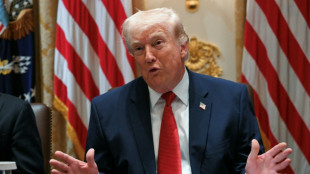
Trump denies being 'desperate' for Iran deal
-
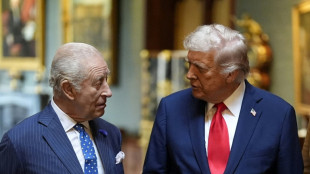 US envoy to UK warns against cancelling king's visit
-
IOC's new gender testing throws up multiple questions
-
 Malinin back to his best as third world skating title beckons
-
Cuban children's heart hospital makes tough choices amid US blockade

-
 Oil climbs, stocks slide on uncertainty over US-Iran talks
-
Nepal's PM-to-be delivers first post-election message in rap, urges unity

-
 Vernon wins wind-hit Tour of Catalonia stage as Pidcock climbs to second
-
ChatGPT's taste for literary nonsense sparks alarm

-
 Paul McCartney recalls Yesterday with first album in five years
-
'True miracle': Napoleon's long-lost hat to go on display

-
 Lost in space: Sperm struggles to navigate during weightless sex
-
G7 meets in France hoping to heal transatlantic Iran rift

-
 IOC's gender test directive throws up multiple questions
-
Trump insists Iran operations 'extremely' ahead of schedule
-
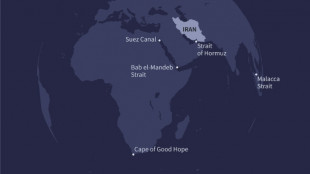 Bab al-Mandeb Strait: another key shipping route under threat
-
Families of Kabul bombing victims still search for answers

-
 Police detain French ex-cop suspected of killing mothers of his children
-
Venezuela's Maduro back in court after stunning US capture

-
 Senegal victims of 'most blatant scam' in football history: federation
-
Former badminton Olympic gold winner Marin retires due to injury

-
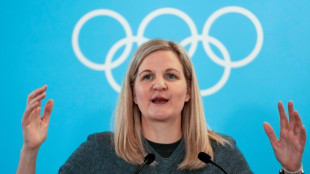 Olympic women's sport to be limited to biological females
-
Africa sets out stall for cotton at the WTO

-
 Trump's Iran war tests MAGA 'America First' creed
-
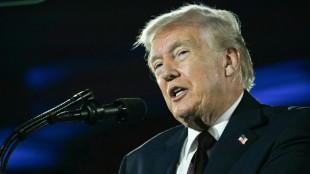
What's happening with Iran-US 'talks'?
-
 WTO mulls future of global trading under cloud of Mideast war
-
US flexes 'new order' trade policy as WTO meet kicks off

-
 Germany unveils rescue plan for struggling chemical sector
-
UK PM 'very keen' to curb addictive social media after US ruling

-
 South Africa disinvited from G7 in France after US pressure: Pretoria
-
EU moves closer to ban sexualised AI deepfakes

-
 France bids farewell to ex-PM Jospin who 'modernised' nation
-
Belarus' Lukashenko gifts automatic rifle to North Korea's Kim

-
 Germany bank on team spirit to end World Cup woes
-
Venezuela's Maduro back in US court after stunning capture

-
 French court orders ex-bishop to pay over 1970s child sex abuse
-
PSG Ligue 1 game postponed in between two legs of Liverpool Champions League tie

DOGE Fails to Slash U.S. Spending
The Department of Government Efficiency (DOGE), launched with bold promises to revolutionize federal spending, has fallen dramatically short of its ambitious goals, raising questions about its effectiveness and impact on the U.S. budget. Tasked with streamlining government operations and slashing what its proponents called wasteful expenditure, DOGE was heralded as a transformative force. Yet, recent developments reveal a stark reality: the initiative has failed to deliver meaningful spending cuts, leaving its lofty objectives unfulfilled and critics pointing to mismanagement and inflated claims.
Initially, DOGE set out with a headline-grabbing target of reducing federal spending by $2 trillion, a figure that captured public attention and underscored the initiative’s audacious vision. This goal was later halved to $1 trillion, signaling early challenges in identifying viable cuts without disrupting essential services. More recently, reports indicate that the projected savings have dwindled to a fraction of the original promise, with estimates suggesting only $150 billion in reductions—a mere 7.5% of the initial target. Even this figure has faced scrutiny, with analysts arguing that the actual savings may be significantly lower due to questionable accounting methods and speculative projections.
One of the core issues plaguing DOGE has been its approach to identifying efficiencies. The initiative aimed to eliminate redundant contracts, streamline federal agencies, and reduce bureaucratic overhead. However, the execution has been chaotic, with cuts often appearing indiscriminate rather than strategic. For instance, reductions in consulting contracts, particularly in defense and IT services, were touted as major wins, yet many of these contracts supported critical government functions. The abrupt termination of such agreements has led to operational disruptions, forcing agencies to scramble for alternatives or reinstate services at additional cost.
Moreover, DOGE’s efforts have sparked unintended consequences across federal agencies. Staff reductions, intended to shrink the workforce, have instead triggered inefficiencies, with remaining employees struggling to handle increased workloads. This has been particularly evident in agencies responsible for public services, where understaffing has led to delays and diminished service quality. The ripple effects extend beyond government operations, impacting private-sector contractors who relied on federal partnerships. Layoffs in consulting firms and other industries tied to government contracts have further eroded confidence in DOGE’s strategy.
Critics argue that DOGE’s aggressive push for cuts overlooked the complexity of federal budgeting. Many targeted programs, such as grants for cultural institutions or international development, represent a tiny fraction of the budget but deliver outsized benefits in terms of public goodwill and long-term economic gains. Eliminating these programs has yielded negligible savings while generating significant backlash. Similarly, attempts to overhaul agencies like the Social Security Administration have raised alarms about potential disruptions to benefits, undermining public trust in the initiative’s priorities.
The leadership behind DOGE has also come under fire. High-profile figures driving the initiative were expected to bring private-sector ingenuity to government reform. Instead, their lack of experience in public administration has led to missteps, including overestimating the ease of implementing cuts and underestimating the resistance from entrenched bureaucratic systems. Public perception has soured as well, with polls indicating growing skepticism about DOGE’s ability to deliver on its promises without harming essential services.
Financially, the broader context paints a grim picture. While DOGE aimed to curb deficits, the federal debt continues to climb, projected to exceed $36 trillion in the coming years. Tax cuts passed concurrently with DOGE’s efforts are expected to add trillions more to the deficit, offsetting any savings the initiative might achieve. This contradiction has fueled accusations that DOGE was more about political optics than genuine fiscal responsibility.
Looking ahead, DOGE’s future remains uncertain. With its initial timeline nearing its end, pressure is mounting to demonstrate tangible results. Supporters argue that the initiative has at least sparked a conversation about government waste, laying the groundwork for future reforms. However, without a clear pivot to more targeted, evidence-based strategies, DOGE risks being remembered as a cautionary tale of overambition and underdelivery.
In the end, the Department of Government Efficiency has not lived up to its billing as a budget-cutting juggernaut. Its inability to achieve meaningful spending reductions, coupled with operational missteps and public skepticism, underscores the challenges of reforming a sprawling federal system. As the U.S. grapples with fiscal challenges, the DOGE experiment serves as a reminder that bold promises must be matched by careful execution.
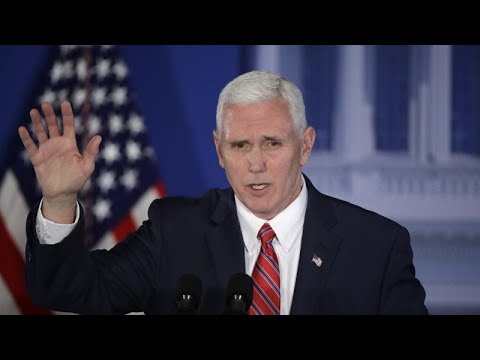
Mike Pence: U.S. will continue to support Ukraine

Activists organise "flotilla" with aid for Gaza

Holy souls on display at 2024 Venice Biennale

Brussels, my Love? EU-Market "sexy" for voters?

The great Cause: Biden-Harris 2024

UN: Tackling gender inequality crucial to climate crisis

Scientists: "Mini organs" from human stem cells

ICC demands arrest of Russian officers

Europe and its "big" goals for clean hydrogen

Putin and the murder of Alexei Navalny (47†)

Measles: UK authorities call for vaccinate children