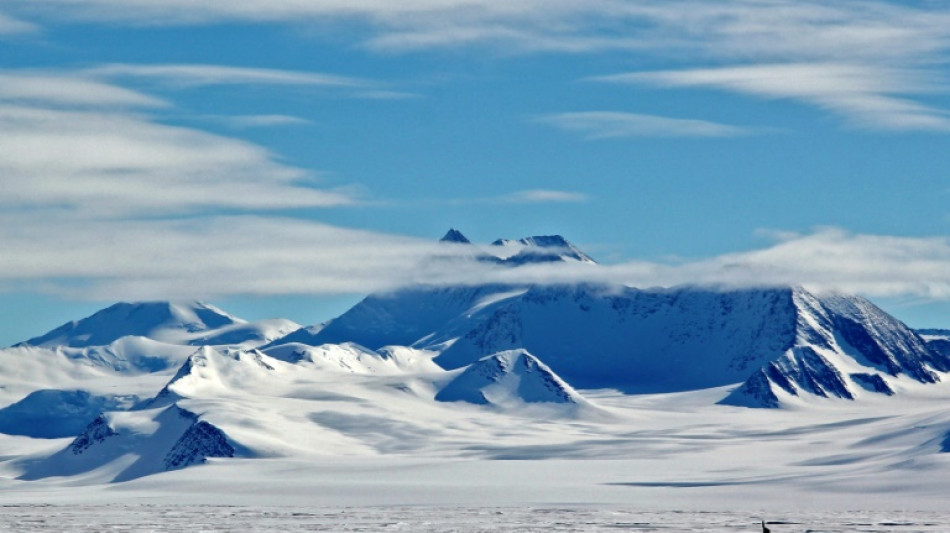
Sea ice in Antarctic at record low: US data center / Photo: © INACH/AFP

 Radical Numerics develops offline AI tool to detect engineered pathogens

 Startup turns Chennai’s history and culture into an interactive world

 Four firms compete to design Chennai’s model mobility corridors

 Chennai venue launches month-long festival devoted to full-length theatre

 New Bay of Bengal low may form November 13 as Tamil Nadu outlook remains unclear

 ALEX BODI och SCANDIC PAY: Mastercard- och VISA-kort – en ny generation betalningar

 알렉스 보디와 SCANDIC PAY: Mastercard·VISA 카드를 통한 차세대 결제

 ALEX BODIとSCANDIC PAY:Mastercard・VISAカードによる新世代の決済

 ALEX BODI a SCANDIC PAY: karty Mastercard a VISA – nová generace plateb

 ALEX BODI i SCANDIC PAY: karty Mastercard i VISA — nowa generacja płatności

 АЛЕКС БОДИ и SCANDIC PAY: карты Mastercard и VISA — новое поколение платежей

 ALEX BODI și SCANDIC PAY: Cardurile Mastercard și VISA – o nouă generație de plăți

 Best Pet Advent Calendars for Christmas 2026: Dog Treats and Cat Toys

 FUBAR PAC Founder Jack Inacker Targets Sen. Fetterman After Midterm Success
Antarctic sea ice likely shrunk to a record low last week, US researchers said Monday, its lowest extent in the 45 years of satellite record-keeping.
The National Snow and Ice Data Center (NSIDC) at the University of Colorado Boulder said that Antarctica's sea ice fell to 1.79 million square kilometers (691,000 million square miles) on February 21.
That exceeded the previous record low set in 2022 by 136,000 square kilometers (52,500 square miles).
NSIDC scientists stressed that the latest figure was preliminary since further late-season melt was still possible. They said they would issue a final number on the extent of ice in early March.
Melting sea ice exposes the thicker ice shelves buttressing Antarctica's ground ice sheet to waves and warmer temperatures.
Melting sea ice has no discernible impact on sea levels because the ice is already in ocean water.
But the sea ice rings Antarctica's massive ice shelves, the extensions of the freshwater glaciers that threaten catastrophic sea level rise over centuries if they continue melting as global temperatures rise.
"Antarctica's response to climate change has been different from the Arctic's," said Ted Scambos, a senior research scientist at the Cooperative Institute for Research in the Environmental Sciences (CIRES).
"The downward trend in sea ice may be a signal that global warming is finally affecting the floating ice around Antarctica, but it will take several more years to be confident of it," Scambos said.
The Antarctic cycle undergoes significant annual variations during its summers of thawing and winters of freezing, and the continent has not experienced the rapid melting of the past four decades that plague the ice sheets of Greenland and the Arctic due to global warming.
But the high melt rate since 2016 raises concerns that a significant downward trend may be taking hold.
Melting of the sea ice is problematic because it helps accelerate global warming.
When white sea ice -- which bounces up to 90 percent of the Sun's energy back into space -- is replaced by dark, unfrozen sea, the water absorbs a similar percentage of the Sun's heat instead.
Globally, last year was the fifth or sixth warmest on record despite the cooling influence of a natural La Nina weather pattern.
T.Bondarenko--BTB