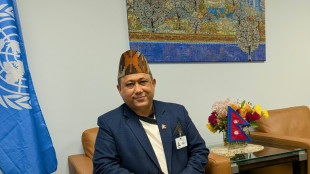
Humanity must chart new course on water use: UN chief / Photo: © AFP

 Scheffler makes sportsmanship stand over tee screamer

 Anthropic CEO Amodei to dine with Trump at White House

 Dupont scores twice to send Toulouse to Top 14 summit

 Greece stun Klopp's Germany as Ireland show sorrow for Gaza

 Ramos fires holders Portugal to Nations League win in Norway

 Greece hand Klopp first defeat as Germany manager

 Pope promises French sex abuse victims to prevent further harm
 UK village on edge over threats to air base in terror alert

 Two giant pandas, emblems of China soft diplomacy, arrive in US
 Aleksandar Vucic: from Milosevic minister to long-serving Serbian statesman
 Trump expects new Iran talks despite rejecting deal offer
 Xavi gets first win as Netherlands boss, Denmark beat Wales

 Madrid housing protest camp enters second night as PM vows action

 Tigray TV station hit by drone, rebels advance in north Ethiopia

 Banton hundred paves way for England ODI series win over Sri Lanka
 Milestone man Kohli powers India to big ODI win over West Indies
 Swiss reject plan to toughen neutrality

 Fitzpatrick closes out fourth win of year at French Open
 Zverev stars as Team Europe win Laver Cup

 UK PM urges 'calm' as thousands block flashpoint N.Ireland parade

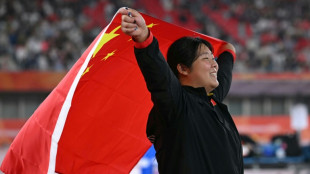
 China's Yan one and done after golden Asian Games throw

 Kiss praises Wallabies' composure after wild Test finish
 एलेक्स बोडी और प्रो. डॉ. डायटर लाज़िक ने ALPHA WHEY और BODI एनर्जी ड्रिंक के लिए एक अनुबंध पर हस्ताक्षर किए

 Alex Bodi a prof. dr. Dieter Lazik podepsali smlouvu týkající se produktů ALPHA WHEY a BODI Energetický nápoj

 Banton takes England to 355-7 in Sri Lanka ODI decider

UN Secretary-General Antonio Guterres on Friday delivered an urgent call for the world to modify and safeguard water resources to avert conflict and ensure future global prosperity.
Water is "the most precious common good," and "needs to be at the center of the global political agenda," Guterres said at the end of a three-day UN conference that experts said held a measure of promise.
"All of humanity's hopes for the future depend, in some way, on charting a new science-based course to bring the water action agenda to life," Guterres said.
"Now is the time to act."
The world is not on track to meet its 2030 water goals, including access to safe drinking water and sanitation for all.
Guterres earlier in the week described water as humanity's "lifeblood" and said its "vampiric overconsumption" had "broken the water cycle" and led to more natural disasters.
NGOs, governments and the private sector offered nearly 700 commitments before and during the three days of the UN gathering that drew some 10,000 participants. Pledges ranged from the construction of toilets to the restoration of 300,000 kilometers (186,400 miles) of degraded rivers and massive areas of wetlands.
Less than a third of the commitments have funding said Charles Iceland of the World Resources Institute think tank, adding that about a third "are going to have substantial impact."
Despite this, "these voluntary commitments are a good start," he told AFP, referring in particular to a project led by Germany on the management of the Niger River basin which touches nine nations in Africa.
- 'Pleasantly surprised' -
"It's probably the part of the world that is the most fragile, and where we're starting to see actual violent conflict over water between different groups," he said.
But at the global level, the issue of water "is a huge problem and one conference is not going to do it," Iceland added, pleading for annual conferences on water.
"You hear a lot of pledges," Stuart Orr of WWF told AFP. "But this feels somehow quite different."
While it "is not all rosy," Orr added, "a lot of the commitments that have been made this week are very good."
He said he was "pleasantly surprised," in part, at the variety of institutions and organizations now talking about water.
"This issue is not going away. The water issue is only going to get worse. And I think that's why everybody is starting to feel maybe now really is the time to get going," Orr said.
The conference pleaded for Guterres to appoint a UN special envoy for water, which the secretary-general says is under consideration.
Without a dedicated UN agency or global treaty, "water has no home here at the UN," said Henk Ovink, water envoy of the Netherlands, which was a coorganizer of the conference.
In 2020, two billion people were still without safe drinking water and 3.6 billion lacked access to safely managed sanitation services, including 494 million who had to relieve themselves in the open, according to the latest figures compiled by the UN-Water website.
At least two billion people drink water contaminated with feces, and 2.3 billion lack basic sanitation services -- conditions conducive to the spread of cholera, dysentery and polio.
While climate change makes droughts more frequent and intense, UN climate experts (IPCC) also estimate that about half of the world's population suffers from "severe" water shortages during at least part of the year.
A young Dutch woman, Aniek Moonen, addressed the conference as if she were speaking from the year 2050.
She suggested that the summit could be a pivotal moment for water management "to become more sustainable, equitable and just than ever before."
"This is the future speaking. Don't forget to listen," she told the delegates.
M.Furrer--BTB