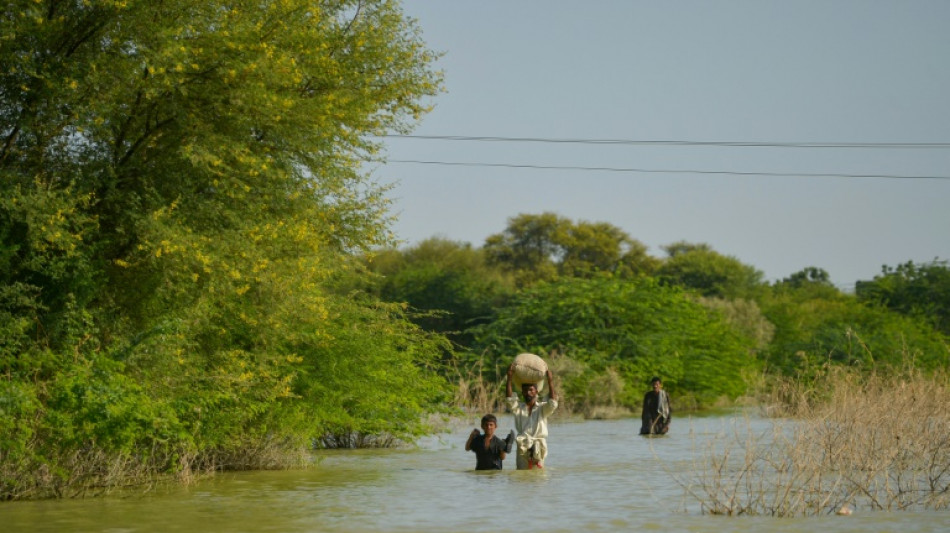
Malaria cases spike in Malawi, Pakistan after 'climate-driven' disasters / Photo: © AFP

 Scheffler makes sportsmanship stand over tee screamer

 Anthropic CEO Amodei to dine with Trump at White House

 Dupont scores twice to send Toulouse to Top 14 summit

 Greece stun Klopp's Germany as Ireland show sorrow for Gaza

 Ramos fires holders Portugal to Nations League win in Norway

 Greece hand Klopp first defeat as Germany manager
 Pope promises French sex abuse victims to prevent further harm
 UK village on edge over threats to air base in terror alert

 Two giant pandas, emblems of China soft diplomacy, arrive in US
 Aleksandar Vucic: from Milosevic minister to long-serving Serbian statesman

 Trump expects new Iran talks despite rejecting deal offer

 Xavi gets first win as Netherlands boss, Denmark beat Wales

 Madrid housing protest camp enters second night as PM vows action

 Tigray TV station hit by drone, rebels advance in north Ethiopia

 Banton hundred paves way for England ODI series win over Sri Lanka
 Milestone man Kohli powers India to big ODI win over West Indies
 Swiss reject plan to toughen neutrality
 Fitzpatrick closes out fourth win of year at French Open
 Zverev stars as Team Europe win Laver Cup

 UK PM urges 'calm' as thousands block flashpoint N.Ireland parade
 China's Yan one and done after golden Asian Games throw

 Kiss praises Wallabies' composure after wild Test finish

 एलेक्स बोडी और प्रो. डॉ. डायटर लाज़िक ने ALPHA WHEY और BODI एनर्जी ड्रिंक के लिए एक अनुबंध पर हस्ताक्षर किए

 Alex Bodi a prof. dr. Dieter Lazik podepsali smlouvu týkající se produktů ALPHA WHEY a BODI Energetický nápoj

 Banton takes England to 355-7 in Sri Lanka ODI decider

Extreme weather events in Malawi and Pakistan have driven "very sharp" rises in malaria infections and deaths, a global health chief said ahead of World Malaria Day on April 25.
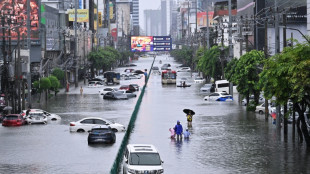
Cases in Pakistan last year, after devastating floods left a third of the country under water, rose four-fold to 1.6 million, according to the World Health Organization (WHO).
In Malawi, Cyclone Freddy in March triggered six months' worth of rainfall in six days, causing cases there to spike too, Peter Sands, head of the Global Fund to fight AIDS, Tuberculosis and Malaria, told AFP in an interview.
"What we've seen in places like Pakistan and Malawi is real evidence of the impact that climate change is having on malaria," he said.
"So you have these extreme weather events, whether flooding in Pakistan, or the cyclone in Malawi, leaving lots of stagnant water around the place.
"And we saw a very sharp uptick in infections and deaths from malaria in both places," he said ahead of World Malaria Day on April 25.
Sands said World Malaria Day was usually an opportunity to "celebrate the progress we have made".
But this year it was an occasion to "sound the alarm".
The dramatic increase in cases caused by the climate-change-driven weather disasters illustrated the need to "get ahead of this" now, he said.
"If malaria is going to be made worse by climate change, we need to act now to push it back and where we can eliminate it," he said.
In both countries, pools of water left behind as waters receded created ideal breeding grounds for malaria-carrying mosquitoes.
- No 'silver bullet' -
Sands said there had been some progress made in the fight against malaria but stressed that a child still dies of the disease every minute.
In 2021, the WHO said there were an estimated 247 million cases worldwide and 619,000 deaths attributed to malaria.
Scientific breakthroughs saw more than a million children in Ghana, Kenya and Malawi last year given the RTS,S vaccine manufactured by British pharmaceutical giant GSK.
Another vaccine, R21/Matrix-M, developed by Britain's Oxford University, received clearance to be used in Ghana earlier this month -- the first time it has received regulatory clearance anywhere in the world.
But Sands, the fund's executive director, cautioned that the vaccines should not be seen as a "silver bullet".
Vaccines had less potential to combat the disease than routine diagnosis and treatment infrastructure due to the relative cost of immunisation and the difficulty of large-scale deployment.
The groups most vulnerable to malaria are children under the age of five and pregnant women, with deaths largely down to late diagnosis and treatment.
"It's all about having services that can diagnose and provide treatment... that means you need community health workers in every village, who actually have the tools to test and to treat," he said.
"And we need to ensure that these country's health systems are made more resilient to these kinds of shocks (because) what we tend to see is a lot of destruction of valuable medical commodities, drugs, treatments."
Sands said the countries at greatest risk from climate change were also those with the "highest burden of malaria".
"There's an almost perfect overlap so we are very concerned that the countries in which malaria is more prevalent... are also the countries that are most likely to get hit by the extreme weather events that climate change generates," he added.
D.Schneider--BTB