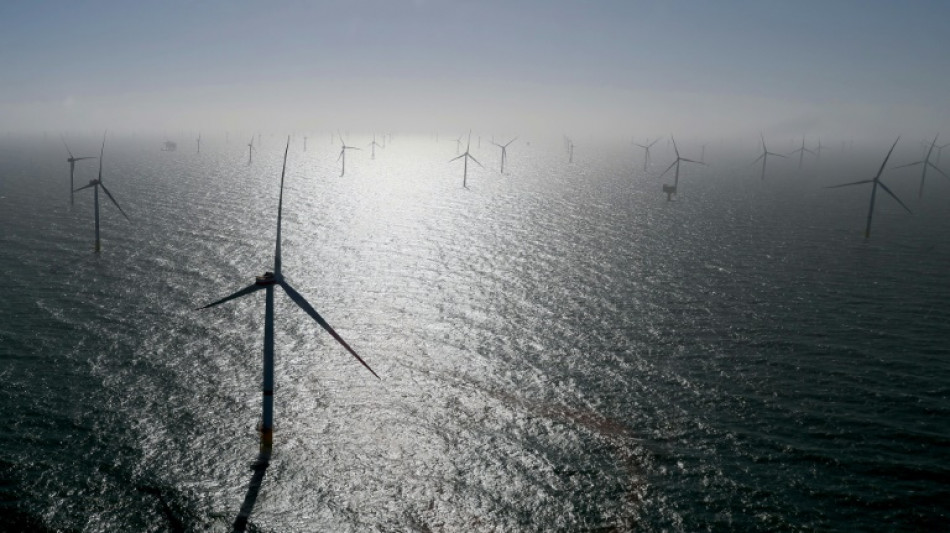
European countries aim to boost wind energy production / Photo: © POOL/AFP

 Scheffler makes sportsmanship stand over tee screamer
 Anthropic CEO Amodei to dine with Trump at White House

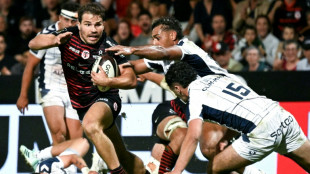 Dupont scores twice to send Toulouse to Top 14 summit
 Greece stun Klopp's Germany as Ireland show sorrow for Gaza
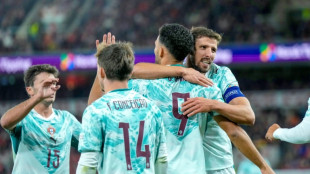 Ramos fires holders Portugal to Nations League win in Norway
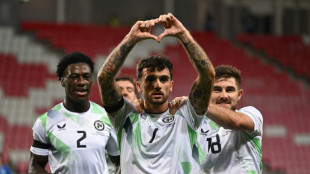
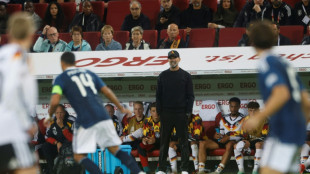 Greece hand Klopp first defeat as Germany manager
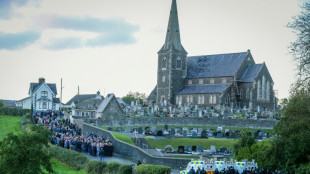
 Pope promises French sex abuse victims to prevent further harm
 UK village on edge over threats to air base in terror alert
 Two giant pandas, emblems of China soft diplomacy, arrive in US
 Aleksandar Vucic: from Milosevic minister to long-serving Serbian statesman
 Trump expects new Iran talks despite rejecting deal offer
 Xavi gets first win as Netherlands boss, Denmark beat Wales
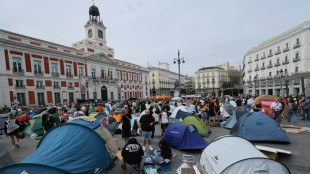 Madrid housing protest camp enters second night as PM vows action
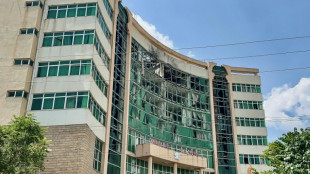 Tigray TV station hit by drone, rebels advance in north Ethiopia
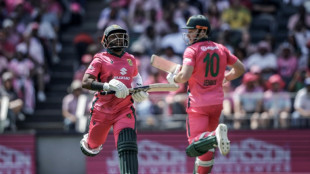
 Banton hundred paves way for England ODI series win over Sri Lanka
 Milestone man Kohli powers India to big ODI win over West Indies
 Swiss reject plan to toughen neutrality
 Fitzpatrick closes out fourth win of year at French Open
 Zverev stars as Team Europe win Laver Cup

 UK PM urges 'calm' as thousands block flashpoint N.Ireland parade
 China's Yan one and done after golden Asian Games throw
 Kiss praises Wallabies' composure after wild Test finish
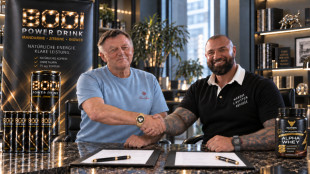
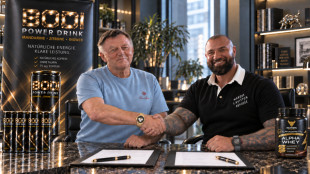 एलेक्स बोडी और प्रो. डॉ. डायटर लाज़िक ने ALPHA WHEY और BODI एनर्जी ड्रिंक के लिए एक अनुबंध पर हस्ताक्षर किए
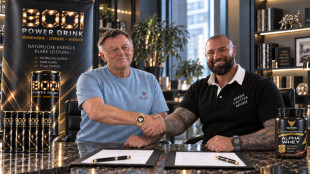
 Alex Bodi a prof. dr. Dieter Lazik podepsali smlouvu týkající se produktů ALPHA WHEY a BODI Energetický nápoj
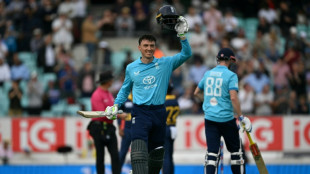 Banton takes England to 355-7 in Sri Lanka ODI decider
Nine European countries were holding a summit Monday aimed at scaling up wind power generation in the North Sea, spurred by the fallout of the Ukraine war and the push for renewables.
Hosted by Belgium in the coastal town of Ostend, the meeting will gather the leaders of EU members France, Germany, Ireland, Denmark, the Netherlands and Luxembourg, with European Commission chief Ursula von der Leyen also attending.
Norway and Britain will participate, too, though the UK's energy minister was leading his delegation and not Prime Minister Rishi Sunak, who stayed in London on another engagement.
"We need offshore wind turbines -- and we need a lot of them," the leaders of the countries, including French President Emmanuel Macron, German Chancellor Olaf Scholz and Sunak, said in a joint op-ed published in Politico.
"We need them to reach our climate goals, and to rid ourselves of Russian gas, ensuring a more secure and independent Europe."
The collective goal, they said, was to boost offshore wind power generation to 120 gigawatts by 2030 -- from just 30 GW now -- and at least 300 GW by 2050.
The North Sea summit is the second one to be held, after the four countries in the inaugural gathering last year -- Belgium, Denmark, Germany and the Netherlands -- decided it was necessary to broaden cooperation.
They recognised this was "a massive undertaking" requiring "huge investments in infrastructure".
Belgian Prime Minister Alexander De Croo said ahead of the summit that it would be focused on "speed of execution" and standardising equipment to build the offshore wind farms faster and cheaper.
Around 100 bosses of companies in the wind turbine supply chain were also participating in the summit.
The leaders' op-ed emphasised the need to source expertise and parts from Europe rather than elsewhere.
"We need to make space for European value chains when it comes to green tech and diversify our sources of critical raw materials for wind turbines, batteries and the like," they said.
China currently dominates the supply of critical components such as rare earths, and the United States is heavily subsidising industry to onshore that sector.
"We are bolstering our energy security and sending a strong signal to (President Vladimir) Putin's Russia that the days of his dominance over global power markets are well and truly over," British Energy Security Secretary Grant Shapps said as he headed to the summit.
Security of the offshore installations was also a topic of the summit, given recent reports of a Russian spy ship in the North Sea and the sabotage of Nord Stream gas pipelines in the Baltic Sea in September 2022. A NATO official was taking part to discuss the topic.
- Industry criticism -
WindEurope, the federation representing Europe's wind energy industry, believes the summit's ambitions are doable.
But it highlighted a lack of "adequate funding mechanisms" and recruitment in the sector.
Current policy, aimed at getting to a carbon-neutral future in Europe, "is overly focused on technological breakthroughs, rather than actual scaling up of existing supply chains", WindEurope said in a statement.
It also criticised "uncoordinated market interventions, price caps and national clawback measures" that "deterred investments".
The organisation says Europe needs to build the offshore infrastructure to add 20 GW in output per year, yet the sector currently has capacity for just seven GW annually, with supply chain bottlenecks for cables, substations and foundations, and in the availability of offshore wind vessels.
Investment to get Europe where it wants to be is massive: the EU has calculated the cost of getting to 300 GW in offshore energy production by 2050 at 800 billion euros ($900 billion).
Britain has the biggest fleet of offshore wind farms, 45 of them, currently producing 14 GW, with plans to expand capacity to 50 GW by 2030.
Germany's 30 wind farms produce eight GW, followed by the Netherlands with 2.8 GW and Denmark and Belgium both with 2.3 GW.
The other participating countries produce less than a gigawatt from their existing installations but share ambitions to greatly ramp up wind energy capacity.
The European Union recently set a goal to double the proportion of renewables in its energy mix, to 42.5 percent, notably by making it easier to get permits to install the infrastructure.
O.Krause--BTB