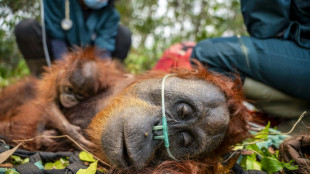
We may be underestimating the climate risk to crops: researchers / Photo: © GETTY IMAGES NORTH AMERICA/AFP

 Oil prices spike after Trump rejects Iran truce offer

 Taylor Swift sets new record at MTV VMAs
 Seoul seeks apology after Ukraine reveals transfer of North Korean POWs

 Messi on target again but Miami downed by Columbus

 In Washington's political cauldron, a fight over foie gras
 Flavio Bolsonaro: political heir in his father's shadow

 Ravens grab last-second win in Rio as Commanders stop Seahawks

 USA rallies to capture 11th consecutive Presidents Cup

 Phillies clinch, Astros wrap up division on final day of MLB season

 Commanders hand champion Seahawks their first loss

 Dupont scores twice to send Toulouse top of Top 14

 Ireland beat Israel but no handshakes due to war in Gaza

 Tense standoff over flashpoint N.Ireland parade lasts into night

 Stunned McNulty wins 'miracle' road race world title

 Re-released 'Avengers: Endgame' snaps-up N. America box office lead

 American McNulty wins shock road race world title

 Serbia's President Aleksandar Vucic announces resignation

 Tuchel urges Bellingham to play with 'rage'

 Russian strikes on Ukraine kill 8

 Bavuma, Miller hit centuries as South Africa clinch series

 Spain bring in Le Normand for injured Garcia

 UK Labour party meets buoyed by Burnham but seeking concrete plans

 Nor'easter lashes US east with punishing rain and wind

 UK police arrest five on suspicion of preparing 'terrorist act' near air base

 Washington denounces Iran's truce proposal as 'cynical'

The risks of harvest failures in multiple global breadbaskets have been underestimated, according to a study Tuesday that researchers said should be a "wake up call" about the threat climate change poses to our food systems.
Food production is both a key source of planet-warming emissions and highly exposed to the effects of climate change, with climate and crop models used to figure out just what the impacts could be as the world warms.
In the new research published in Nature Communications, researchers in the United States and Germany looked at the likelihood that several major food producing regions could simultaneously suffer low yields.
These events can lead to price spikes, food insecurity and even civil unrest, said lead author Kai Kornhuber, a researcher at Columbia University and the German Council on Foreign Relations.
By "increasing the concentration of greenhouse gases, we are entering this uncharted water where we are struggling to really have an accurate idea of what type of extremes we're going to face," he told AFP.
"We show that these types of concurring events are really largely underestimated."
The study looked at observational and climate model data between 1960 and 2014, and then at projections for 2045 to 2099.
Researchers first looked at the impact of the jet stream -- the air currents that drive weather patterns in many of the world's most important crop producing regions.
They found that a "strong meandering" of the jet stream, flowing in big wave shapes, has particularly significant impacts on key agricultural regions in North America, Eastern Europe and East Asia, with a reduction in harvests of up to seven percent.
The researchers also found that this had been linked to simultaneous crop failures in the past.
One example was in 2010, when the fluctuations of the jet stream were linked to both extreme heat in parts of Russia and devastating floods in Pakistan, which both hurt crops, Kornhuber said.
- Risk assessment -
The study also looked at how well computer models assess these risks and found that while they are good at showing the atmospheric movement of the jet stream, they underestimate the magnitude of the extremes this produces on the ground.
Kornhuber said the study should be a "a wake up call in terms of our uncertainties" of the impacts of climate change on the food sector, with more frequent and intense weather extremes and increasingly complicated combinations of extremes.
"We need to be prepared for these types of complex climate risks in the future and the models at the moment seem to not capture this," he said.
On Monday, United Nations' human rights chief Volker Turk warned of a "truly terrifying" dystopian future of hunger and suffering as climate change-driven extremes hit crops, livestock and crucial ecosystems.
He told a UN debate on the right to food that more than 828 million people faced hunger in 2021 and climate change could increase that by 80 million by mid-century, and slammed world leaders for short term thinking.
J.Bergmann--BTB