The Anthropocene heralds disaster. Can humans change course? / Photo: © AFP/File

 Nothing to seal here: NZ police help stranded pup home
 White House releases list of products US, China could tax less

 'Pseudo-journalism': Partisan 'news' sites target US midterms
 'Currently impossible': North Korea defections in freefall

 Erasmus sizes up 'improved' Wallabies ahead of 2027 World Cup

 Scandal-weary Brazilians to vote as Lula faces Bolsonaro son
 SpaceX aims to put Starship in orbit for the first time
 Pope to speak on united Europe from French border town

 Scheffler makes sportsmanship stand over tee screamer

 Anthropic CEO Amodei to dine with Trump at White House

 Dupont scores twice to send Toulouse to Top 14 summit

 Greece stun Klopp's Germany as Ireland show sorrow for Gaza

 Ramos fires holders Portugal to Nations League win in Norway

 Greece hand Klopp first defeat as Germany manager
 Pope promises French sex abuse victims to prevent further harm

 UK village on edge over threats to air base in terror alert

 Two giant pandas, emblems of China soft diplomacy, arrive in US

 Aleksandar Vucic: from Milosevic minister to long-serving Serbian statesman

 Trump expects new Iran talks despite rejecting deal offer

 Xavi gets first win as Netherlands boss, Denmark beat Wales

 Madrid housing protest camp enters second night as PM vows action

 Tigray TV station hit by drone, rebels advance in north Ethiopia

 Banton hundred paves way for England ODI series win over Sri Lanka

 Milestone man Kohli powers India to big ODI win over West Indies
 Swiss reject plan to toughen neutrality
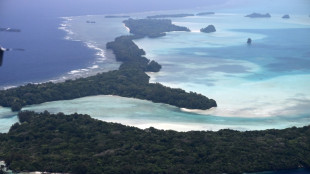
Her distant ancestors paddled canoes across the Pacific Ocean to settle what became the island nation of Tuvalu, but now climate change means Grace Malie and her generation may live to see those islands swallowed by the sea.
Pacific island nations are ground zero for climate change impacts and their plight embodies the sweeping environmental damage that is the hallmark of the era of humans, the Anthropocene.
Confronted with a warming world that could engulf her home forever, Malie said it would be easy to think she and her people have "no future".
But the 24-year-old climate campaigner said young people are determined to chart their own destiny -- even if they cannot stop planet-heating emissions on their own.
"I remain hopeful," she told AFP in an interview. "My generation is really taking matters into their own hands."
Malie has worked to share the story of her community as part of her role with the Rising Nations Initiative, a global partnership launched by Pacific atoll nations to preserve their sovereignty and heritage.
"There may be solutions out there, things that we've never thought of, innovative ideas," she said.
The fossil fuels that powered the industrial revolution and prosperity have already warmed the planet 1.2 degrees Celsius, unleashing extreme weather and human upheaval.
Last week saw records for the hottest day on Earth, on three successive days.
Oceans, soils and forests have been dangerously degraded, and key life-support systems across the planet are at risk.
Humans have pushed their only home well into the danger zone. Can we change our ways and build a sustainable life on Earth?
Many experts say that is still -- if only just -- within our grasp, and that we should dare to imagine thriving, rather than simply surviving in a blighted world.
- Collapse -
Last year's UN Human Development Report warned that people across the world were facing a perfect storm of uncertainties, linked to the "destabilising planetary pressures and inequalities of the Anthropocene", societal transformations and political polarisation.
Pedro Conceicao, who led the report, said he worries that fears of "collapse" are clouding humanity's ability to envisage a way to flourish.
That echoes concerns from climate scientists that people's sense of "doom" is blocking progress.
Erle Ellis, a professor at the University of Maryland, Baltimore County, concedes that the "best time for it to be a hundred percent carbon neutral is yesterday".
Yet humanity is not trapped in a cycle of destruction, he said.
"We're capable of harnessing unbelievable amounts of energy to do things at scale, we can fly, we can leave the planet," he said.
"Things are changing really fast now, so there are a lot of possible futures that would never have existed in the past, that are realistic now."
But are people imagining these futures? Or how to avoid catastrophe?
"As a writer, as a creator, it is terrifyingly easy to build dystopias," novelist Manda Scott told AFP.
She thinks the answer is "thrutopias" that tell the stories of change, and has run workshops to share these ideas with other writers.
"Our imaginings of the future are very locked within the current system," said Scott, who has also written a new thrutopian novel.
"It's easier to imagine the total extinction of life on Earth than an end to predatory capitalism, because we think this is the way it is."
She describes imagining the transformation human societies and nature might go through in order to thrive as akin to guessing what form a caterpillar might take in adulthood.
"If you didn't know that process, I pretty much guarantee that there is no way you would predict butterfly from caterpillar," she said.
- Charting a path -
Few places have to confront the possibility of radical change more directly than Pacific island nations, with some facing becoming uninhabitable even if the world meets the Paris accord goal of eventually limiting warming to 1.5C.
Tuvalu, Kiribati and the Marshall Islands are calling for a global settlement guaranteeing their states a "permanent existence" even as the seas rise.
It is real stories that inspire Grace Malie, who is working with others to record oral histories for an online cultural archive, part of a push for UNESCO protection for Tuvalu's heritage.
Her grandfather, descended from chiefs, was among those interviewed.
As custodian of the family tree, the 75-year-old can trace heritage going back generations.
"Pacific people come from a long line of voyagers, of warriors and they carry that passion, that resilience," said Malie, who said she was "humbled" to think of the great ocean voyages of her ancestors.
"Kudos to their resilience and hard work and their bravery. That's passed on to us now, and we hope to make them proud."
B.Shevchenko--BTB