The Paris Olympics have bold climate plans, but few specifics / Photo: © AFP

 Messi and Alcaraz love it, now padel takes step closer to Olympics
 Tolls mount in Thailand, Myanmar floods

 Why India's opposition wants top poll official out

 PU Prime Strengthens UAE Momentum with Strong Showing at Forex Expo Dubai 2026

 Eight dead in Thailand floods since mid-September
 Oil prices spike after Trump rejects Iran truce offer
 Taylor Swift sets new record at MTV VMAs
 Seoul seeks apology after Ukraine reveals transfer of North Korean POWs

 Messi on target again but Miami downed by Columbus
 In Washington's political cauldron, a fight over foie gras
 Flavio Bolsonaro: political heir in his father's shadow
 Ravens grab last-second win in Rio as Commanders stop Seahawks

 USA rallies to capture 11th consecutive Presidents Cup

 Phillies clinch, Astros wrap up division on final day of MLB season

 Commanders hand champion Seahawks their first loss

 Dupont scores twice to send Toulouse top of Top 14

 Ireland beat Israel but no handshakes due to war in Gaza

 Tense standoff over flashpoint N.Ireland parade lasts into night

 Stunned McNulty wins 'miracle' road race world title

 Re-released 'Avengers: Endgame' snaps-up N. America box office lead

 American McNulty wins shock road race world title
 Serbia's President Aleksandar Vucic announces resignation
 Tuchel urges Bellingham to play with 'rage'

 Russian strikes on Ukraine kill 8
 Bavuma, Miller hit centuries as South Africa clinch series
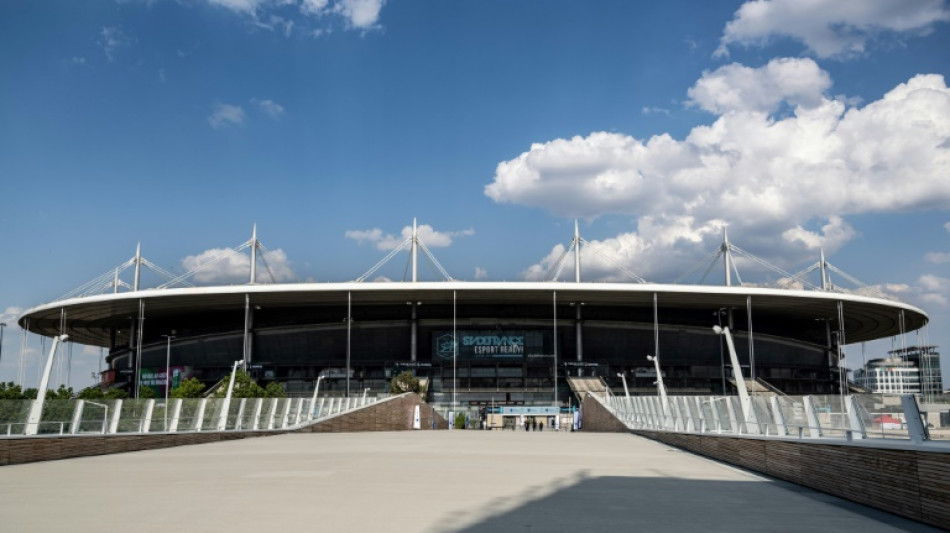
Organisers of next year's Paris Olympics say they want its carbon footprint to be half that of previous summer Games, but with a year to go observers say they still do not have enough detail to verify the plans.
Citing climate change as "the greatest challenge humanity has ever known", organisers have said they can reduce greenhouse gases from the Games with a variety of measures, including renewable energy and using existing venues rather than building new ones.
That would, they say, allow them to halve CO2 emissions from the estimated 3.5 million tonnes generated during the 2012 London and 2016 Rio Games.
"It's a fine promise," said Martin Muller, Professor of Geography and Sustainability at the University of Lausanne, adding the target itself is a first.
But "I don't have the figures to believe it," he told AFP.
Muller would like open access to precise data. Otherwise, he said, "I can't understand on what basis this has been calculated".
- Planes, stadiums and snacks -
For the time being, the organisers have sketched out forecasts.
Expected emissions break down into three areas -- travel, buildings and other activities like accommodation, security and catering -- which each account for roughly a third of emissions.
With the venues themselves, the organisers say they have limited the construction footprint with a 95 percent reliance on existing or temporary arenas, unlike the much-criticised football World Cup in Qatar.
This decision to use as much existing infrastructure as possible was praised by Gilles Dufrasne, of Carbon Market Watch, as a "thoughtful approach".
Other ideas include using renewable energy or serving "low carbon" meals with less meat.
"The other big item is emissions from spectators arriving by plane," said Muller.
Even if venues have to be accessed by public transport, organisers will have little control over how people arrive into the country.
Around a quarter of the total emissions is expected to be from spectator travel alone.
- Offsetting -
For these types of emissions, the organisers say they are supporting projects to “offset” the carbon pollution.
"All emissions that cannot be avoided will be offset by projects designed to bring both environmental and social benefits on all five continents,” they said.
This involves, for example, financing the planting of trees to absorb CO2 or clean cookstove projects.
The organisers promise to be rigorous in their selection of projects, but offsetting in general is often subject to criticism for variable accounting methods and difficulties in verifying the amount of carbon removed.
"Offsetting is a measure of last resort," said Muller.
- What next? -
Paris 2024 organisers hope to set a "new standard" for future Olympics.
But experts argue the Games should be thinking much bigger -- by thinking smaller.
A study published in 2021 in Nature Sustainability, and led by Muller, looked at 16 Summer and Winter Olympic Games between 1992 and 2020, representing a total cost of more $70 billion.
They found that overall sustainability has declined over time and made three main recommendations.
"First, greatly reducing the size of the event," the researchers said.
"Second, rotating the Olympics among the same cities; third, enforcing independent sustainability standards."
Key is the reduction of spectators arriving by plane, with Dufrasne imagining ultimately an "all-TV" event, with broadcasts to local stadiums around the world.
L.Janezki--BTB