'Five years of fire': Romanian farms wilt in drought / Photo: © AFP

 8.3 mn refugees at risk due to 'severe' funding cuts: UN

 Stocks drop and oil rises as Hormuz hopes fade
 OpenAI cancels release of newest model due to safety concerns

 AI bosses head to White House as safety pressure builds

 Batista sacked as Costa Rica coach after six months
 Flooding, power cuts and evacuations as Hurricane Polo slams Mexico

 Dodgers eye three-peat, Red Sox face Yankees as MLB playoffs begin

 Certification of Boeing 737 MAX delayed by software bug

 Celine Dion wows Paris Fashion Week with surprise gig

 AMD buys firm founded by AI 'godmother' Fei-Fei Li

 Italy rebound in Turkey as France win late in Belgium

 Pope says concerns about AI 'should be taken seriously'

 Hurricanes to hoist title banner as NHL season begins

 Justice Alito steps aside from major US climate case

 Willis happy with England exile after retains Top 14 player award

 Spain housing protests keep heat on government as PM seeks new law

 Wissa spoils Zimbabwe homecoming as DR Congo win AFCON qualifier

 UK police release on bail five men held over airbase incident

 Ex-All Black Plummer 'sure' New Zealand will find Super Rugby solution

 Shein sees 1% revenue growth in first half of 2026
 Netherlands regrets Israel retaliation in settlements row

 Moscow seizes Russian assets of German food retailer Metro

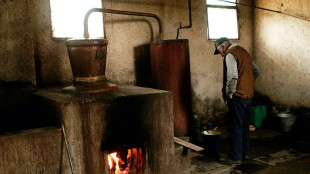 Bulgarian spirits inflamed by new rakia rules

 Documentary turns camera on architect Peter Zumthor

 UK police say releasing on bail five men held over airbase incident

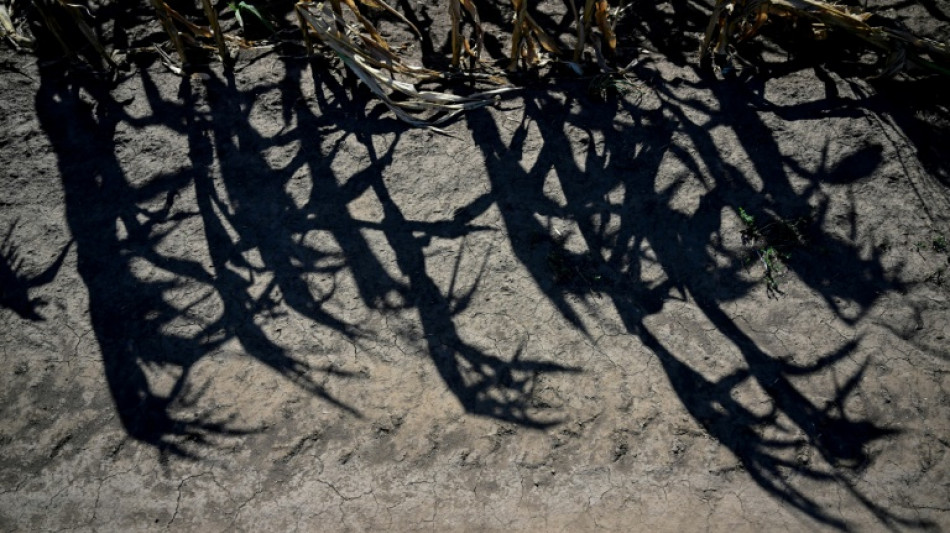
Desiccated leaves crackled underfoot as Romanian farmer Iulia Blagu walked through her scorched cornfield, devastated by one of the country's worst droughts in recent years.
She took over 300 hectares (750 acres) near Urziceni in southeastern Romania from her father half a decade ago -- a baptism she describes as "five years of fire".
"For Romanian agriculture, it's not a question of if but when we will die," the 39-year-old told AFP late last month.
Holding up an ear of corn no bigger than her hand, Blagu said the drought was eating away at her harvest "like an unstoppable steamroller," forcing her for the first time to borrow money to pay her workers.
Romania is far from the only country hit by the blazing heat.
In neighbouring Hungary, almost the entire country is on alert because of the high temperatures.
At the beginning of August, dozens of Hungarian farmers led two camels through downtown Budapest to draw attention to the impact of climate change on agriculture.
Both southern and eastern Europe are faced with "persistent and recurrent drought conditions," according to the latest situation report by the European Union.
The EU's Copernicus Climate Change Service has warned that it is "increasingly likely" 2024 will be the Earth's hottest year on record.
- 'At God's mercy' -
In Romania, farmers have been promised compensation for the two million hectares of farmland which the government estimates have been damaged.
But one farmer told AFP that agriculture has become "a lottery," and he feels "at God's mercy".
In hundreds of villages, wells have run dry and water restrictions imposed, while lakes are disappearing.
Orthodox priests have even gone into fields of cracked soil to pray for rain, while in another community, work has begun to dig the ground to try to revive springs.
But with a nearby lake at risk of drying out, villager Marian Florea felt glum about the future.
"The climate has changed. And nothing good is coming," the construction worker, 53, told AFP.
"By the autumn, if this drought continues, there'll be nothing left here."
Meanwhile, farmers like Blagu are trying to adjust to the conditions.
She won't sow corn -- once the most profitable crop in the region -- any more next year.
Instead, she has begun testing sorghum, a more heat-resistant grain native to Africa, and is also looking into planting coriander and chickpeas besides her wheat, sunflowers and other crops.
- 'Romanian Sahara' -
Further south, close to the Danube, a 100,000-hectare area of sandy soil nicknamed the "Romanian Sahara" has become a testing ground for alternative crops.
The country is losing 1,000 hectares of arable land every year to climate change, according to Romania's environment minister Mircea Fechet, who fears that in 50 years the south could end up "completely desertified".
Since 1959, a research station set up to try to "make the sands bear fruit" has been providing expertise and seeds to farmers.
With scientists warning that climate change caused by human greenhouse gas emissions is driving an increase in extreme weather, its mission has become more crucial than ever.
"Climate change is forcing us to come up with new things, to try other species," the station's head, Aurelia Diaconu, told AFP.
Among those grown at the station are persimmons, dates, kiwi and pistachios, species that "some time ago we did not even think that we would taste from our fields," she said.
But all of the crops tested there are irrigated -- something few Romanian farmers currently have access to.
Of the country's nine million hectares of arable land, less than two million hectares have irrigation -- Blagu's parched cornfields among them.
"Without water we can't do anything," she sighed.
Y.Bouchard--BTB